
Solar storage battery
Price, capacity and profitability in Switzerland.
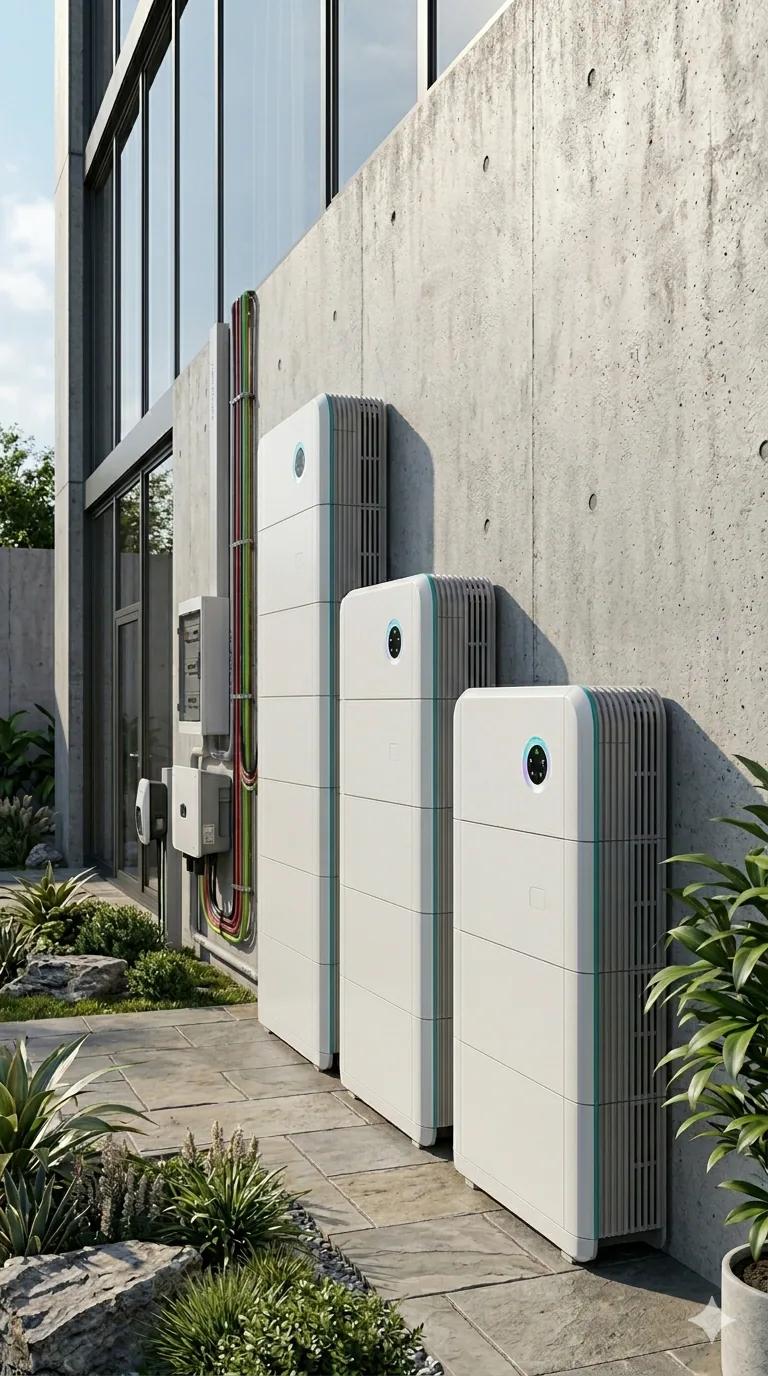
A solar battery stores the excess photovoltaic produced during the day to consume it in the evening. Compare the useful capacity, coupling, efficiency, backup mode and warranty before choosing a model.
Installed price 10 kWh
CHF 6'000–9'500
Benchmark 2026 to compare on an identical perimeter, installation and configuration included.
Standard villa
5–8 kWh
Current capacity to be confirmed with nighttime consumption.
With heat pump
10–12 kWh
Benchmark to be recalculated according to uses and winter production.
Indicative return
10–15 years
Very sensitive to the purchase price, the injection and the number of useful cycles.
Federal aid
No Pronovo
Only check targeted cantonal or municipal programs.
Emergency current
Option to plan
A battery alone does not guarantee power during an outage.
Energy Independence
Reduce your reliance on the grid by using your own stored energy.
Financial Savings
Shift some surplus into your consumption hours and calculate the benefit after losses and costs.
Configure backup power
Have the powered circuits, power, duration and switching time confirmed for the chosen configuration.
Intelligent Integration
Check inverter, battery, meter, appliance controls and dependence on online services together.

Reference marks
Local aid to check before quote
Pronovo does not subsidize the home battery itself. Certain cantons, municipalities or suppliers offer targeted aid, particularly under conditions in Geneva and Neuchâtel. Do not include any calculation assistance until the program, eligibility, and schedule are confirmed in writing.
4 Simple Installation Steps
Evaluation
Analysis of your needs for optimal autonomy.
Design
Modular selection of capacity adapted to your consumption.
Installation
Quick installation thanks to innovative connectors.
Monitoring
Real-time battery status monitoring via a dedicated app.
Expertise beyond the product
LFP chemistry (lithium iron phosphate)
LFP is used in many home storage systems. Compare the complete system's safety, warranty and usable capacity rather than cell chemistry alone:
- Thermal stability: LFP can offer an advantage, but does not eliminate overheating, short-circuit or fire risks. Check the protection measures and location of the complete system.
- Service life: Compare the exact model's warranty period, guaranteed remaining capacity, energy throughput, cycle limits, temperature limits and operating conditions.
- Depth of discharge: Distinguish nominal from usable capacity. Follow the manufacturer and battery management limits; a displayed 100% discharge does not mean the cells have no reserve.
AC coupling vs DC coupling: Which architecture to choose?
The integration of a battery depends on the stage of your solar project:
- DC coupling: A compatible hybrid inverter can charge the battery from the panels. Compare whole-system efficiency, standby losses and power limits.
- AC coupling: A dedicated converter can allow storage to be added to an existing installation. Check compatibility, additional conversions and backup operation.
The Golden Rule of Sizing
A common mistake is to oversize the battery "just in case". Financially in Switzerland, it is counterproductive.
- The correct calculation: The capacity must cover your nightly consumption, not make you autonomous over several covered days.
- Capacity: Use an hourly simulation of available surplus, consumption, season, usable capacity and power. A heat pump alone does not determine storage size.
- Profitability: Calculate useful cycles, avoided grid purchases and forgone export revenue, then deduct losses, maintenance and replacement. A daily cycle does not guarantee a short payback.
The Myth and Reality of “Back-up” mode
Having a battery does not automatically guarantee having power during a Blackout. Standard inverters turn off for safety. If you want backup power, you must require it:
- The EPS (Emergency Power Supply) option: A dedicated emergency outlet to power a small circuit (fridge, router).
- Extended backup: A switch alone is not enough. Have islanding, protection, phases, starting power, powered circuits and battery reserve designed and tested.
Economic Model: Profitability and Alternatives in Switzerland
Pronovo does not subsidize the home battery itself. Compare the options using the costs and conditions applicable to your address:
- Local support: Check the program, eligibility and deadlines. Include only contributions confirmed in writing.
- Tariffs: Storage can shift grid purchases between hours where the contract allows it. Compare the price difference with losses, fees and wear.
- Virtual storage: This is a contract for accounting for or valuing surplus. Compare subscriptions, charges, export prices and terms; it does not physically store energy at your home for an outage.