
Photovoltaic Maintenance & Cleaning
Maximize Your Yield and Secure Your Production
The idea that a photovoltaic installation is maintenance-free is a myth. Urban particles, agricultural pollen and Saharan sand deposits accumulate to form an opacifying film. A professional maintenance strategy is vital to guarantee the sustainability of your investment over 30 years.
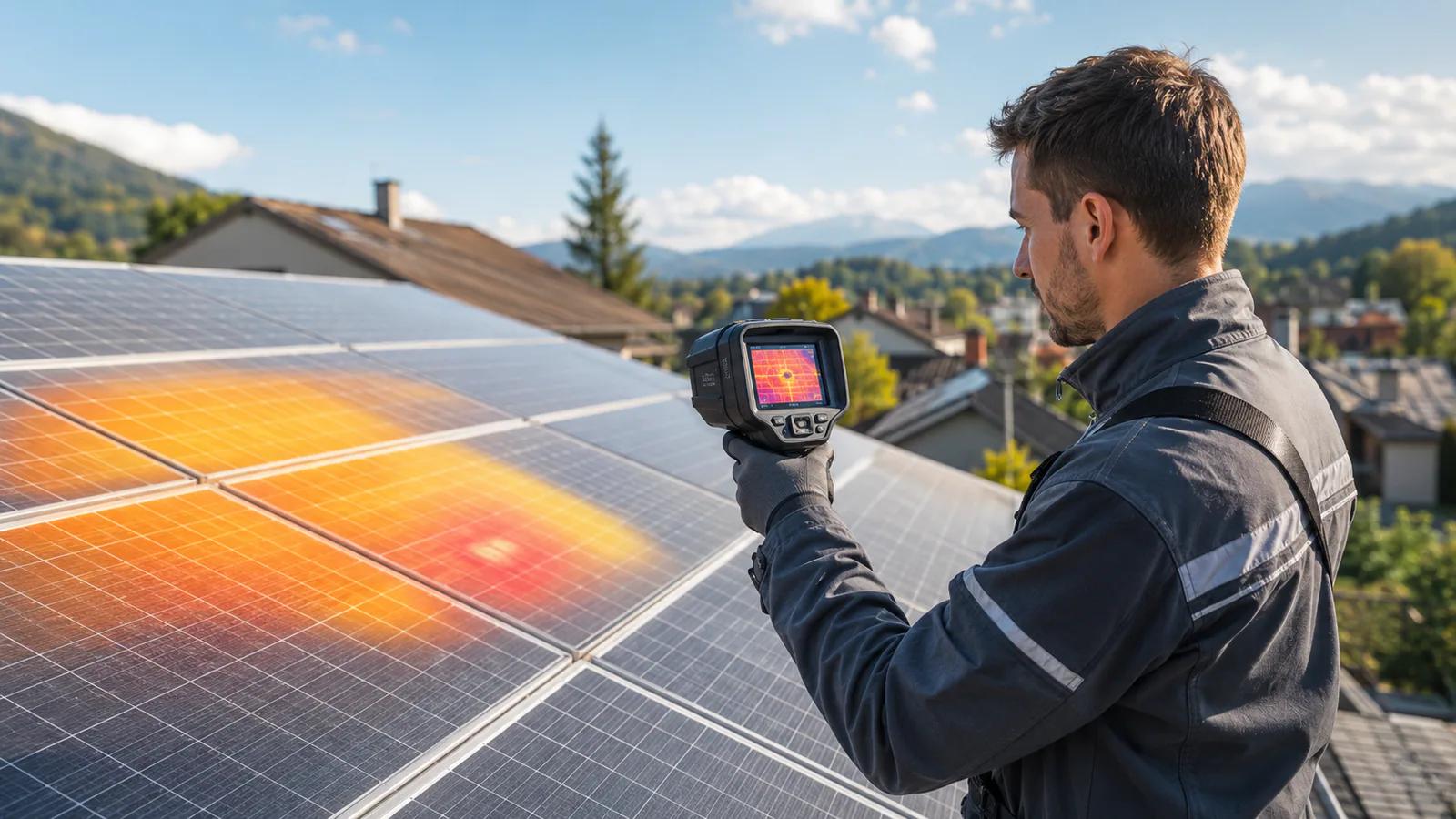
Hot Spot Prevention
Avoid destructive heating of cells masked by dirt.
Preserved Guarantees
Suitable cleaning without high pressure or abrasive chemical detergents.
Optimized ROI
Measure soiling-related loss and compare recoverable output with intervention cost.
Tax Deduction
Check the tax treatment of costs for the building, canton and your circumstances.
Essential Services
4 Simple Installation Steps
Diagnosis
Visual inspection and static control of fixings after bad weather.
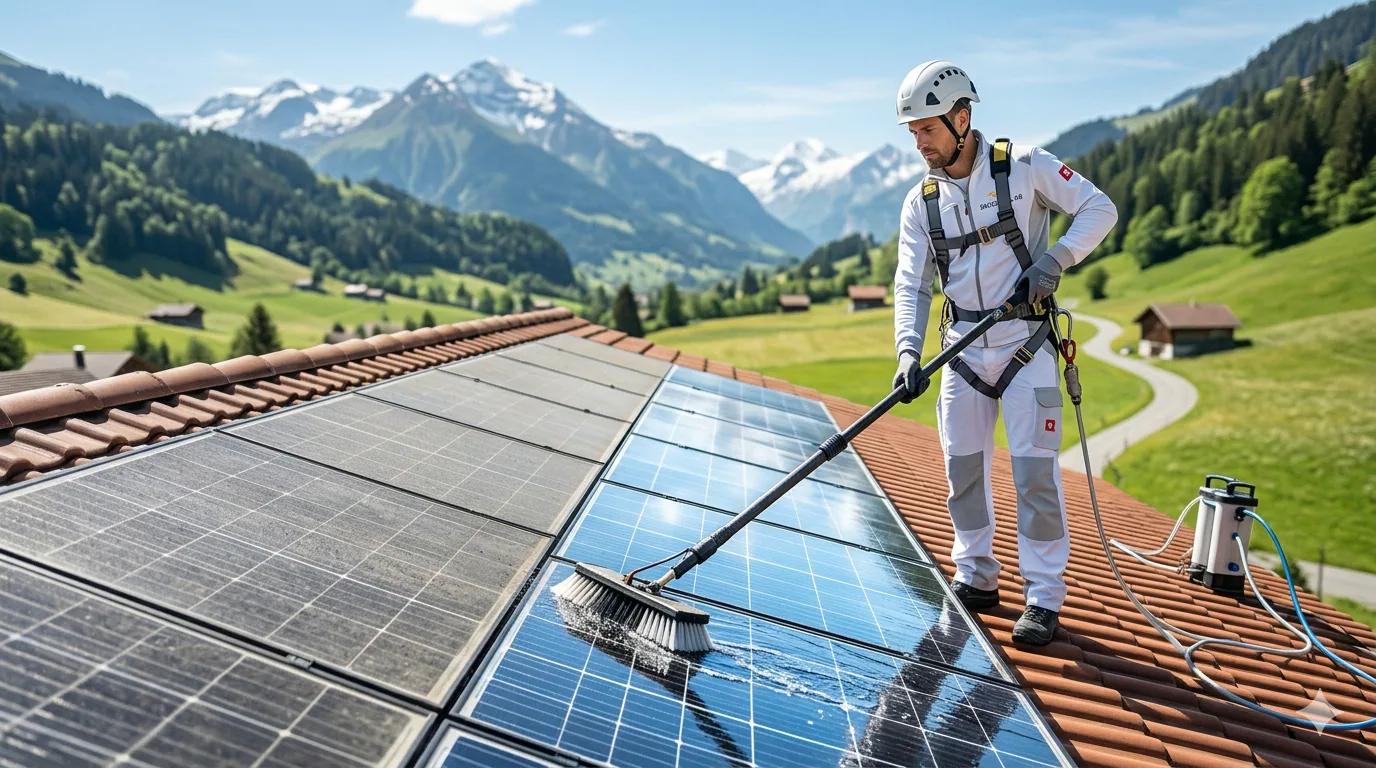
Cleaning
Very low mechanical action with reverse osmosis water to leave no mineral trace.
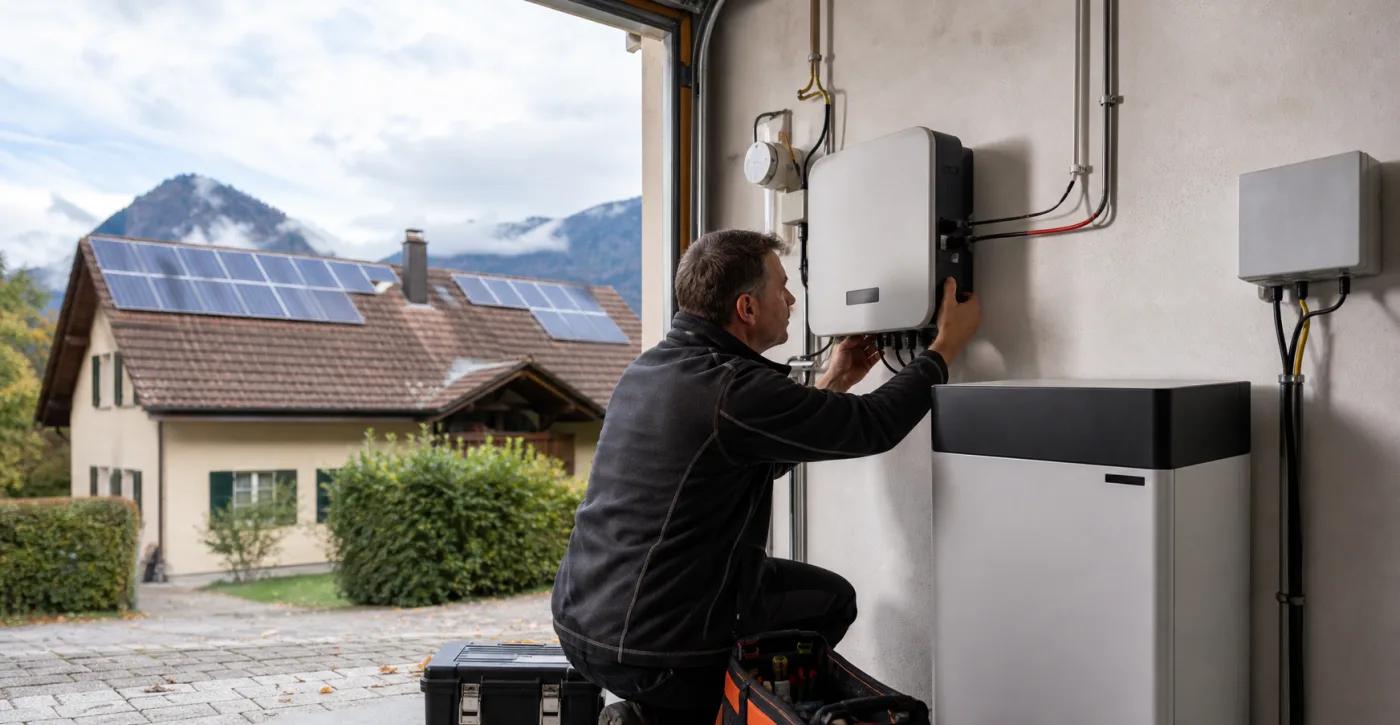
Electronic Control
Checking inverters, cleaning filters and updating firmware.
Report
Submission of a complete inventory and recommendations for optimization.
Expertise beyond the product
The Technical Impact of Clogging: String and Hot Spot
Yield loss is not simply proportional to the surface area covered. Understanding the risks is essential:
- Bottleneck Effect: The intensity of the entire string is dictated by the weakest/dirty panel.
- Hot Spot Risk: A masked cell turns into a resistance, heats up and can cause micro-cracks or a fire.
- Wiring Safety: Examination of MC4 connectors prevents short circuits linked to rodents and bad weather.
Methodology and Frequency of Intervention
Cleaning cannot be improvised and depends heavily on the location of your installation:
- Agricultural site: decide from deposits, monitoring and manufacturer guidance rather than a fixed frequency.
- Industrial or roadside site: inspect deposits and confirm a compatible method before washing.
- Residential site: track shading, deposits and alerts; schedule intervention when its benefit is documented.
Frequently Asked Questions (FAQ)
Answers to popular ideas about solar cleaning:
- High pressure cleaner (Kärcher)? Strictly not recommended, risk of destroying the seal and causing a short circuit.
- Snow: it can remain on modules. Do not climb onto the roof or scrape the glass; have concerning accumulations professionally assessed.
- Tax: confirm whether costs are eligible and in which year. Do not assume the same benefit for every owner.

Decision framework
A verifiable decision, not an isolated estimate
Before comparing solutions, clarify the project assumptions, their sources and dates, and the responsibilities involved. Use your bill, roof plan and written responses to check that each quote covers the same needs.
Start with a measurable question
Start your solar decision with building data. Record the address, building type, relevant area, energy use and desired result. When assessing maintenance and cleaning of a photovoltaic installation, distinguish readings, written confirmations and assumptions. Compare gross and net amounts for the same scope; separate installed capacity from annual generation. Check grant conditions before deducting support from the budget. Prepare open questions for the installer, municipality, grid operator and insurer, identifying the record or measurement needed to answer each one.
Turn your bills into scenarios
Gather twelve months of bills if possible. Separate energy, network use, metering, taxes, levies and optional services. Include heating, hot water, EV charging and absences. An annual average can hide demand concentrated in mornings, evenings or winter. Compare conservative, central and favourable scenarios for an owner who wants to preserve performance without taking any roofing risks. Keep units, scope and tariff dates consistent so that differences reflect the options being compared.
Check the roof and surroundings
Orientation, slope, chimneys, dormers, trees, antennas, snow, access, ventilation and neighbouring buildings affect solar generation. Ask for an aerial image, a dimensioned roof plan and a seasonal shading assessment. Have the roof covering, possible asbestos, structural capacity and cable routes assessed before committing to system capacity. A simulation for maintenance and cleaning of a photovoltaic installation should explain losses, show monthly generation and account for roof renovation or expansion before installation.
Compare quotes for the same scope
Three quotes are comparable only when they cover the same scope. Ask for the brand and exact model of each module, inverter, battery, protective device and mounting system. List scaffolding, distribution-board upgrades, grid connection, metering, applications, monitoring, maintenance, VAT and options separately. A lower price may exclude a service; a higher price may include a structural assessment or broader service terms. Identify who coordinates with the DSO and provides commissioning documents.
Check warranties and responsibilities
Product, performance and installation warranties, and insurance, cover different matters. Check duration, exclusions, beneficiary, claims procedure, response times and service arrangements if a manufacturer changes distributor. Keep invoices, serial numbers, photos, certificates, diagrams and handover records. The owner should retain access to the file documenting the roof condition, manufacturer's instructions, monitoring and documented interventions, even if the installer or project manager changes. Identify who addresses sizing errors, water ingress, communication faults or substantial differences between simulated and measured generation.
Compare the full cost
Include purchase, installation, applications, maintenance, remaining grid purchases, inverter replacement, possible roof work and surplus revenue. For a battery, consider usable capacity, losses, cycles, backup reserve, temperature, software and replacement. For a contract, check subscriptions, price changes, credit validity and exit terms. For a grant, consider eligibility and payment timing. Test whether the decision remains affordable if feed-in tariffs fall, consumption changes or the project is delayed.
Prepare for commissioning and handover
Before work starts, request a list of tests and documents to be provided. These may include insulation measurements, protective-device checks, grid settings, backup settings, connector checks, circuit labels, monitoring access and meter readings. An app displaying data does not replace a complete technical handover. Ask for safe shutdown instructions, a service contact and the circuit diagram. A dated handover record supports warranty claims and comparisons between expected and measured generation, bills and consumption.
Plan for future electricity use
A heat pump, water heater, EV, home working, extension, tenant change or renovation can alter a home’s electricity use. Include planned changes in the simulation. Check whether the inverter, distribution board, communications, available space and grid connection allow realistic expansion. An open system can be more useful than a larger system with limited compatibility. For an owner who wants to preserve performance without taking any roofing risks, assess how to avoid a second costly installation when needs change.
Keep the evidence organised
Keep annotated bills, plans, simulations, compared quotes, grant conditions, official applications, before-and-after photos, certificates, warranties and generation records in one file. Date each item because tariffs and programmes change. An undated screenshot cannot establish a contractual condition. Record the amount stated, the condition that applied and the person responsible. These records support budget checks, a future sale and discussions with the DSO, insurer or authorities.
Check the quote before signing
Before signing, check the description, address, owner, capacity, models, generation estimate, exclusions, prices, VAT, grants, schedule, handover, warranties and termination. Gather the relevant records: the roof condition, manufacturer's instructions, monitoring and documented interventions. Request written answers to unclear points and identify who will resolve them. Keep the final quote, data sheets and contract terms together. A promised saving or equipment brand cannot replace the scope of work, calculation assumptions and service arrangements.
A calendar adapted to the site
The frequency of maintenance depends on slope, pollen, dust, needles, birds, snow and accessibility. An agricultural roof, a site close to a salt road, a forest house and an urban roof do not produce the same deposit. Start with a visual inspection from the ground after a windy episode, then compare expected production and production measured in the monitoring. A gradual decline over several months does not necessarily require washing: it can come from new shading, a chain fault, a meter or exceptional weather. Note date, weather, dirt observed and action decided to build a useful history.
Clean without damaging
Do not use a pressure washer, harsh detergent, metal scraper or very cold water on a hot module. The glass, gasket, frame, membrane and connectors have different constraints. If washing is necessary, the service provider must explain water, brush, access, water recovery, drying and final inspection. Ask if the manufacturer authorizes the method and if roof work affects a warranty. Encrusted droppings, resins and mineral deposits sometimes require a one-off technique rather than a uniform pass. Any marks, cracks or delamination should be photographed before scrubbing.
Safety before performance
Climbing onto a roof carries a risk of falling, slipping and electrical contact, even when the sky is overcast. Check guardrails, lifelines, scaffolding, routing, weather, lockout, access to the panel and possible presence of asbestos. A homeowner should not improvise a height inspection. The maintenance estimate must specify insurance, authorization, area manager, fall protection equipment and repair. After intervention, request a report with observed modules, connectors, cables, drains, fixings, vegetation, hail damage and recommendations. Dated proof protects both the roof and the relationship with the insurer.
Monitoring and preventive maintenance
Set up reasonable alerts and watch trends, specific yield, PV string voltage, temperature and communication availability. An offline monitoring portal is not necessarily a production failure, but it should be distinguished from a inverter fault. Have the tightness, corrosion, ventilation, surge arrester, fuses, connectors and condition of the cable tray checked periodically according to the manufacturer's instructions. Plan a budget for inverter replacement, nacelle intervention, exceptional cleaning and thermographic diagnosis. Good maintenance does not seek a perfect image: it reduces documented risks and maintains performance within the limits promised by the offer.
Usable intervention report
After each visit, demand a form that indicates technician, date, weather, access used, areas inspected, modules stained, electrical anomalies, condition of rails, fixings, joints, gutters and drains. Add before and after measurements, numbered photographs, part replaced, serial number, recommendation, urgency level and next due date. Distinguish observation, diagnosis and action: a coloring is not automatically a fault, and a communication alert is not a panel fault. This common vocabulary makes it possible to compare several providers, to justify an intervention with the insurance company and to verify a guarantee without redoing the entire inspection.
Special cases to anticipate
Pollen, soot, road spray, construction site dust, resin, limestone, droppings, moss and biological film have neither the same adhesion nor the same risk. A powdery deposit can come off with rain, while a mineral stain requires suitable water and glass inspection. Needles in a valley retain moisture; vegetation that touches the cables creates a different risk than a simple optical drop. At altitude, frost, frost, snow avalanches and winter access require different planning from a lowland roof. Describe the context to the service provider, ask for the method, frequency and price separately, then check that the cleaning does not move the dirt to a gutter, facade or neighboring plot. Responsible maintenance also deals with water drainage, birds, joints, galvanic corrosion and construction site waste.
Budget and frequency without automation
An annual contract is not suitable for every roof. Compare inspection package, travel, basket, washing, thermography, small supplies and report separately, then ask for the cost of an emergency after hail or storm. A serious service provider explains the trigger: measured loss threshold, visible deposit, electrical alert, neighboring work or manufacturer's recommendation. Avoid a subscription that imposes unnecessary action or excludes access, water, disposal and restoration. For an isolated site, group the tasks; for a fragile roof, plan a visit from the ground and a specialized intervention. Write down the decision, the expected savings, the next date and who is responsible. You will then be able to compare the cleaning to the actual production recovered, rather than to a visual impression.
After a storm or a nearby construction site
Do not touch the modules until you have photographed hail, branches, dust, splinters, ballast movement or gutter damage. Report the event to the insurer according to the policy, request an electrical diagnosis and distinguish between emergency, security, repair and simple aesthetics. Scaffolding or a crane can change the price and time; have it included in the estimate. If a site has produced plaster, cement, filings or paint, ask who is responsible for decontamination, water recovery and surface control. After drying, compare chain, insulator, connector, frame, glass and yield. This protocol protects the proof, the roof and the guarantees while avoiding improvised washing which aggravates a crack or infiltration.
Use this section with your invoice, roof plan and quotes. The final decision must remain linked to the official conditions, the actual connection and the written contract.