
Insulation
Keep comfort in, leave costs out.
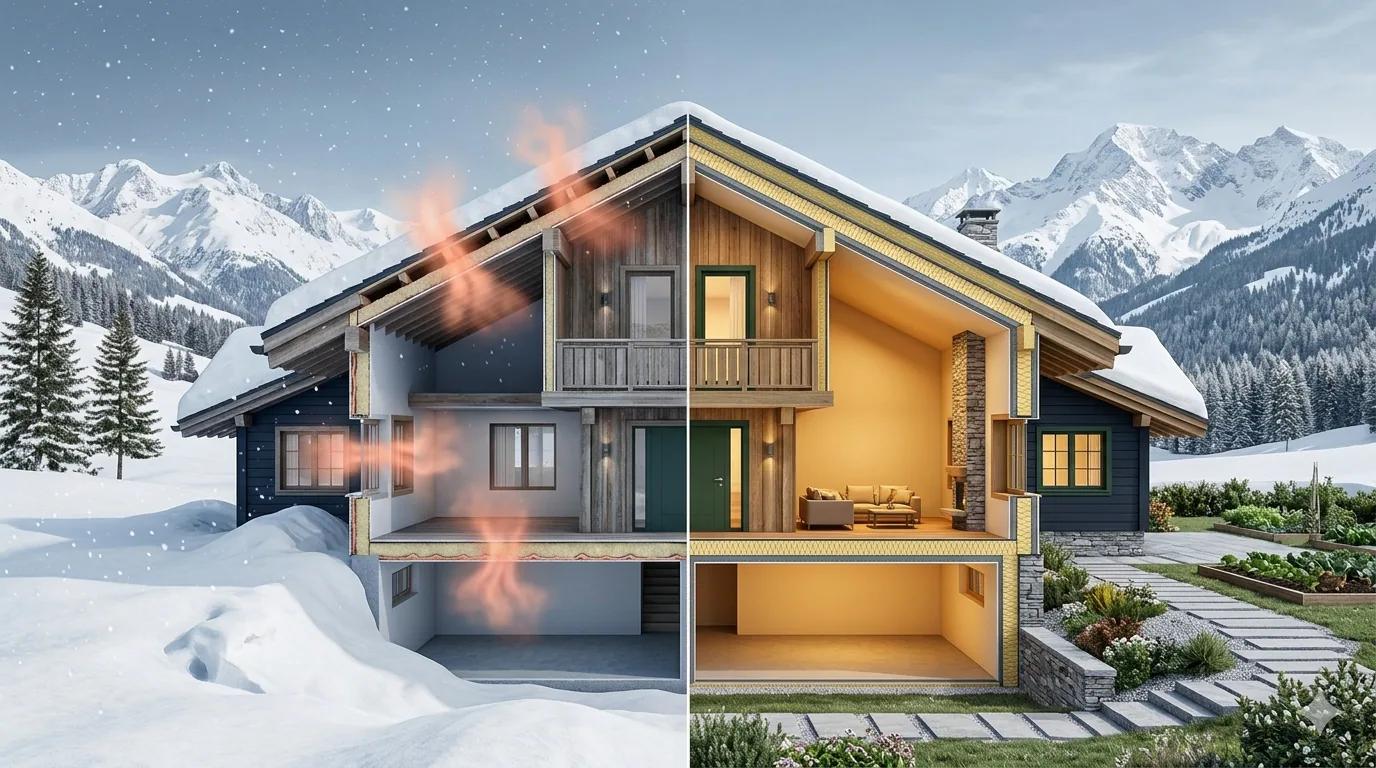
Good insulation is the absolute basis of any energy transition. Reduce your heat loss, save on your bills and enjoy a healthier environment. We use cutting-edge materials that meet the most demanding Swiss standards.
Local Expertise
In-depth knowledge of the climate and Swiss construction standards.
Ecological Materials
Use of certified, sustainable and Minergie-ECO compliant products.
Simulate savings
Calculate savings from building condition, heating, use and renovation plan.
Turnkey Service
From CECB assessment to final installation and grant applications.
Reference marks
Take advantage of Subsidies and Taxation
Check cantonal and municipal programmes, technical requirements and submission timing. Separate confirmed grants from tax effects calculated for your circumstances.
4 Simple Installation Steps
Roofing
Attic insulation by blowing or under roof slopes.
Exterior Walls
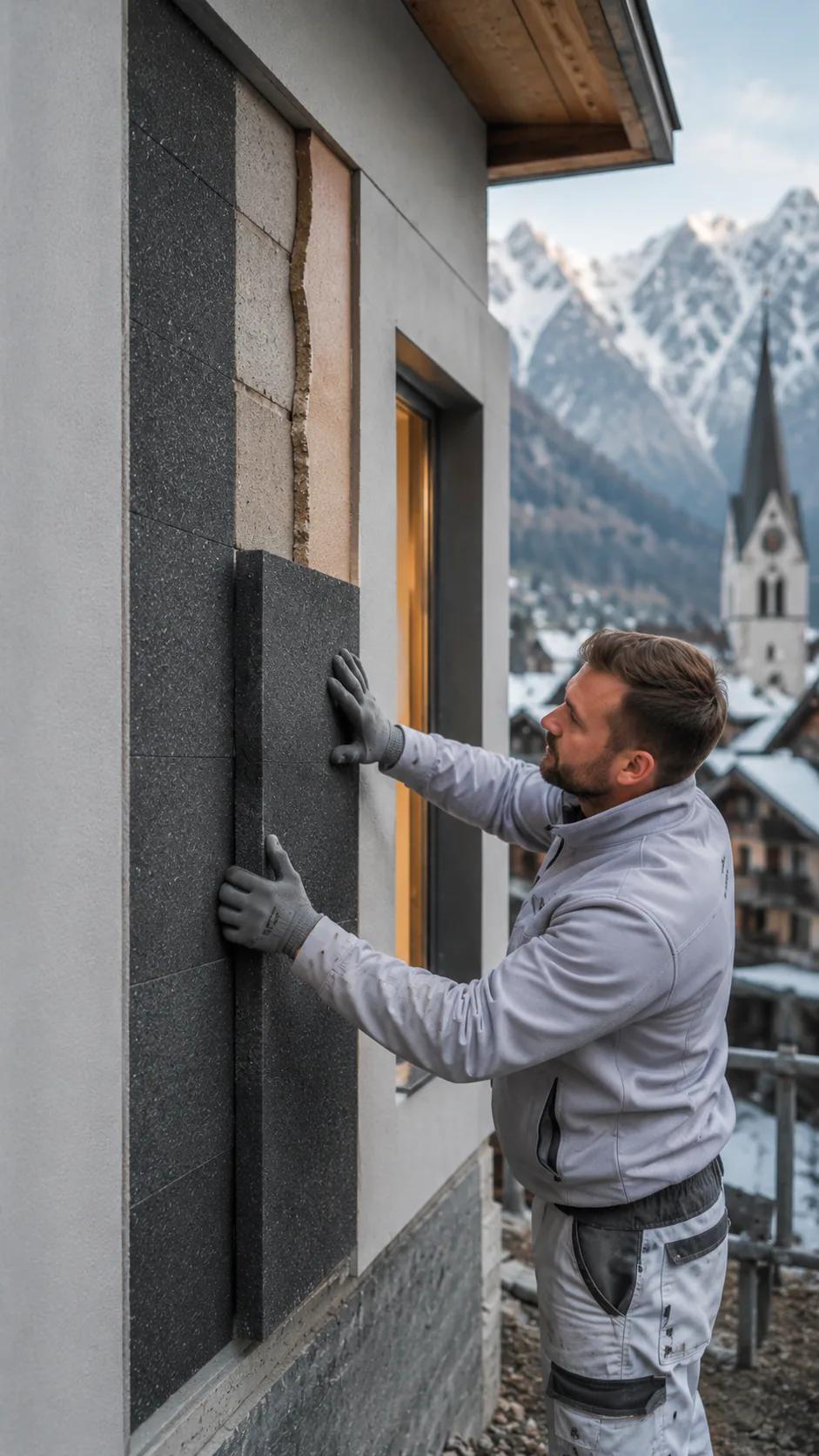
External Thermal Insulation (ITE) to eliminate thermal bridges.
Interior Walls
Interior insulation (ITI) for protected facades.
Floors & Cellars
Insulation of the cellar ceiling with rigid panels (e.g. EPS).
Expertise beyond the product
The Absolute Prerequisite: The “Envelope First” Rule
The correct engineering approach, supported by Swiss standards (SIA 380/1), requires addressing the problem at the source:
- Renovation plan: coordinate envelope and heating. Recalculate heat load after the chosen measures to avoid oversizing the heat pump.
- Surface comfort: Poor insulation creates the “cold wall” effect. Walls at 14°C absorb your thermal radiation, creating a feeling of permanent discomfort despite air heated to 22°C.
Strategic Zones: Where are your Swiss francs fleeing?
Insulation cannot be improvised. We must target the areas with the fastest return on investment:
- Roof and loft: assess losses, covering condition and interfaces with a future solar installation.
- Facades: compare external and internal insulation for structure, heritage constraints, moisture and thermal bridge details.
- Floors and basements: assess comfort, losses, available height and wall junctions before choosing.
Deciphering Quotes: Technical Indicators to Know
To compare insulating materials, don't rely solely on thickness:
- The Lambda Coefficient (λ): Measures conductivity. The lower it is, the more insulating the material is (ideally between 0.030 and 0.040 W/(m.K)).
- The U Value: Justice of the peace which measures the overall performance of the wall. To obtain subsidies, the U value must often fall below 0.20 W/(m²K).
- Thermal Phase Shift: The time it takes for summer heat to pass through the insulation. Faced with heatwaves, high-density insulation (such as wood fiber) offers a phase shift of 10 to 12 hours.
The Official Diagnosis: CECB® and CECB® Plus
Before undertaking major work, the Cantonal Energy Certificate for Buildings is essential:
- GEAK/CECB: a certified expert assesses the envelope, overall energy efficiency and direct CO₂ emissions on A-to-G scales.
- The strategy (CECB Plus): This detailed report offers 2 to 3 renovation variants, with the cost of the work, the savings generated and the expected subsidies.
- Cantonal requirement: In several French-speaking cantons, the CECB Plus is mandatory to request subsidies exceeding a certain threshold (from 10'000 CHF).
Humidity Management: The Risk of the “Airtight Box”
Insulating massively without anticipating ventilation can lead to a constructive disaster:
- Steam migration: A family produces 10 to 15 liters of water per day. If the house is completely sealed, moisture can no longer escape.
- The Vapor Barrier: A regulating membrane must be meticulously installed on the interior side of the insulation to avoid the concentration of humidity in the structure.
- Ventilation: design air renewal for airtightness, use and humidity. Mechanical ventilation is not a universal requirement; the solution must suit the building.
Financing Insulation: The Buildings Program and Taxation
Thermal insulation is the area where the State intervenes most massively:
- Grants: check the measure, area and required U-value. Thickness alone does not establish eligibility.
- Tax: confirm eligible expenses, grants to deduct and any carry-forwards. An income deduction does not reimburse the works cost.
- Timing: some programmes require an application or decision before work starts. Check each measure and retain written confirmation.