
Increasing your property’s value
In 2026, a property without an efficient energy label or without a solar installation will gradually lose its relative value on the Swiss market.
Average capital gain
+5 à +10%
CECB certificate impact
A–B vs. D–E
Valuation period
Immediate resale
Duration of return on investment.
8–12 years
Solar as a return investment for your home.
Remember the essentials of this issue at a glance before moving on to the detailed analysis and recommendation.
Objective
Decide quickly
Horizon
2026
Approach
Practical decision
Verifications
5
Problem Analysis
The Swiss real estate market is increasingly integrating energy criteria into the valuation of properties. Since the entry into force of the Buildings Program (extended in 2023) and the dissemination of the CECB certificate (Cantonal Energy Certificate for Buildings), buyers and especially banks are paying increased attention to the energy class of properties.
A better CECB rating can boost the attractiveness of a home, especially when solar production, insulation and energy costs are well documented. The effect on the price, however, depends on the local market, the overall condition of the property and the quality of the file provided to the buyer.
The mechanism is twofold: first, operating costs (energy expenses) perceived as low increase buyers' borrowing capacity and willingness to pay. Then, since 2024, Swiss banks — UBS, Credit Suisse (now UBS), Raiffeisen — have offered slightly preferential mortgage terms (–0.1 to –0.2%) for properties with a good energy certificate.
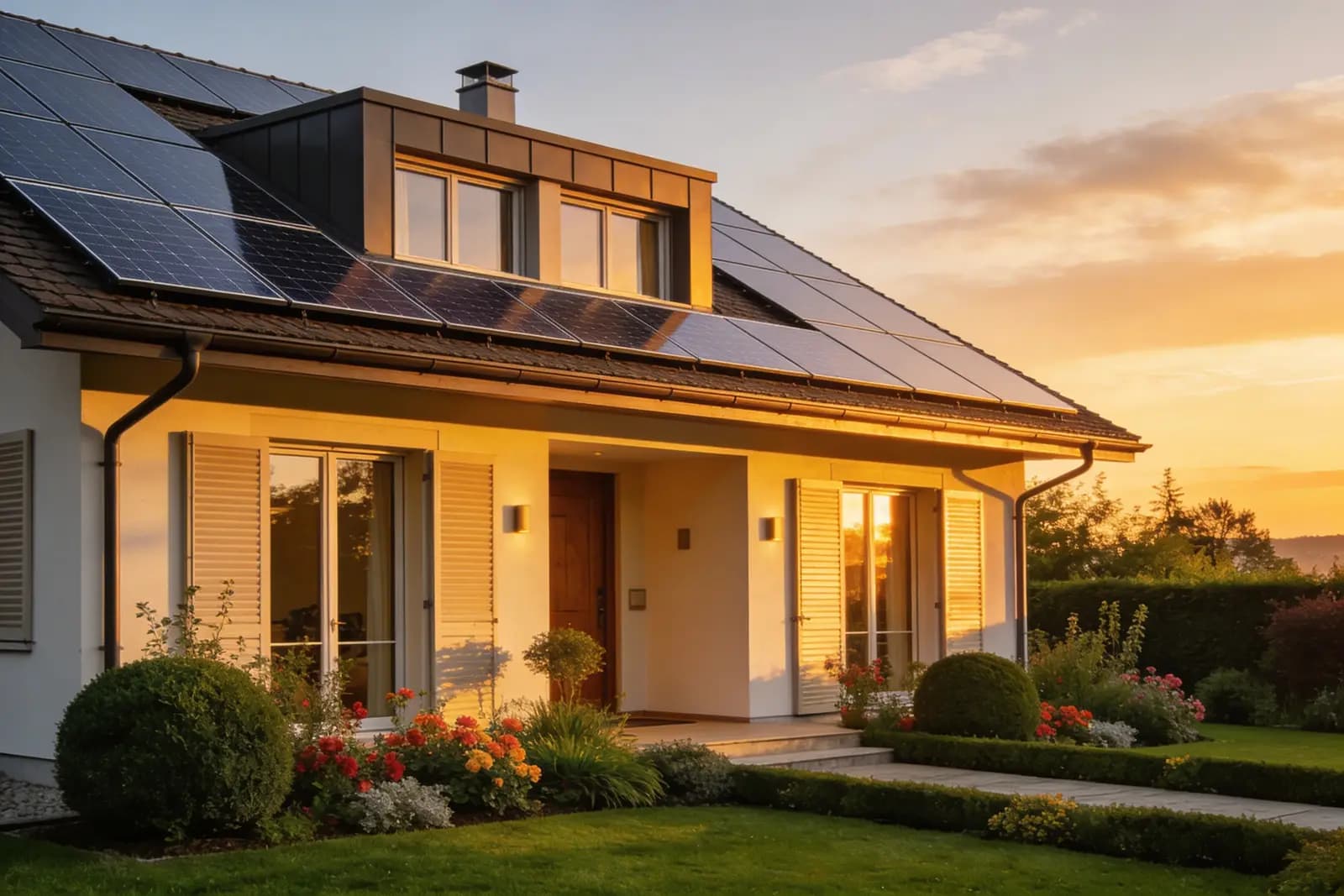
In a context where house buyers in Switzerland are mainly high-income households sensitive to sustainability and long-term costs, a visible and quality solar installation is increasingly perceived as a premium attribute rather than a technical constraint. French-speaking real estate agents report that the mention 'N-Type solar panels, battery included, 75% autonomy' in an advert generates significantly more qualified visits.
Our Recommendation
Do not think of solar as a comfort expense or an ecological gesture: it is a strategic renovation with a high financial return. The logic is that of a kitchen or bathroom renovation — except that the ROI is precisely measurable.
To maximize the impact on resale value, choose an aesthetic installation in full-black (completely black panels without silver frames), well integrated into the roof without visible cables, with a clean wall battery installed in the garage or cellar. The visual aspect counts: a careful installation adds value, a sloppy installation can, on the contrary, be off-putting.
Systematically document your installation: keep the original invoice, the commissioning report, the annual production statement and the Pronovo file. These documents are requested during real estate transactions and reassure buyers about the quality and compliance of the system.
Anticipate the energy assessment: ask a CECB/GEAK expert or your energy advisor which measures create the best effect before installing. In some cases, treating the roof insulation before solar improves both comfort, energy rating and perceived value.
Sources & Method
Analysis based on ElCom 2024–2026 data, OFEN (Federal Office of Energy), Pronovo SA, EPFL and HEG Geneva studies. The financial projections use the following assumptions unless otherwise stated: local purchase price, GRD injection price, production 1 100 kWh/kWp/year, self-consumption rate 35–40%. Actual results vary depending on canton, roof orientation and consumption profile. The site may also present its own services or calls for contact related to these subjects.
Next step
Compare several quotes, validate profitability with our tools and then check the contractual conditions adapted to your canton.
No obligation · Transparent data