
Privacy choice

Google, HubSpot and Reddit are activated after acceptance. Clarity, Meta and Tawk.to can load independently. Details: cookie policy.

Recommended starting point
Essential

Installation of solar panels (priority n°1)

The service expected first: technical study, sizing, connection, installation and commissioning in the correct administrative order.

See the cost and quote guide

How it's done

  • Pre-study of the roof (orientation, shading, useful surface area) using local data and a technical visit.
  • Sizing according to your annual consumption and your uses (heating, EV, heat pump).
  • Announcement of the installation to the network manager (DSO) and planning of the connection before commissioning.
  • Installation of modules, inverter and AC/DC protections by a qualified company.
  • Final inspection with safety report, then commissioning and production monitoring.

To be checked before signing

  • The quote specifies the production assumptions (kWh/kWp/year), not just the installed power.
  • The schedule explicitly integrates the GRD + final electrical inspection stages.
  • The Pronovo single payment request is prepared with the correct supporting documents after commissioning (small installations).
Services & Execution

Concrete solar solutions

The operational page for organizing a photovoltaic project in Switzerland: installation as a priority, then roofing, maintenance, storage and management.

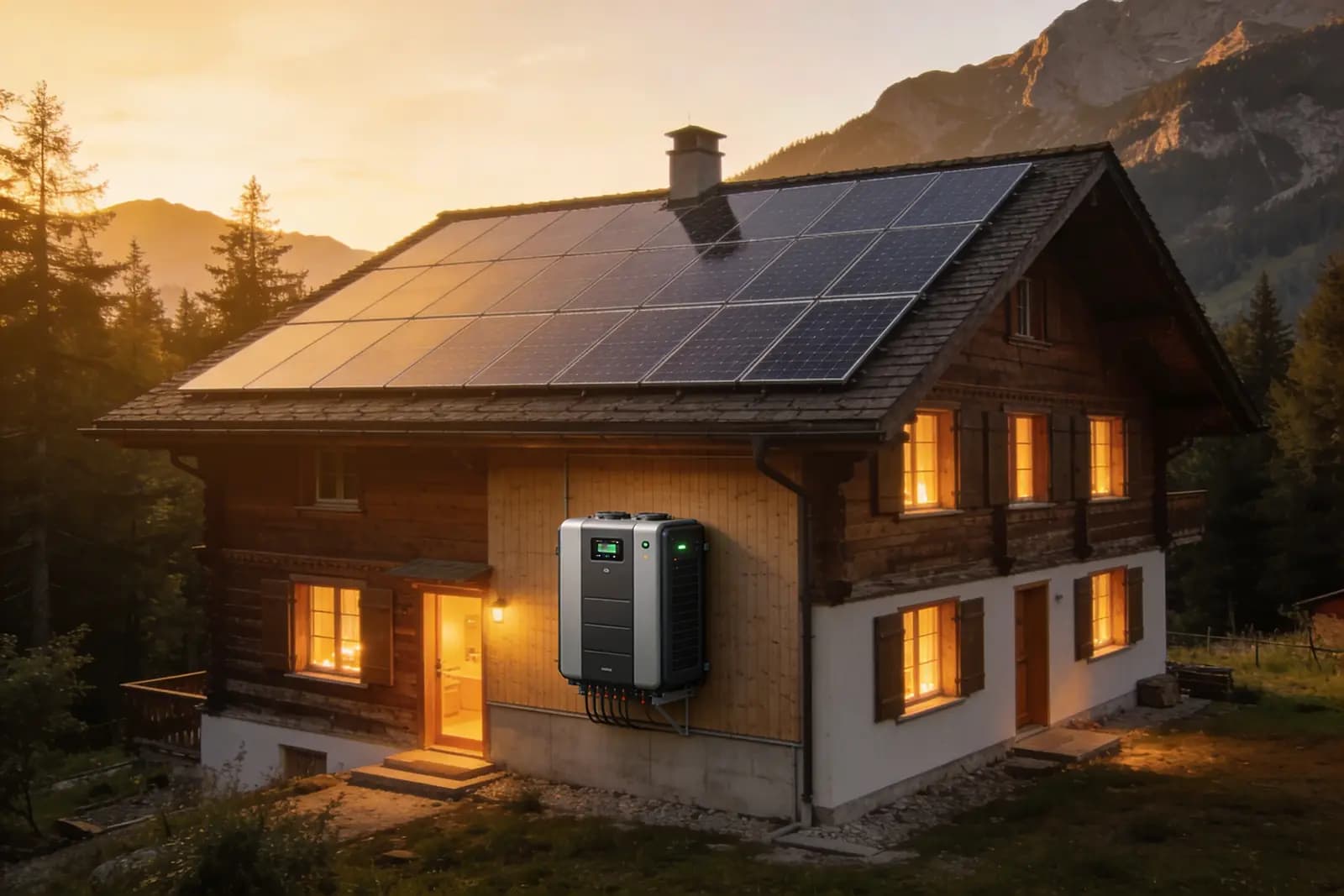
House equipped with photovoltaic panels in Switzerland

Median price 2026

27.7 cents/kWh

Priority #1

PV installation

Services listed

6

Sources

Officielles

Other key services
Roofing

Roof repair / renovation before solar

If the roof is tired, it is generally more rational to treat the roofing before or during the PV installation to avoid subsequent removal and re-installation.

How it's done

  • Diagnosis of the condition of the roof (watertightness, covering, framework, anchor points).
  • Arbitration between local repair and complete refurbishment depending on the remaining lifespan.
  • Roof + solar coordination on the same site to pool scaffolding and logistics.
  • Integration of fixings and technical passages with waterproofing treatment.

Checkpoints

  • Check in black and white which guarantees watertightness after intervention.
  • Avoid installing PV on a roof that will need to be redone in the short term.
  • Confirm allowable loads and anchoring zones before ordering material.
See the roof/warranty points
Maintenance

Cleaning and maintenance of panels

Cleaning is not systematic: it is mainly triggered in the event of real contamination or a drop in performance observed during monitoring.

How it's done

  • Implement production monitoring to detect abnormal deviation.
  • Carry out a periodic visual inspection (dirt, debris, connectors, fixings).
  • Plan cleaning only if necessary (heavy pollen, droppings, dust, low slope).
  • Use gentle methods compatible with modules (clean water, soft brush, without abrasives).

Checkpoints

  • Avoid risky interventions on roofs without suitable equipment/know-how.
  • Request a clear cleaning protocol so as not to damage glass, seals and frames.
  • Compare before/after on monitoring to validate the real effect of maintenance.
See the cleaning guide in Switzerland
Storage

Energy storage (residential battery)

Storage allows you to move part of the solar energy towards the evening/night and improve self-consumption according to your profile.

How it's done

  • Analyze the actual load curve of the home (day, evening, peaks).
  • Define the main objective: self-consumption, relief, or price arbitrage.
  • Size the battery and check inverter/EMS/protection compatibility.
  • Configure the charge-discharge strategy and validate the parameters during commissioning.

Checkpoints

  • Do not choose battery capacity without actual consumption data.
  • Check the useful capacity, the cycles/years warranty and the power limits.
  • Request a compared economic scenario: with battery vs without battery.
See the 2026 battery guide
Operation

Monitoring, inverter and troubleshooting

Good service includes performance monitoring, automatic alerts and rapid interventions in the event of an inverter or string fault.

How it's done

  • Configuration of production alerts and remote monitoring.
  • Periodic checks (performance, electrical safety, exposed components).
  • Targeted diagnosis then replacement of faulty parts (inverter, protections, connections).
  • Intervention report with corrective actions and post-repair monitoring.

Checkpoints

  • Require a contractual response time in the event of a blocking failure.
  • Plan who manages the manufacturer's warranty and associated labor.
  • Maintain production history and reports for long-term monitoring.
See the complete maintenance guide
Mobility

EV terminal controlled by solar surplus

The service consists of connecting the charging station to the PV system to favor surplus charging rather than the full network price.

How it's done

  • Choice of a communicating terminal compatible with the inverter/EMS.
  • Configuration of charging modes (single surplus, mixed, time schedule).
  • Commissioning with dynamic tests when solar production varies.
  • Adjustment of driving rules according to your mobility habits.

Checkpoints

  • Check terminal + inverter compatibility before purchase.
  • Ensure that the minimum charging power follows production variations.
  • Measure the share of charging actually covered by solar after 1-2 months.
See the EV solar charging guide
Detailed analyzes

Official sources used

This page summarizes practical steps (order of procedures, control, maintenance, operation) from public technical and institutional sources. Always check the requirements specific to your DSO and your canton before launch.

Move from information to action

Receive a personalised estimate, compare your options and prepare your solar project with a clear process.

Callback request