


String inverter vs hybrid inverter: what's the difference?
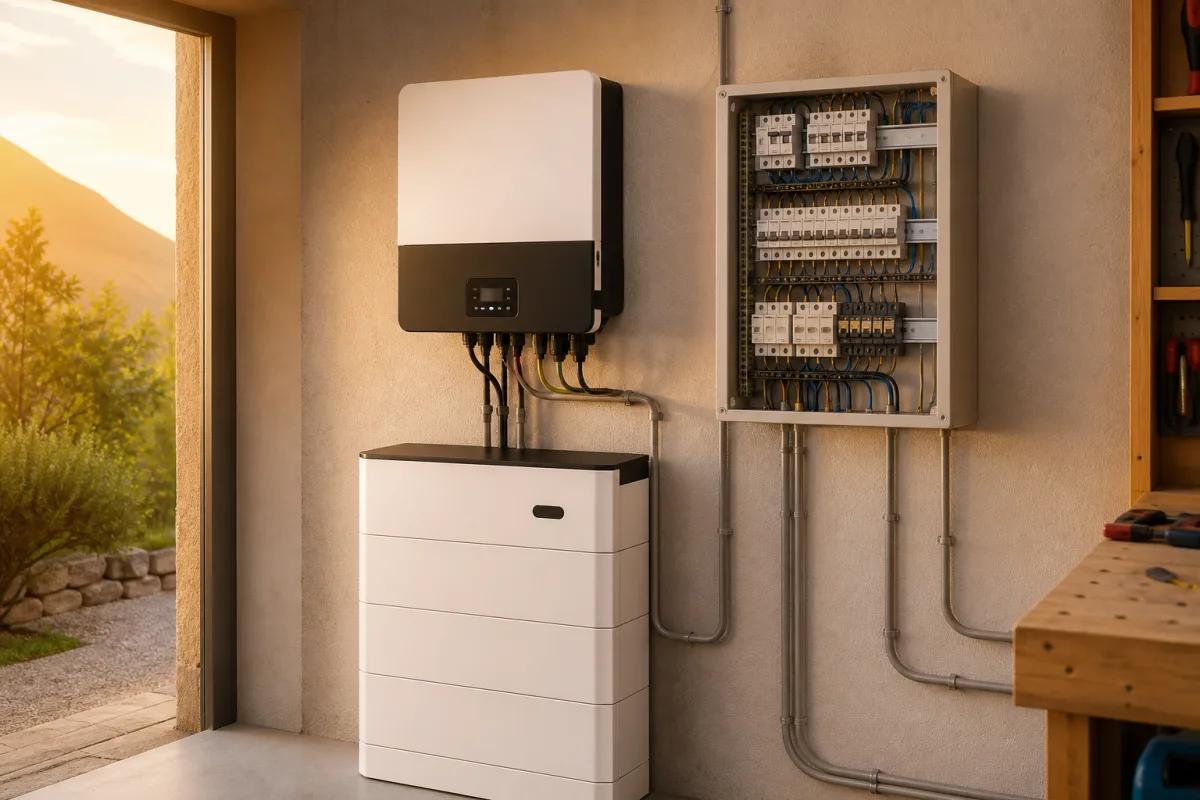
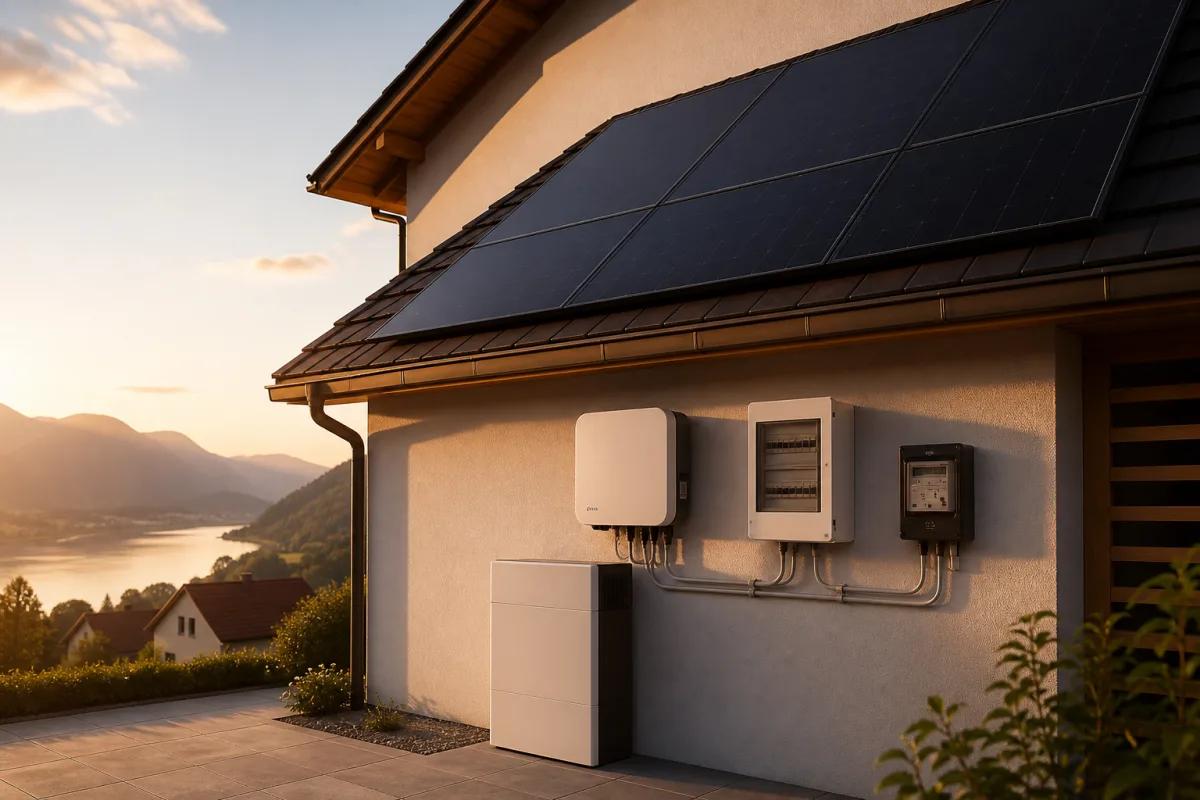
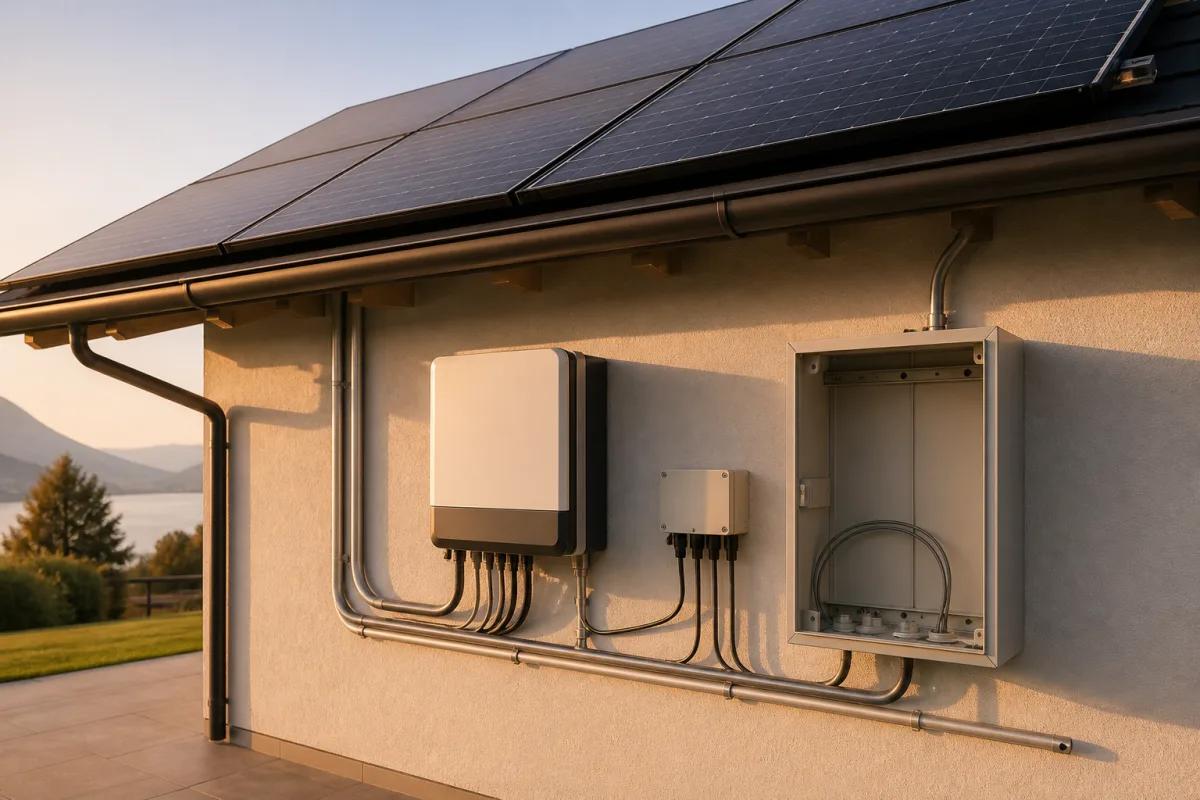
A classic string inverter converts the direct current (DC) produced by the panels into alternating current (AC) injected into the domestic network. It only manages one thing: DC→AC conversion. A hybrid inverter does the same conversion, but adds a DC-coupled charger — it can charge and discharge a DC battery without going through AC conversion, which improves storage efficiency (92–97% round-trip efficiency vs. 88–92% for an AC-coupled battery).
DC-coupled vs AC-coupled architecture
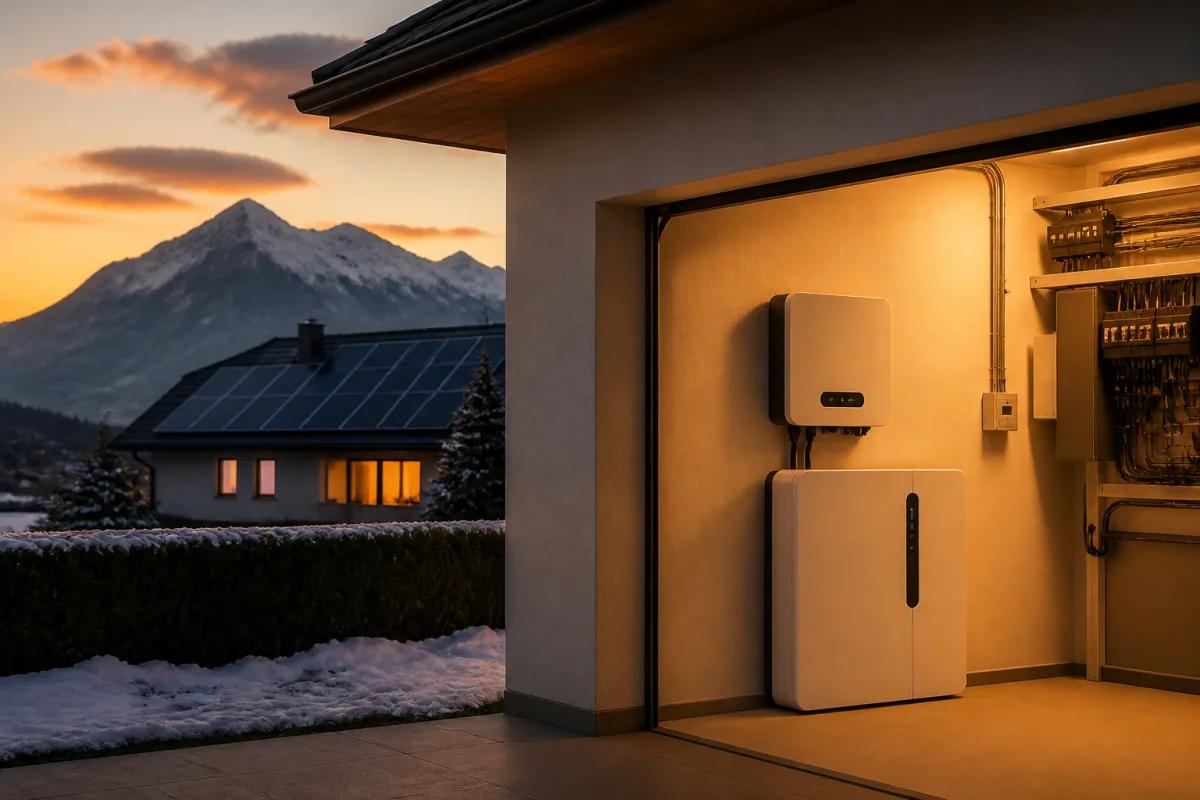
A hybrid inverter is always DC-coupled : the battery is connected to the direct current side, before conversion. Advantage: higher efficiency, possibility of charging the battery even without a network (off-grid mode with panel production). Alternative: a battery AC-coupled works with any existing string inverter, via a second converter integrated into the battery. Example: Enphase IQ Battery is AC-coupled — it plugs into the existing 230V home network.
Selection criteria for Switzerland
DC power: the inverter must accept the peak power of your panels. DC/AC oversizing of 1.2–1.3 is common (e.g. 10 kWp panels on an 8 kW AC hybrid inverter). Number of MPPTs: For multi-slope roofs or roofs with obstacles, 2–3 independent MPPT inputs allow each surface to be optimized separately. Battery compatibility: choose the certified inverter+battery pair — changing the battery afterwards may require an inverter replacement.
Models available in French-speaking Switzerland
Huawei SUN2000 (3–12 kW): very present in French-speaking Switzerland. Integrated EMS depending on configuration, FusionSolar app, LUNA2000 compatible. Price: CHF 1 600–2 800 depending on power. Fronius GEN24 Plus (3–10 kW): industrial standard with good after-sales service network, BYD HVS/HVM and Fronius Solar Battery compatible. Price: CHF 2 000–3 500. SMA Sunny Tripower Smart Energy: three-phase, suitable for large installations, SMA Home Storage compatible. Price: CHF 2 500–4 000. Goodwe ET Series: attractive quality/price ratio; check the certificates, GRD compatibility and local support on the proposed model. Price: CHF 1 200–2 000.
Installation and commissioning
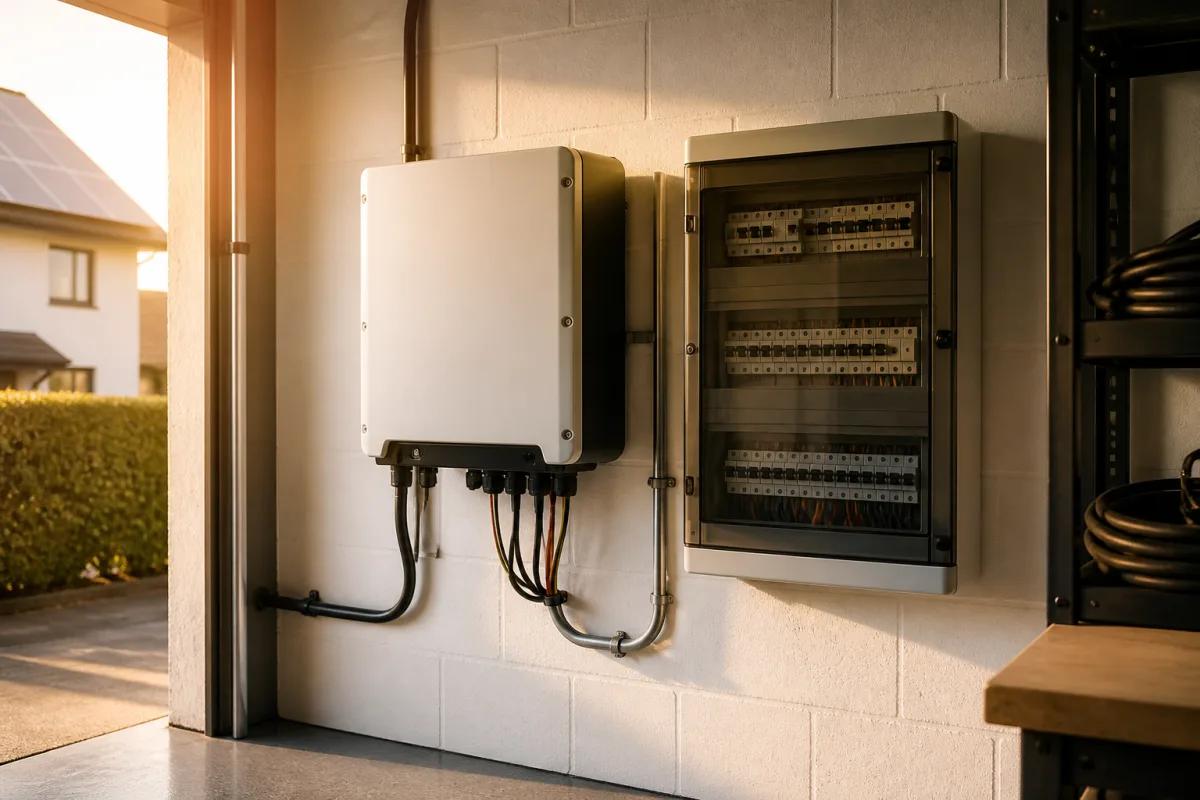
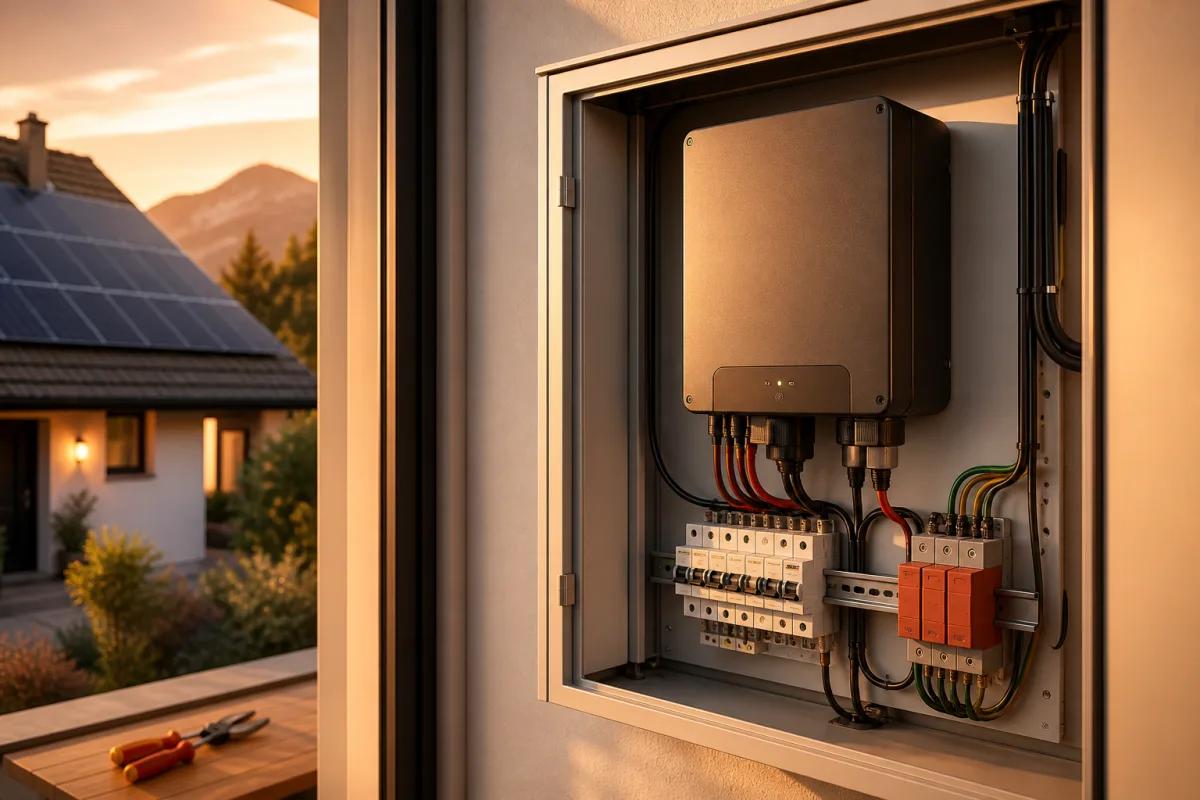
Installing a hybrid inverter requires an ESTI approved electrician. Points of vigilance: DC wiring sized for the short-circuit power of the panels, suitable DC cable section (generally 6 mm²), DC protection (fuses or DC circuit breaker), NIN compliant earthing. Commissioning involves configuring the NA-Schutz (regulatory network protection) and declaring it to the DSO before connection.
In-depth technical guide
A hybrid inverter is not just a regular inverter with a battery added. It coordinates several electrical flows, protections, consumption measurement and sometimes an emergency circuit. The quality of the result therefore depends on the diagram, the power limits and the commissioning as much as the manufacturer chosen. This section helps you read an offer without narrowing the decision down to one brand.
Understand flows before comparing boxes
The modules produce direct current. The inverter converts it into AC power for the home and the grid, while a battery can be charged or discharged according to another voltage and current limit. The measurement at the connection point indicates whether the house imports or exports. A hybrid system must interpret this information quickly enough to avoid unnecessary flows, respect protections and maintain network security. Request a single-line diagram that shows each flow, each protection and each metering point.
The rated power of the case is not always the power that the battery can charge, nor that which will be available as backup. The maximum current of the strings, the number of MPPTs, the starting voltage and the operating range can limit the installation even before the peak power of the panels is reached. A serious comparison starts with the roof and load profile, then selects an inverter that can keep up with these constraints.
- Ask for the continuous AC power, the overload power and the duration of this overload.
- Separately check the charging and discharging power of the battery.
- Show the meter, current transformers and the direction of measurement on the diagram.
Compatible battery does not mean equivalent battery
A battery may be electrically compatible without offering the same useful capacity, the same backup mode or the same warranty. Check the chemistry, voltage, management system, temperature limits, number of modules and expandability. Ask whether the advertised capacity is raw or usable and what reserve remains inaccessible to protect lifespan. The quote must also indicate the software that controls the load and the conditions necessary for its operation.
Future expansions are often presented as simple, while they may depend on the age of the modules, the firmware version or a compatibility window. If you are planning a battery in two or five years, ask for the current reference, the minimum extension power and the requalification procedure. If this information is not available, consider the extension as a business possibility and not a promise baked into today's price.
Rescue: a function to be defined, not a keyword
An inverter can continue to power certain circuits during an outage if an islanding function, sufficient battery, separate switchboard and safe disconnection from the grid are provided. This does not mean that the entire house will be powered. Heating, heat pump, terminal, oven and large machines may exceed the available power or require incompatible starting. Ask for the exact list of emergency circuits, their simultaneous power and the expected autonomy in a realistic scenario.
Switchover time and continuity for sensitive devices must also be documented. Some systems restart charging after a few seconds; others require manual intervention or management. The owner must know where the emergency panel is located, how the system behaves when the battery is empty and who intervenes after an alarm. This precision avoids selling general independence when the project only protects a few sockets and lighting.
Three-phase network, protection and compliance
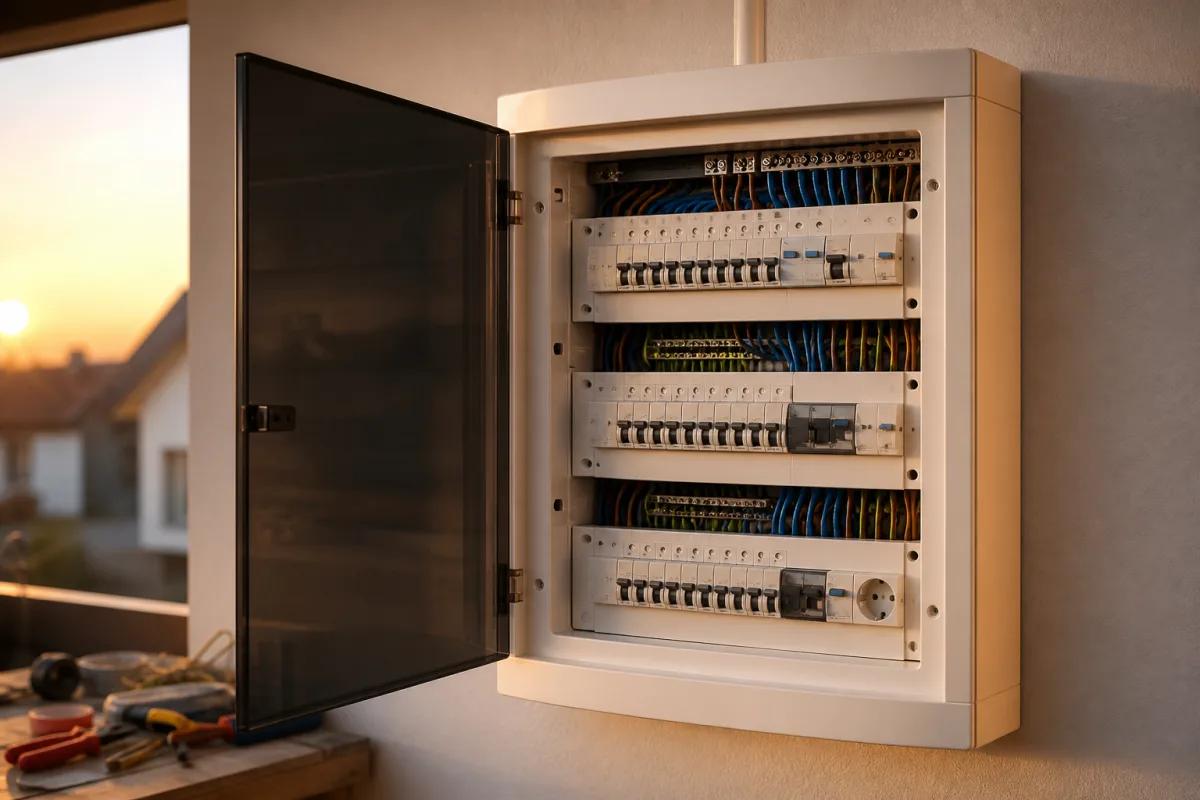
In a Swiss house, the inverter must be integrated into the existing panel and connection. The presence of a three-phase connection, a heat pump, a terminal or an old installation can modify the wiring strategy. The quote must identify overcurrent and overvoltage protection, earthing, sectioning, panel placement and commissioning tests. Electrical work and monitoring responsibilities must be entrusted to an authorized company as appropriate.
Don't validate an inverter based on the mobile app or its appearance alone. Request the conformity documents, the network setting used, the measured values and the commissioning report. If a backup solution is offered, specify how it separates from the public network and how it is tested. A well-documented architecture is easier to ensure, maintain and take over by another professional.
Replace an existing inverter
On an installation already in service, adding a battery can involve a replacement hybrid inverter, separate AC coupling or a specific solution from the manufacturer. Each option has losses, cabling cost and compatibility constraints. Identify the age of the current inverter, remaining warranties, string wattage, fault histories and available space. An offering that keeps the panels but replaces the core of the system must explain what happens to connectors, protections and existing monitoring.
Compare the renovation solution to a new installation on the same bases: total cost, production not available during the work, warranty, access to data and possibility of adding a terminal or a heat pump. The price of a single case never represents the cost of a replacement. Ask who disposes of the old equipment, who recycles it, and who updates the owner's drawings and records.
Management, data and after-sales service
A hybrid system can schedule charging based on solar production, rate, weather or backup reserve. These features are only useful if the measurement is correct and the owner understands the priorities. Ask if the algorithm favors self-consumption, reserve, price or battery life. Also check who can change settings, how data is exported and what remains accessible if the application or installer account changes.
The contract must distinguish between equipment warranty, installation warranty, remote intervention and on-site travel. A persistent alarm should not be sent to an application without a clearly named responsible person. Before final payment, submit the identifiers, diagram, essential parameters, wiring photos and test results. The receipt file is part of the value of the system, not an administrative formality.
Checklist to put in the quote
Request an offer which indicates the exact model of the inverter, the compatible battery, the DC and AC powers, the number of MPPTs, the protections, the emergency panel, the measurement, the compliance work, the commissioning and the guarantees. Add an operating scenario: sunny day, winter evening, full battery, empty battery and network failure. You will immediately see which assumptions are actually covered.
Finally, compare the hybrid system with an installation without a battery and with a solution ready to evolve. A battery does not create energy; it moves part of the production and adds a layer of material. The best inverter is the one that matches your roof, your loads, your connection and your objectives, with written limits and a local contact after installation.
Before choosing a brand, request the drawing, certified compatibility, emergency circuits, power limits and commissioning file. It is this documentation that makes the investment sustainably understandable.
Decision framework
A verifiable decision, not an isolated estimate
Before comparing solutions, clarify the project assumptions, their sources and dates, and the responsibilities involved. Use your bill, roof plan and written responses to check that each quote covers the same needs.
Start with a measurable question
Start your solar decision with building data. Record the address, building type, relevant area, energy use and desired result. When assessing the choice of a hybrid inverter and its integration into a solar installation, distinguish readings, written confirmations and assumptions. Compare gross and net amounts for the same scope; separate installed capacity from annual generation. Check grant conditions before deducting support from the budget. Prepare open questions for the installer, municipality, grid operator and insurer, identifying the record or measurement needed to answer each one.
Turn your bills into scenarios
Gather twelve months of bills if possible. Separate energy, network use, metering, taxes, levies and optional services. Include heating, hot water, EV charging and absences. An annual average can hide demand concentrated in mornings, evenings or winter. Compare conservative, central and favourable scenarios for an owner comparing DC-coupled and AC-coupled architecture. Keep units, scope and tariff dates consistent so that differences reflect the options being compared.
Check the roof and surroundings
Orientation, slope, chimneys, dormers, trees, antennas, snow, access, ventilation and neighbouring buildings affect solar generation. Ask for an aerial image, a dimensioned roof plan and a seasonal shading assessment. Have the roof covering, possible asbestos, structural capacity and cable routes assessed before committing to system capacity. A simulation for the choice of a hybrid inverter and its integration into a solar installation should explain losses, show monthly generation and account for roof renovation or expansion before installation.
Compare quotes for the same scope
Three quotes are comparable only when they cover the same scope. Ask for the brand and exact model of each module, inverter, battery, protective device and mounting system. List scaffolding, distribution-board upgrades, grid connection, metering, applications, monitoring, maintenance, VAT and options separately. A lower price may exclude a service; a higher price may include a structural assessment or broader service terms. Identify who coordinates with the DSO and provides commissioning documents.
Check warranties and responsibilities
Product, performance and installation warranties, and insurance, cover different matters. Check duration, exclusions, beneficiary, claims procedure, response times and service arrangements if a manufacturer changes distributor. Keep invoices, serial numbers, photos, certificates, diagrams and handover records. The owner should retain access to the file documenting the electrical diagram, power limits and written warranties, even if the installer or project manager changes. Identify who addresses sizing errors, water ingress, communication faults or substantial differences between simulated and measured generation.
Compare the full cost
Include purchase, installation, applications, maintenance, remaining grid purchases, inverter replacement, possible roof work and surplus revenue. For a battery, consider usable capacity, losses, cycles, backup reserve, temperature, software and replacement. For a contract, check subscriptions, price changes, credit validity and exit terms. For a grant, consider eligibility and payment timing. Test whether the decision remains affordable if feed-in tariffs fall, consumption changes or the project is delayed.
Prepare for commissioning and handover
Before work starts, request a list of tests and documents to be provided. These may include insulation measurements, protective-device checks, grid settings, backup settings, connector checks, circuit labels, monitoring access and meter readings. An app displaying data does not replace a complete technical handover. Ask for safe shutdown instructions, a service contact and the circuit diagram. A dated handover record supports warranty claims and comparisons between expected and measured generation, bills and consumption.
Plan for future electricity use
A heat pump, water heater, EV, home working, extension, tenant change or renovation can alter a home’s electricity use. Include planned changes in the simulation. Check whether the inverter, distribution board, communications, available space and grid connection allow realistic expansion. An open system can be more useful than a larger system with limited compatibility. For an owner comparing DC-coupled and AC-coupled architecture, assess how to avoid a second costly installation when needs change.
Keep the evidence organised
Keep annotated bills, plans, simulations, compared quotes, grant conditions, official applications, before-and-after photos, certificates, warranties and generation records in one file. Date each item because tariffs and programmes change. An undated screenshot cannot establish a contractual condition. Record the amount stated, the condition that applied and the person responsible. These records support budget checks, a future sale and discussions with the DSO, insurer or authorities.
Check the quote before signing
Before signing, check the description, address, owner, capacity, models, generation estimate, exclusions, prices, VAT, grants, schedule, handover, warranties and termination. Gather the relevant records: the electrical diagram, power limits and written warranties. Request written answers to unclear points and identify who will resolve them. Keep the final quote, data sheets and contract terms together. A promised saving or equipment brand cannot replace the scope of work, calculation assumptions and service arrangements.
Use this section with your invoice, roof plan and quotes. The final decision must remain linked to the official conditions, the actual connection and the written contract.