
A project on pasture is only defensible if agricultural production, animal safety, access and authorization remain demonstrable. Check the site data and official sources before signing.
Decision to make
A project on pasture is only defensible if agricultural production, animal safety, access and authorization remain demonstrable. Adapt this decision to the building, your actual consumption and the project schedule.
For this project, start by identifying the grid operator, applicable tariff and site constraints. The quotation must specify the conditions affecting connection, metering or the value of surplus electricity.
Practical effects of the project
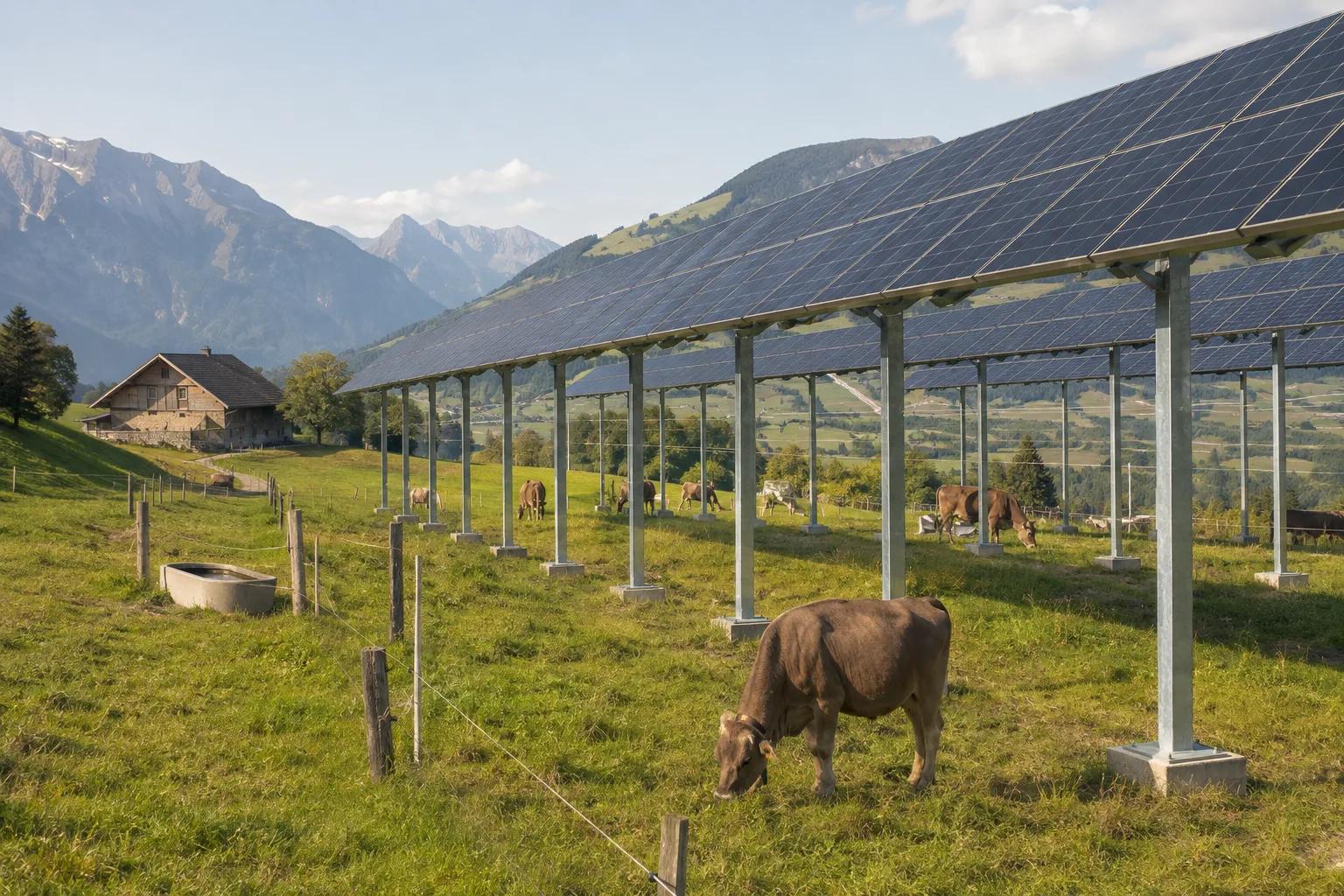
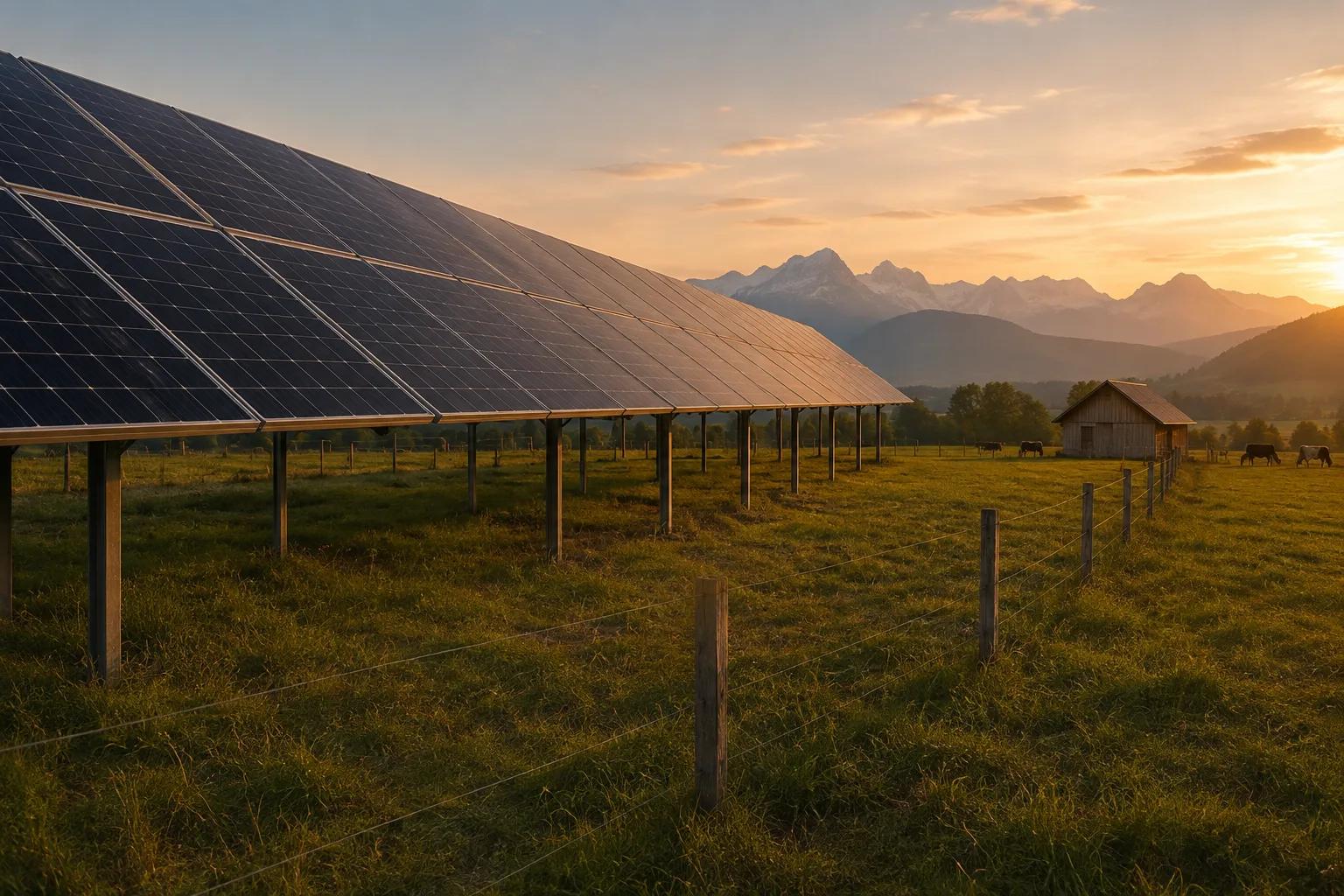
- Agrivoltaism is not a simple ground-based power plant: it is necessary to demonstrate maintained agricultural use and an advantage for the operation, with an authorization adapted to the land.
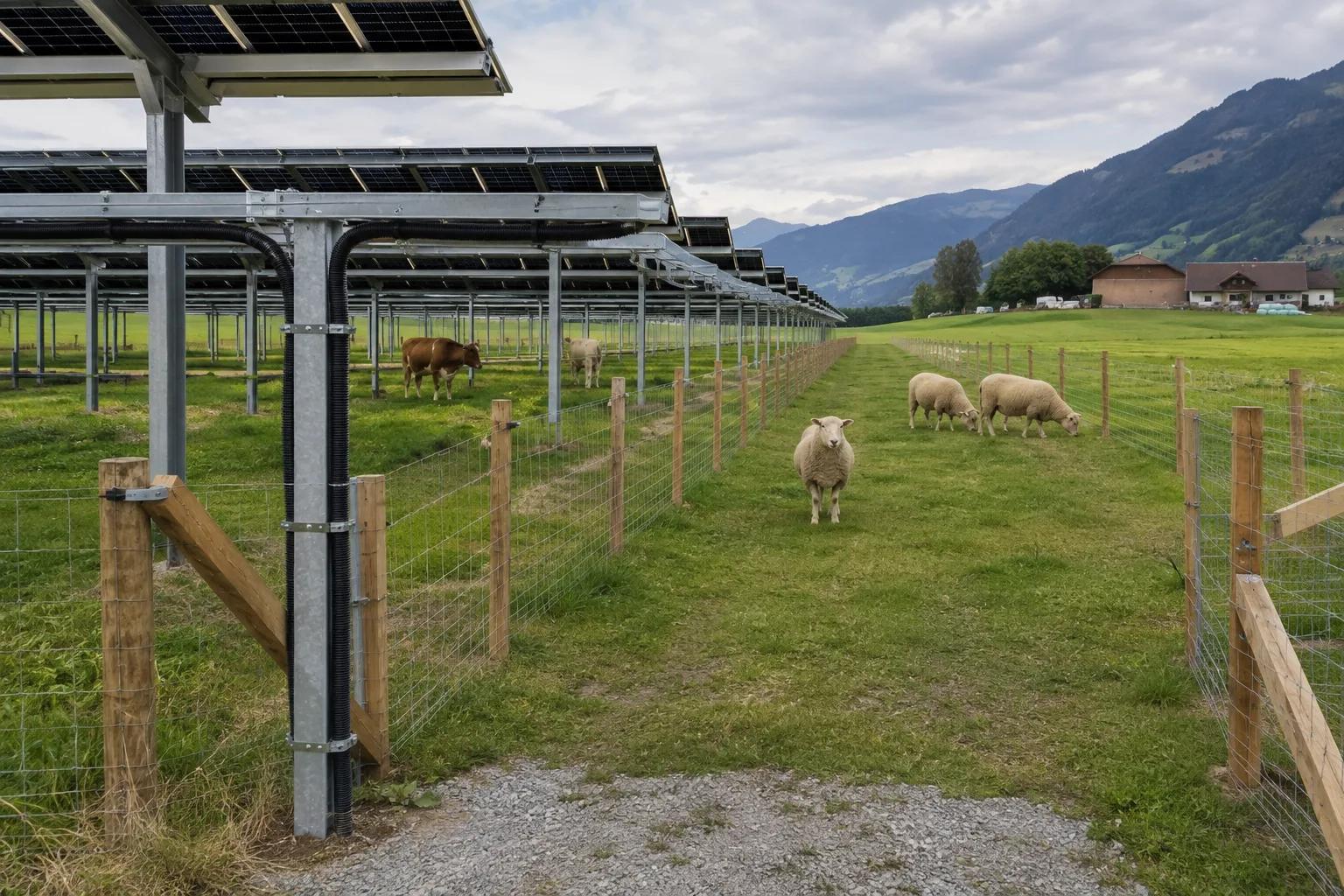
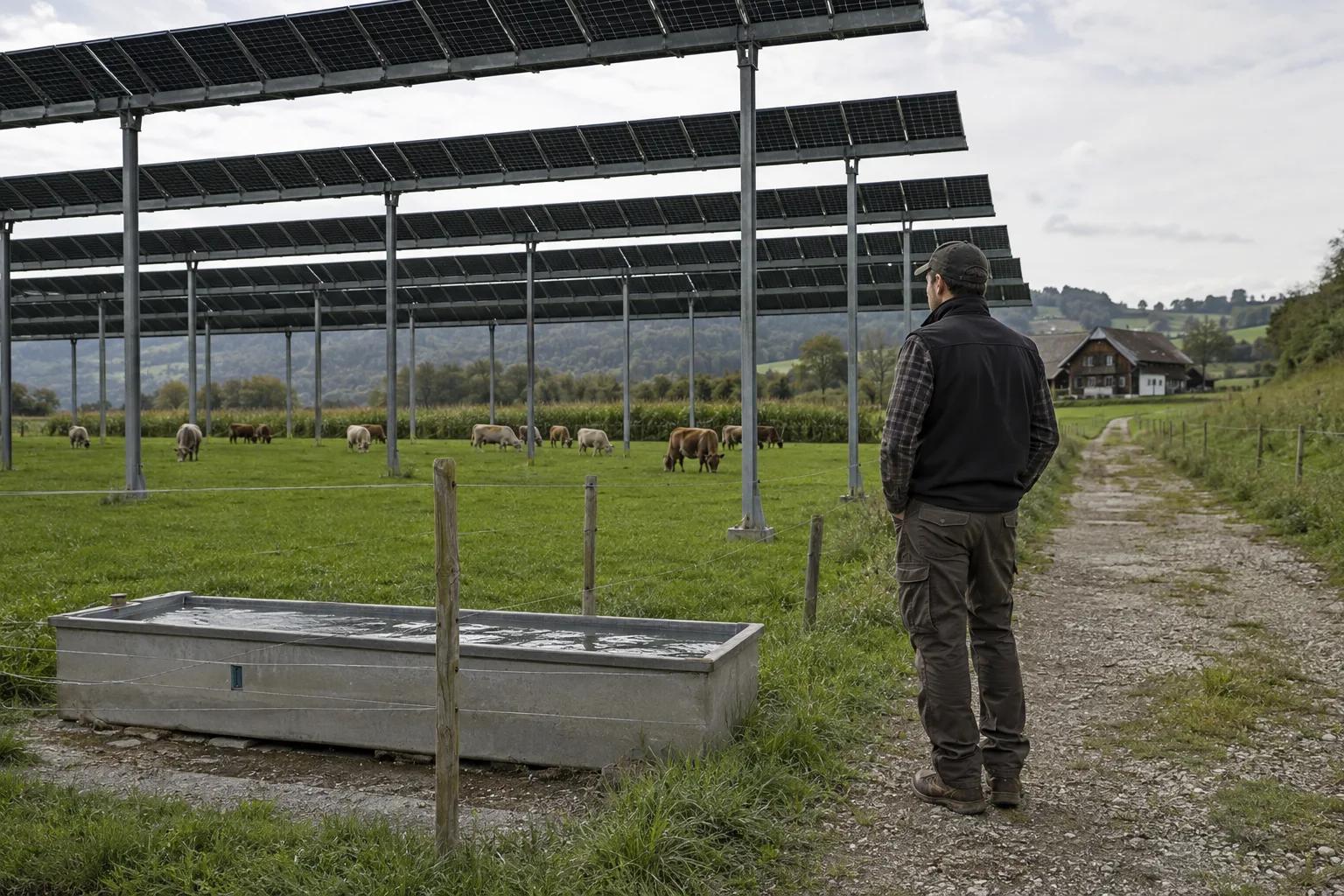
- On a pasture, height, row spacing, shade, water, fencing and access should match the type of livestock and grazing schedule.
- Cables, edges, posts, foundations and protection devices must be designed to avoid injuries, entanglements and damage by animals.
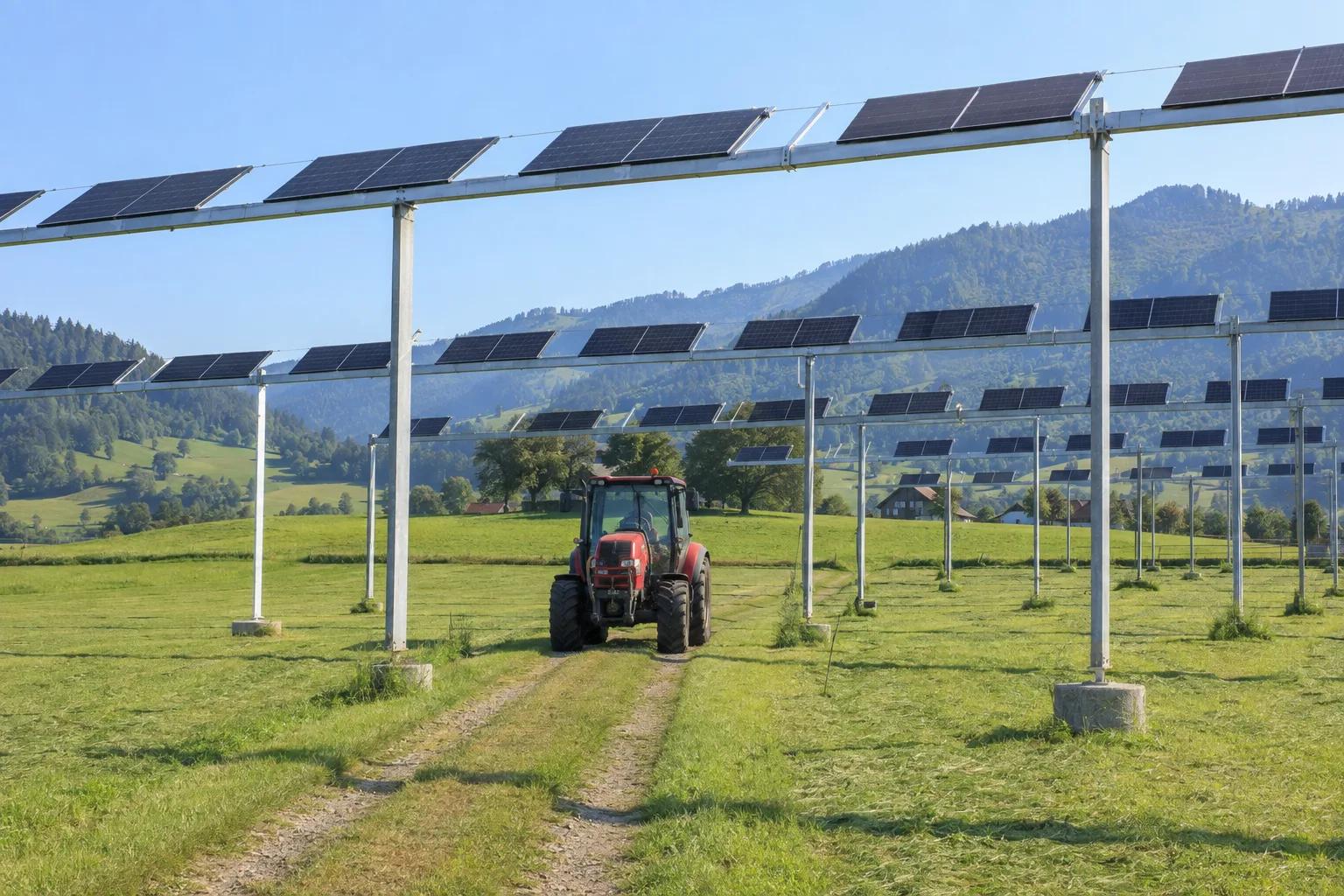
- Agricultural equipment requires precise dimensions and maneuvering radii; a row that appears clear from a plan can block mowing, feeding or intervention.
- Profitability must integrate network, earthworks, maintenance, insurance, rehabilitation and the cost of agricultural organization, not just the kWh produced.
These points help assess the topic ‘ Agrivoltaism on Swiss pastures: protecting livestock while producing electricity ’ without turning a national average into a local promise. Every decisive figure needs its source, date and scope.
Specific controls
- Have an agricultural concept drawn up with use of the areas, measurable benefit, calendar, livestock concerned and maintenance of access.
- Identify canton, municipality, zone, nature and landscape protection, water, soil and possible compensation requirements before the detailed study.
- Have animal safety validated: fences, cables, angles, shade, water, lightning, snow, wind and emergency evacuation.
- Draw tractor paths, machine passages, storage, maintenance and emergency access.
- Separate into contracts land law, investment, agricultural exploitation, sale of electricity, insurance, maintenance and restoration.
The answers should appear in the quote or in a dated appendix. A verbal explanation is insufficient if it changes the price, expected output, financial support or a contractual obligation.
Compare quotes
- Tariffs: state the purchase price, surplus remuneration and fixed charges applicable to the site, with their source and date.
- Production: provide a monthly estimate with orientation, shading, losses and weather assumptions.
- Investment: separate material, installation, safety, scaffolding, connection, procedures and options.
- Aids: distinguish confirmed amount, estimate and deposit liability.
- Contract: specify guarantees, calendar, deposit, exclusions, maintenance and after-sales service.
A project on pasture is only defensible if agricultural production, animal safety, access and authorization remain demonstrable. In the comparison table, keep one column for the stated value, one for the evidence provided, and one for the effect of a less favorable hypothesis.
Cautious scenario
Test the project with slightly lower production, an unconfirmed grant and less favourable surplus remuneration. This scenario shows whether the decision remains sound based on self-consumption, roof quality and a controlled installed cost.
The main references used are SFOE - photovoltaic support and agricultural use: agri-PV, SFOE - support for photovoltaic installations, Confederation - Sonnendach / solar potential of roofs, Energiefranken - Search for energy aid by municipality. They frame the method, but the local amounts and contractual conditions must be rechecked at the time the offer is signed.
Risks to be managed
Profitability must integrate network, earthworks, maintenance, insurance, rehabilitation and the cost of agricultural organization, not just the kWh produced. Ask who assumes this risk, what proof will be provided and how a change is handled after ordering.
A more expensive solution should meet a specific need in your project. Ask for a documented benefit and a separate price for each option.
Next step
Gather the address, annual consumption, future electricity uses and building documents. Then check the grid operator's conditions, available grants and site constraints; request quotations covering the same scope.
A project on pasture is only defensible if agricultural production, animal safety, access and authorization remain demonstrable. You can then decide with a documented net price, clear responsibilities and assumptions that each company can explain line by line.
Start with the farm
An agrivoltaic project on pasture must be presented first as an agricultural project with complementary electricity production. Describe the type of animals, grazing periods, mowing or feeding, resting areas, water and access. Only then draw the rows of modules and the connection. This method avoids asking operations to adapt to an already frozen plant.
Swiss rules for agricultural areas, installations outside building zones and energy projects are evolving. A foreign study or a promise from a developer does not replace verification with the canton, the municipality and the competent services. The benefit for agriculture must be able to be explained with site data, not just with the word dual use.
Livestock and staff safety
Animals explore, rub, bite and can move quickly when the weather changes. Posts, anchors, cables, angles, fences and enclosures must be positioned to limit injuries and entanglements. Protection against lightning, wind, snow and shock must be considered with passages and shelters, then checked before the arrival of the livestock.
The project must also provide for human intervention: opening of fences, evacuation of an animal, access by a veterinarian, maintenance of modules and work after a storm. A barrier that protects a cable but blocks drainage is not a complete solution. Ask for a traffic plan separating animals, people and machinery.
Machines, shadow and water
A pasture can be mowed, harrowed, fenced or crossed by a tractor. Clearance height and row spacing must correspond to the machines actually used, with their width and turning radius. Indicate areas where a crane, truck or aerial platform will need to access, as maintenance without a passable path becomes very expensive.
Shadow and water can also be read on the scale of the plot. Modules can modify rain distribution, drying or growth; these effects must be observed for the chosen operating system. Do not promise immeasurable agronomic improvement. Instead, define indicators: usable area, number of grazing days, access to water and agricultural results.
Permits, network and economic model
The file must distinguish between zone, soil protection, landscape, biodiversity, water, construction, connection and agricultural exploitation. The foundations and the trench can be more decisive than the price of the modules. Confirm who pays for the network study, who makes the request, who gets the insurance and what happens if permission is not granted.
For profitability, compare production, farm self-consumption, recovery price, maintenance costs, access, insurance, monitoring and restoration. A project that exports all its energy to a remote network does not have the same profile as a farm that uses electricity for milking, ventilation, cooling or pumping. The model should show these cases without counting the same kWh twice.
Contracts and return to initial state
If the operator, land owner, investor and electricity buyer are different, their obligations must be written. Set duration, access, cost sharing, crop loss, animal damage, maintenance, insurance, change of operator and exit from the project. Dismantling should not be left to a company that may no longer exist at the end of the contract.
The good project is one that remains useful even if production is lower or authorizations take time. Start by proving agricultural use, protect animals and daily work, then compare kWh and costs. This discipline makes agrivoltaism credible without presenting it as an automatic solution for each pasture.
Points to check
- Tariffs: Compare the tariff for your address with the Swiss ElCom median for 2026, keeping local prices separate from the national benchmark.
- Grants: Check the programme, eligibility, documents and deadlines with Pronovo, the canton or municipality. Include only confirmed contributions in your budget.
- Roof potential: Sonnendach is presented as a public pre-diagnosis, to be validated by a technical visit.
- ROI: the method separates self-consumption, injection, installed price, taxation and payment schedule.
- Agrivoltaism is not a simple ground-based power plant: it is necessary to demonstrate maintained agricultural use and an advantage for the operation, with an authorization adapted to the land.
- On a pasture, height, row spacing, shade, water, fencing and access should match the type of livestock and grazing schedule.