
Assess a solar carport through its structure, connection, charging, shading and vehicle use, rather than its maximum panel count. Check the site data and official sources before signing.
Decision to make
Assess a solar carport through its structure, connection, charging, shading and vehicle use, rather than its maximum panel count. Adapt this decision to the building, your actual consumption and the project schedule.
For this project, start by identifying the grid operator, applicable tariff and site constraints. The quotation must specify the conditions affecting connection, metering or the value of surplus electricity.
Practical effects of the project
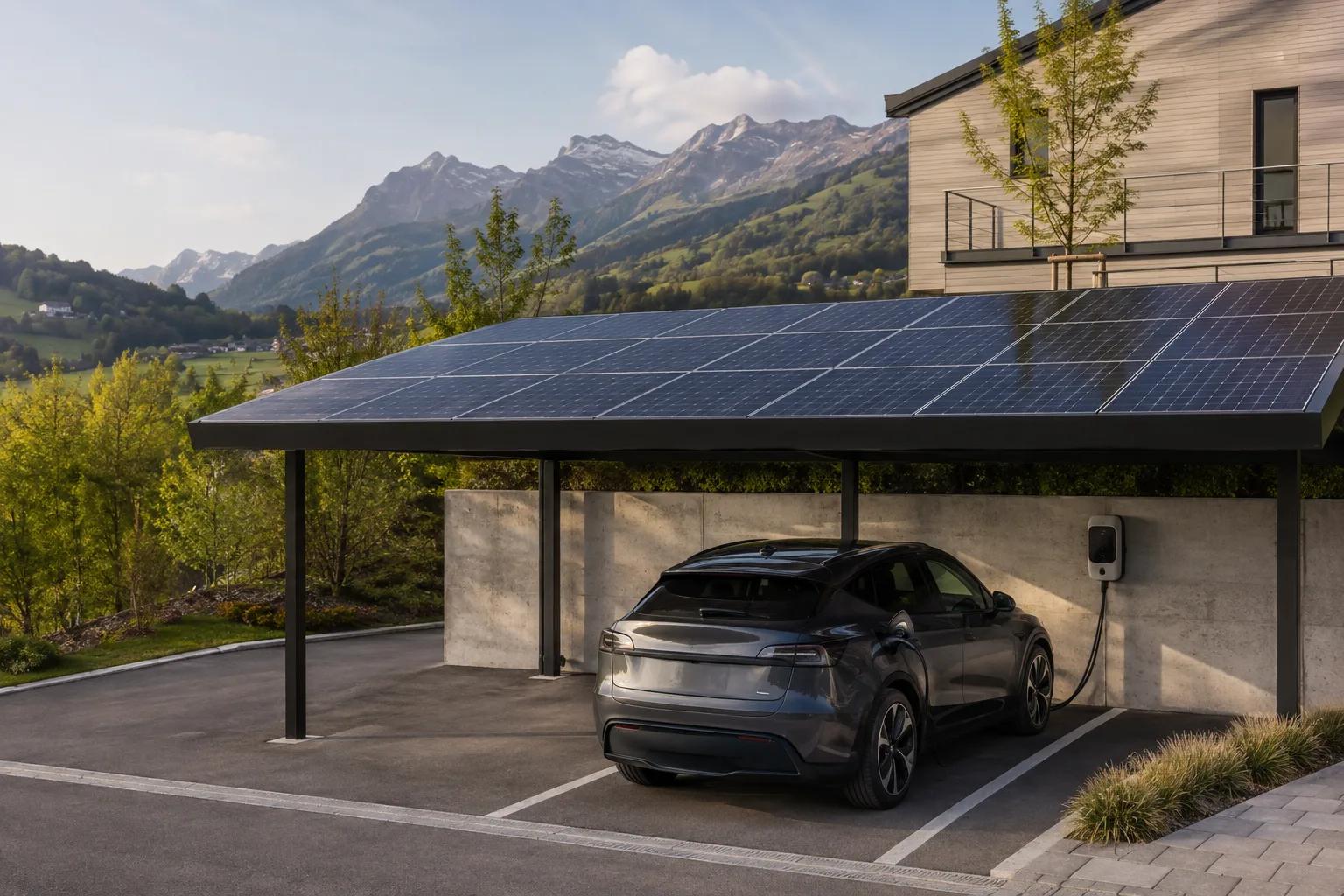
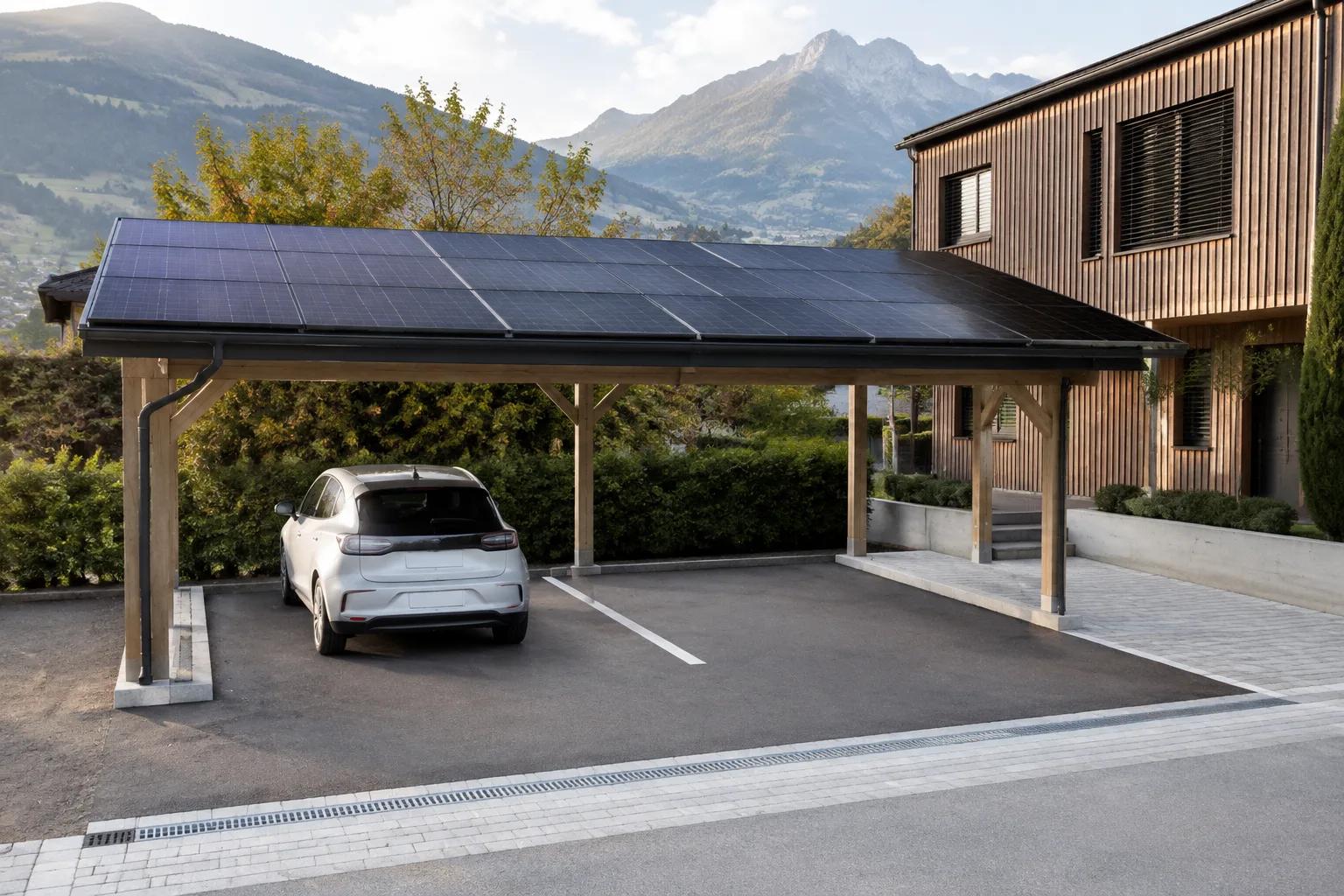
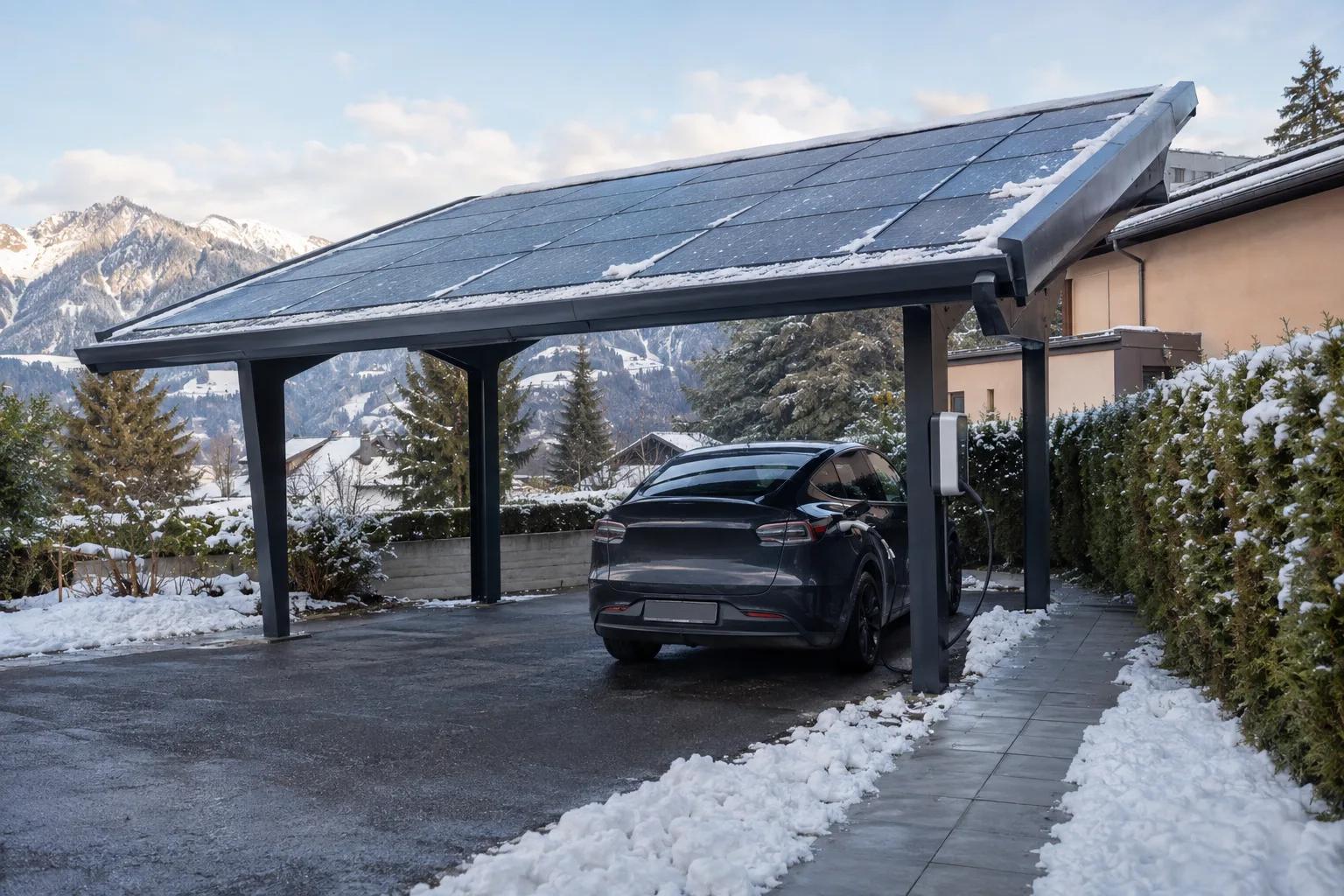
- A solar carport is a small, complete construction: foundations, drainage, wind and snow resistance, vehicle access, protection against impacts and possible municipal procedure.
- The value of electricity depends on the presence of the vehicle when the sun is producing. A car that is absent during the day may need steering or another self-consumption strategy.
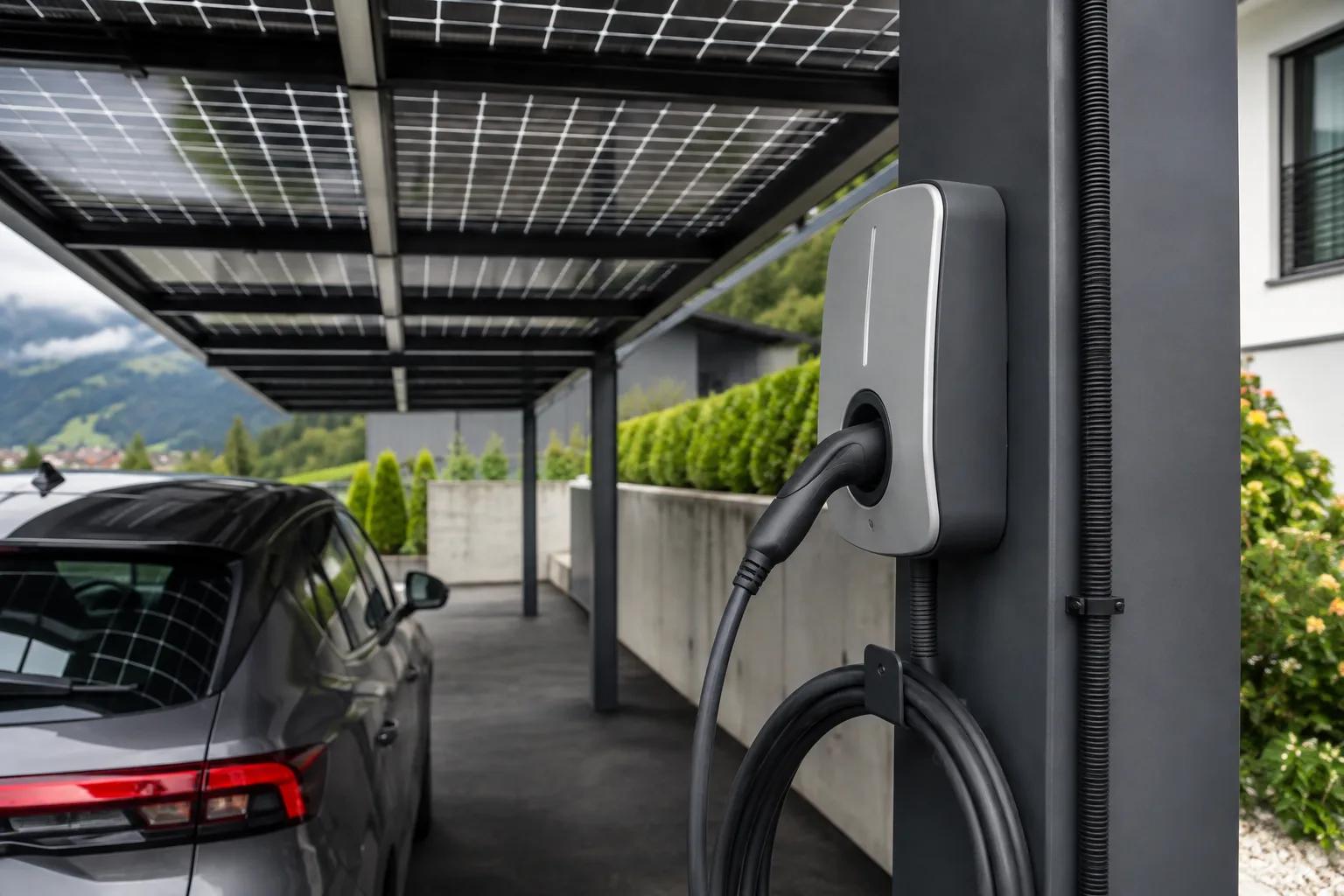
- The power of the terminal should not be chosen without checking the connection, protection and other loads of the building; dynamic management can avoid unnecessary reinforcement, but must be dimensioned.
- In a PPE or in a shared parking lot, spaces, cables, meter, costs and usage rights must be allocated before comparing solar production.
- The winter scenario should include lower production, snow and ice, lighting, cable security and normal reliance on the grid when the car has to leave.
These points help assess the topic ‘ Solar carport and electric car charging in Switzerland: size without overpaying ’ without turning a national average into a local promise. Every decisive figure needs its source, date and scope.
Specific controls
- Ask for plans for foundations, parking, drainage, snow and wind loads, and maintenance responsibilities.
- Simulate your parking schedule, kilometers, charging hours and self-consumption rate without promising that everything will be charged under the sun.
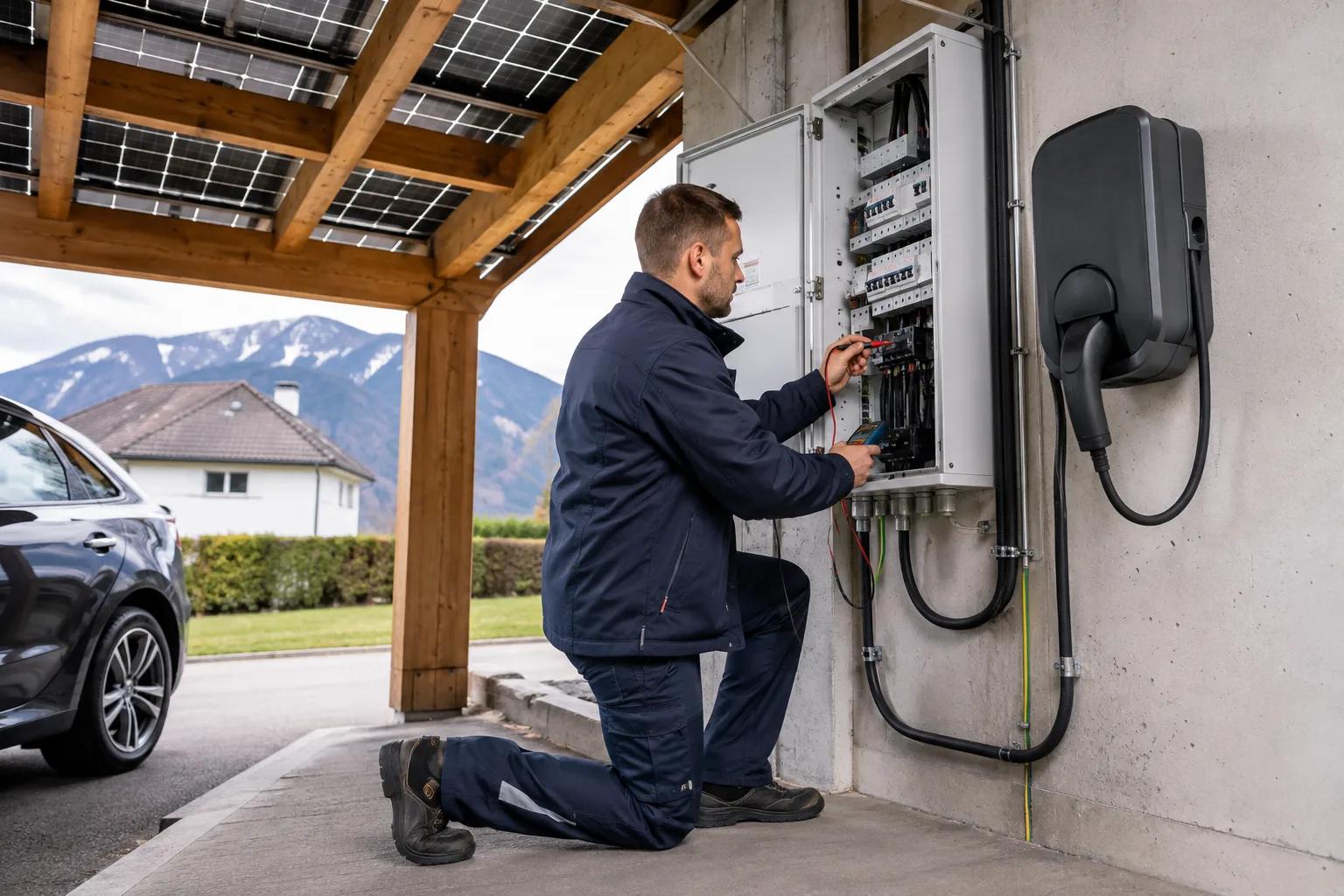
- Request an electrical diagram with terminal, protections, available power, load shedding or dynamic management and cable to the panel.
- Check the building authorization, the rights to the place and the distribution of work if the carport belongs to several owners.
- Compare separately structure, modules, terminal, trench, connection, meter, commissioning, software and after-sales service.
The answers should appear in the quote or in a dated appendix. A verbal explanation is insufficient if it changes the price, expected output, financial support or a contractual obligation.
Compare quotes
- Tariffs: state the purchase price, surplus remuneration and fixed charges applicable to the site, with their source and date.
- Production: provide a monthly estimate with orientation, shading, losses and weather assumptions.
- Investment: separate material, installation, safety, scaffolding, connection, procedures and options.
- Aids: distinguish confirmed amount, estimate and deposit liability.
- Contract: specify guarantees, calendar, deposit, exclusions, maintenance and after-sales service.
Assess a solar carport through its structure, connection, charging, shading and vehicle use, rather than its maximum panel count. In the comparison table, keep one column for the stated value, one for the evidence provided, and one for the effect of a less favorable hypothesis.
Cautious scenario
Test the project with slightly lower production, an unconfirmed grant and less favourable surplus remuneration. This scenario shows whether the decision remains sound based on self-consumption, roof quality and a controlled installed cost.
The main references used are SwissEnergy/SFOE - photovoltaics on car park canopies, OFEN/BFE - Connection conditions and remuneration 2026, SFOE - permits and low-voltage installations, ElCom - Slight drop in electricity prices in 2026. They frame the method, but the local amounts and contractual conditions must be rechecked at the time the offer is signed.
Risks to be managed
The winter scenario should include lower production, snow and ice, lighting, cable security and normal reliance on the grid when the car has to leave. Ask who assumes this risk, what proof will be provided and how a change is handled after ordering.
A more expensive solution should meet a specific need in your project. Ask for a documented benefit and a separate price for each option.
Next step
Gather the address, annual consumption, future electricity uses and building documents. Then check the grid operator's conditions, available grants and site constraints; request quotations covering the same scope.
Assess a solar carport through its structure, connection, charging, shading and vehicle use, rather than its maximum panel count. You can then decide with a documented net price, clear responsibilities and assumptions that each company can explain line by line.
Compare a carport to an existing roof
A carport can create new solar surface area while protecting the car, but it adds a complete structure to the budget. Compare it with installation on the roof of the house while keeping the same electrical requirement and the same price of electricity. The carport must be enhanced by several functions: production, shelter, parking space, recharging and possibly preparation of a second space.
The first visit should note possible foundations, property lines, vehicle access, door openings, height, slope, drainage and shaded areas. A structure that maximizes modules but requires moving a pipe, cutting a tree or eliminating a maneuver is not automatically a good deal.
Size with actual vehicle
Note the days the car is present, the kilometers, the usual return time, early departures and the amount of energy you want to recharge. Solar production occurs mainly during the day; if the car is away, the electricity can power the house or be injected, but it does not magically end up in the vehicle's battery.
Compare a slow terminal, a more powerful terminal and a terminal driven by the surplus, without confusing maximum power and actually charged energy. A management system can start the load when the surplus appears, reduce it when another load starts and return to the network when the departure takes priority. The value is in this logic, not in an isolated power figure.
Check connection and charging
The electrical diagram must show the cable from the carport to the panel, the protections, the terminal, the inverter, the meter and the load management. Ask if the power available at the address allows for the option chosen and what happens when the heat pump, furnace or water heater are running at the same time. Dynamic management can prevent a subscription or connection increase, but only if it is properly tuned and tested.
The trench and the cable are often underestimated. Their length, ground, crossings, water drainage, mechanical protections and future access must be quantified. For a carport far from the house, the fixed cost of the connection can reduce the interest of a surface that is nevertheless well oriented.
Shared parking, permits and responsibilities
In a PPE or in a common parking lot, the space is not just a physical location. The right to use the terminal, the meter, the roof of the carport, the maintenance, the repair costs and the injected production must be allocated. A co-ownership decision or written agreement may be necessary before ordering; do not allow the structure to be installed before you have adjusted the usage.
The construction procedure depends on the municipality, canton and parking location. Ask what document is required, who files it and what happens if the authority changes the height or distances. Any traffic, neighborhood, fire protection and water flow constraints must be identified in the schedule.
Compare the full quote
Require separate lines for foundation, structure, modules, inverter, terminal, cables, trench, protections, meter, connection, software, permits, commissioning and maintenance. Also check the guarantees of the structure, the covering, the terminal and the tightness of the connections. The price per kWp is not enough to compare an existing roof with a carport.
Finally, test a winter scenario and a car-missing scenario during the day. If the decision remains interesting because the carport protects the vehicle and serves the building's loads, it is a clear choice. If it only works under the assumption that every kWh will be charged directly into the car, the offer should be reviewed before signing.
Points to check
- Tariffs: Compare the tariff for your address with the Swiss ElCom median for 2026, keeping local prices separate from the national benchmark.
- Grants: Check the programme, eligibility, documents and deadlines with Pronovo, the canton or municipality. Include only confirmed contributions in your budget.
- Roof potential: Sonnendach is presented as a public pre-diagnosis, to be validated by a technical visit.
- ROI: the method separates self-consumption, injection, installed price, taxation and payment schedule.
- A solar carport is a small, complete construction: foundations, drainage, wind and snow resistance, vehicle access, protection against impacts and possible municipal procedure.
- The value of electricity depends on the presence of the vehicle when the sun is producing. A car that is absent during the day may need steering or another self-consumption strategy.