
The research increase in electricity prices Switzerland and solar energy Switzerland express very concrete concern. Owners see their bill change, sometimes significantly, sometimes with lines that are difficult to understand. They wonder if solar panels are a real thing answer or just one more expense. The honest answer is nuanced: solar power does not eliminate the network, but it can permanently reduce your exposure to network prices if the project is well dimensions.
1. Why the price of electricity changes solar calculation
Solar profitability depends on the value of the kWh produced. One kWh consumed directly in the house is worth the full price of the kWh you are not purchasing. If this price increases, each self-consumed kWh becomes more precious. Conversely, a kWh injected into the network is remunerated according to a recovery rate which can be well lower and which varies depending on the network manager. This is the heart of calculation: producing a lot is useful, but consuming intelligently is often more profitable.
Volatility matters as much as level. Even if certain prices drop occasionally after a period increase, no one can guarantee the price of electricity over twenty-five years. A solar installation transforms part of your energy cost into an initial investment. You pay for a system, then you produce part of your kWh at a more predictable cost. This is not complete assurance, but it is risk reduction.
2. Read your bill before talking about solar
Before requesting a quote, read your invoice like an investor. The annual consumption in kWh gives the volume to be processed. The full kWh rate indicates the potential value of self-consumption. Fees fixed shows what will remain even with panels. Taxes, the grid and energy explain why two neighboring municipalities may have different bills. If you have a heat pump, a terminal recharging or an electric boiler, identify the uses which can be postponed during the day.
| Invoice line | Impact on solar |
|---|---|
| Energy | Share avoided by each self-consumed kWh. |
| Network | Often also avoided for the kWh produced and consumed on site. |
| Taxes and royalties | Depending on the tariff structure, influence the total value of the kWh avoided. |
| Fixed costs | Remain due even with a solar installation. |
3. Self-consumption: the strategy that transforms solar into defensive purchasing
An installation without a self-consumption strategy can remain profitable, but it often leaves money on the table. The goal is to consume a larger part of your production on site. This does not mean not to say live only when the sun shines. This means moving what can be moved: washing machine, dishwasher, boiler, heat pump, car charging, battery. Modern devices and Power managers make this logic simpler than before.
For a classic Swiss house, self-consumption without battery can be around 30 to 45% depending on the profile. With a battery or controllable uses, it can go higher. But every point additional self-consumption at a cost: battery, EMS, smart terminal, heating adaptation. The good project chooses the tools that really create value for you.
4. Storage battery: protection or additional cost?
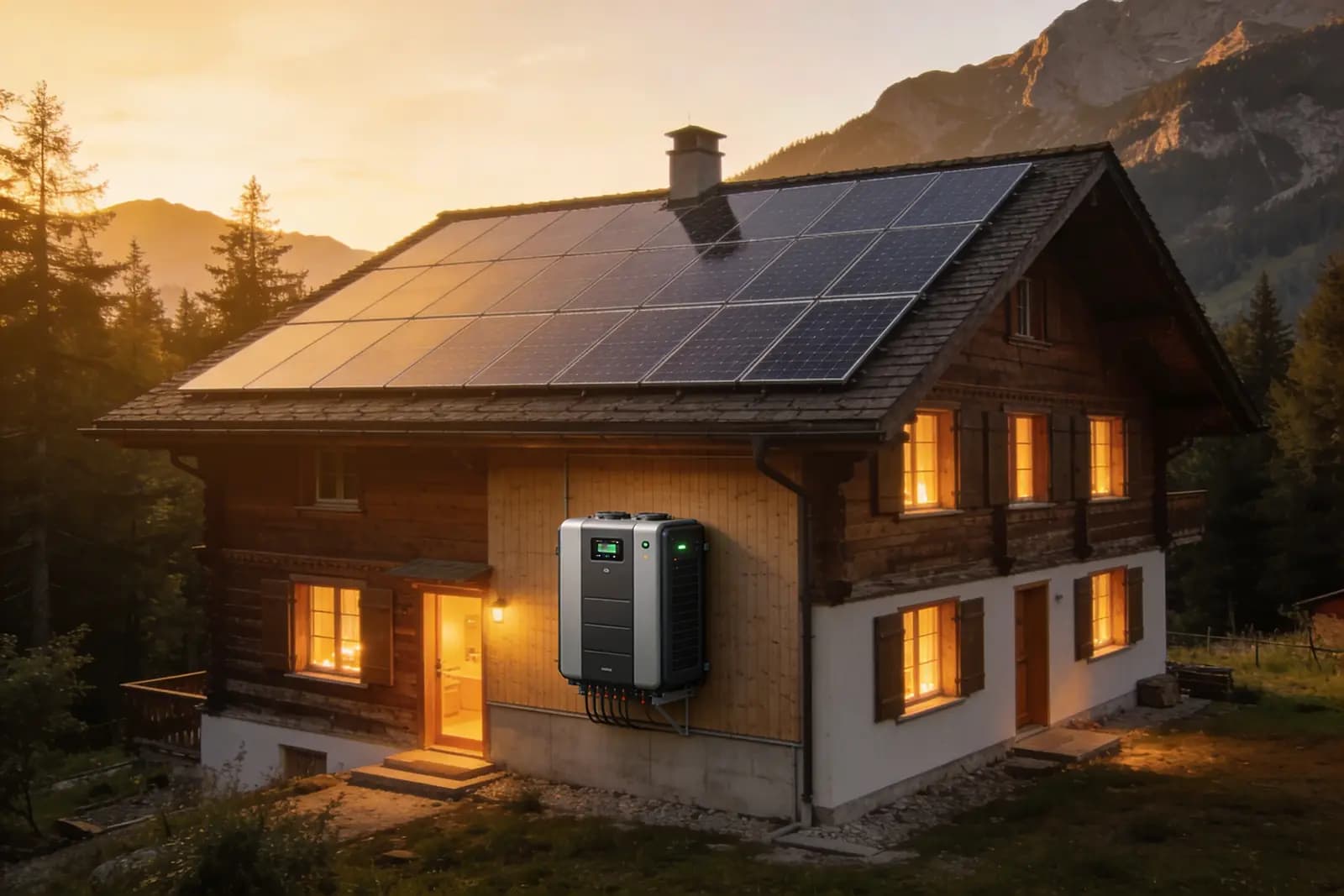
The storage battery for solar panels responds to a simple intuition: keep the surplus from midday for in the evening. Technically, it's relevant. Economically, you have to calculate. A battery increases the price of project, takes up space, has its own lifespan and must be correctly configured. She becomes more interesting when the purchase price is high, the injection price low, evening consumption important, or when you value a backup function.
In a buyer's guide, the best approach is to ask for two variations: solar only and solar with battery. Then compare the additional battery savings with its net cost. If the difference is low, prepare the installation for a future battery without purchasing it right away. If your profile shows high evening consumption or a future electric car, the battery may become more logical.
5. Prices, subsidies and return on investment
The price of a solar installation must be weighed against three flows: aid, savings and resale of the surplus. The aid reduces the initial cost. Savings come from self-consumed kWh. The resale values the surplus, but often less strongly than self-consumption. The return to investment therefore depends on your net cost, your local rate and your habits.
Too simple a simulation can add up all production as if each kWh had the same value. This is the mistake to avoid. Always ask for a separate line for self-consumption and for injection. Also ask for a conservative variant with a lower take-back price and a variant with future pump heat or electric car. You will then see if the project is robust or if it depends on a hypothesis that is too optimistic.
6. When solar is not yet the priority
Solar power is powerful, but it should not obscure other work. If the roof needs to be redone in five years, start with the roof or combine the work. If the insulation is very poor and you plan a heat pump, an energy study can avoid oversizing the heating. If a PEP does not have a collective decision, the best technical project can remain legally blocked. Buy at the right moment, it is also knowing how to prepare the preconditions.
7. Action plan for owner
- Record your annual consumption and your full price per kWh.
- Estimate the roof's potential with a calculator or Sonnendach.
- List future uses: heat pump, EV, boiler, battery, air conditioning, workshop.
- Ask for three quotes with variant without battery and with battery if relevant.
- Compare the net cost, self-consumption and exclusions.
- Do not sign before understanding who manages Pronovo, the connection and after-sales service.
Does your bill make solar more urgent?
Start with a realistic estimate: local rate, roof, self-consumption and net cost. Only then compare installers.
Callback request