



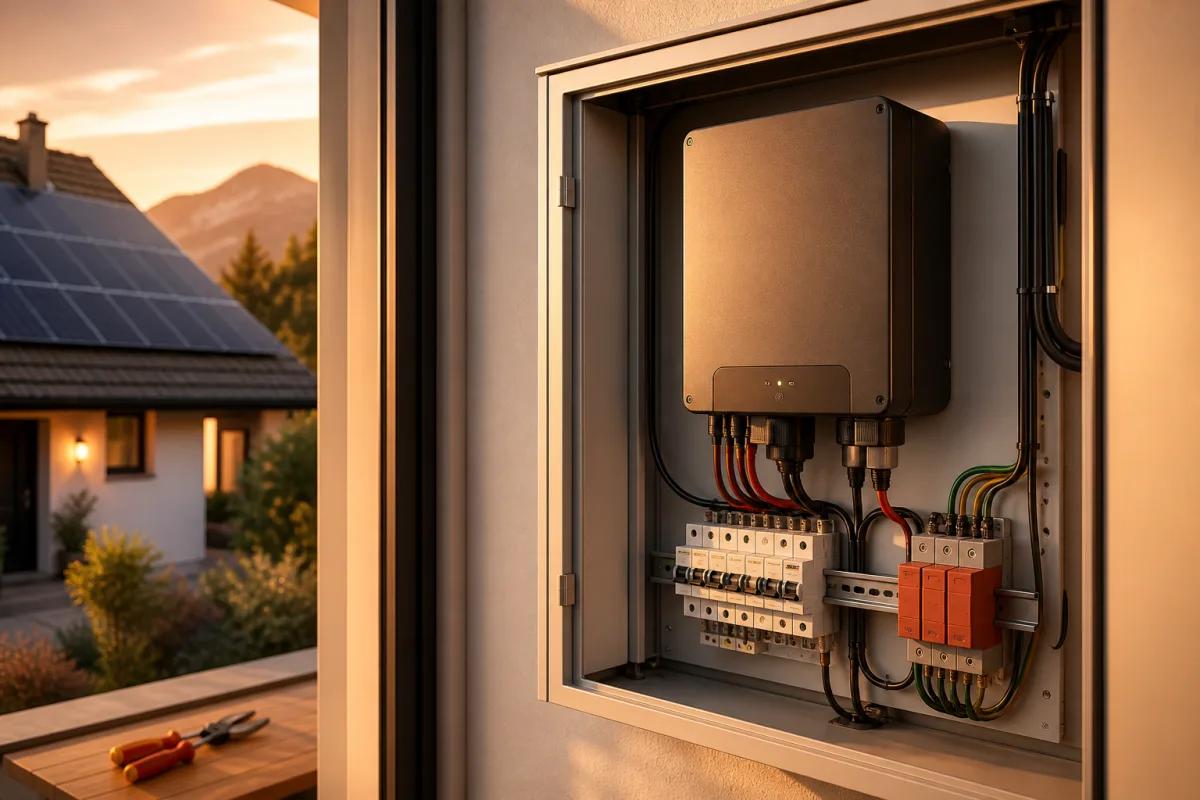

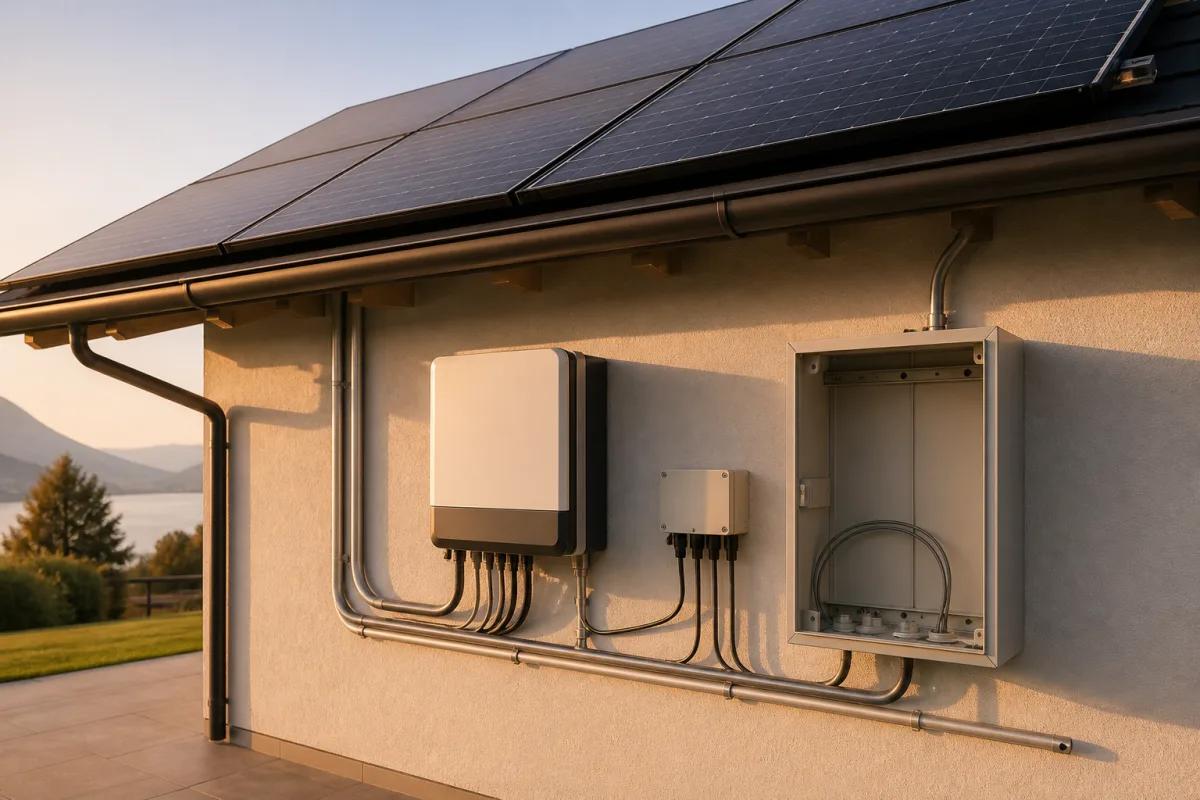
What is a photovoltaic energy manager?
A photovoltaic energy manager, often called an EMS for Energy Management System, measures electricity flows and applies rules to use the energy at the right time. It can monitor solar production, building consumption, battery, boiler, heat pump, charging station and network. Its purpose is not to make energy, but to coordinate equipment that would otherwise have reacted separately.
The term covers several realities. An inverter sometimes offers simple control, a battery has its own controller and independent software can aggregate data from several brands. Before comparing products, ask what the system actually controls, with what measurements and during what times. A colorful interface does not prove that an EMS optimizes your bill. The value comes from verifiable automatic decisions and the ability to take back control.
- Photovoltaic production, consumption, battery and network must be measured on the same schedule.
- An EMS must explain its priorities when there is little sunlight, an outage or missing data.
- The owner must be able to view the data and understand the rules applied.
EMS, inverter, battery and meter: do not confuse the roles
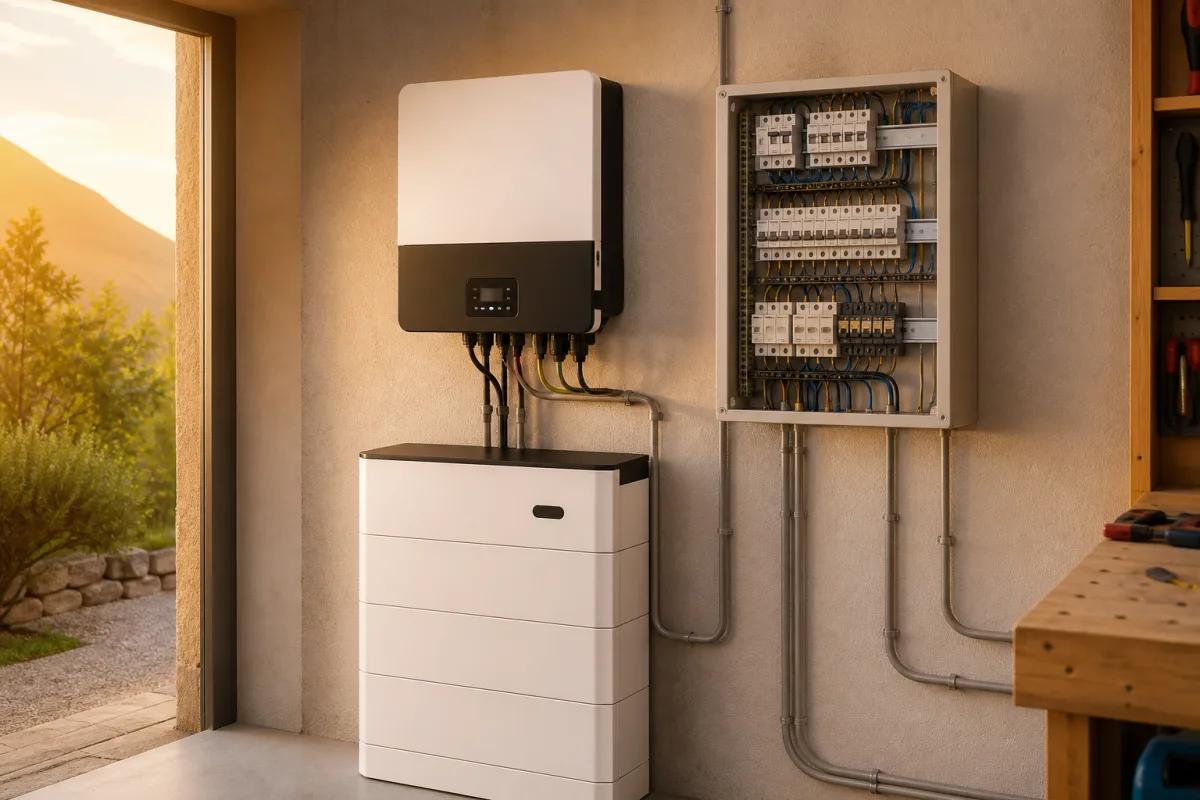
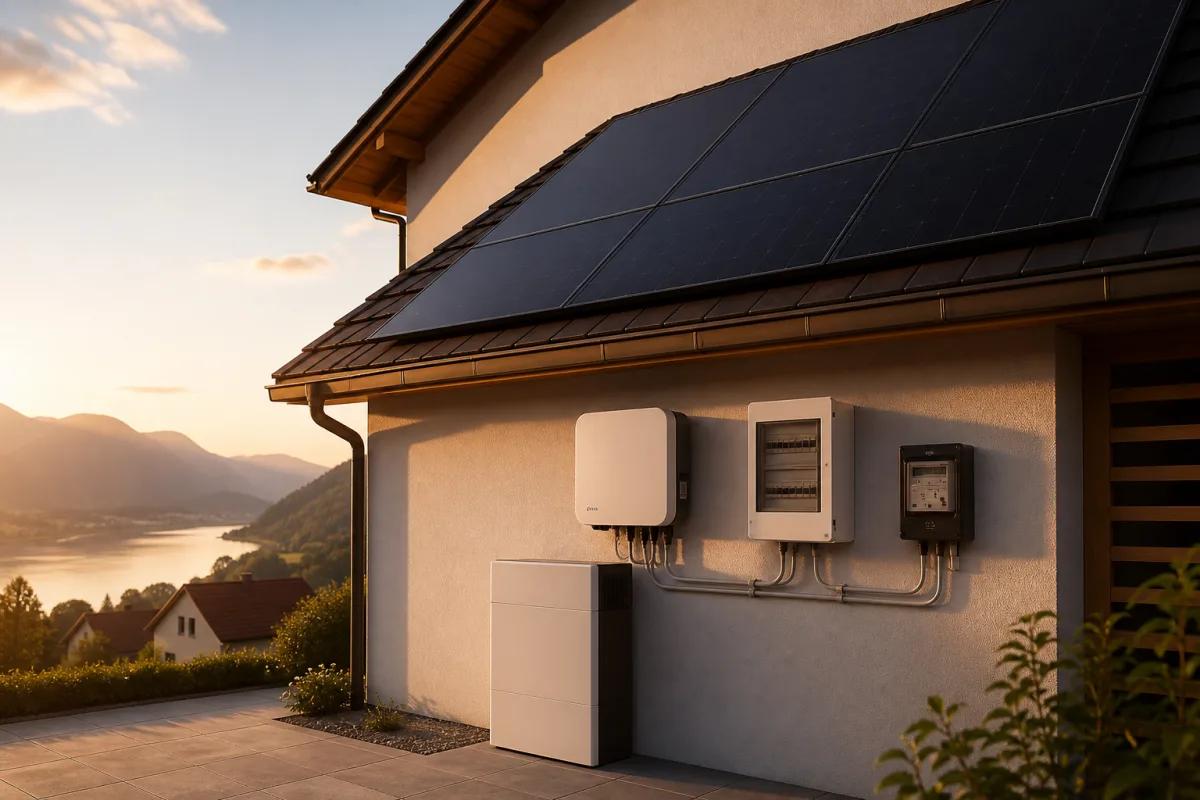
The inverter converts the direct current from the modules into current usable by the building and the network. A battery stores part of the electricity to release it later. The meter measures exchanges with the network. The EMS is at the coordination level: it can ask the battery to charge, the boiler to heat or the terminal to slow down. Depending on the architecture, these functions are integrated or distributed between several devices.
This distinction must appear in the estimate. Ask which box makes the decision, what data triggers the action, and what happens if the internet goes down. A system can continue to produce without a cloud, while an hourly optimization can stop. The battery may also continue to operate with its local rules, but lose a forecast function. You are buying an architecture and a service, not just a mobile application.
- Request a diagram showing the flows between panels, inverter, battery, loads and network.
- Check which functions are local and which require an external connection.
- Separate the price of hardware, installation, license and subscription.
Why a Swiss household may need EMS
The interest in an EMS increases when several flexible uses meet. A heat pump can preheat a tank when solar production is available. A station can charge a car present at midday and slow down when a cloud arrives. A boiler or resistance can absorb a surplus without purchasing the same energy from the network in the evening. A battery can then displace some of what's left, if its cost and warranty warrant it.
A household that already consumes all of its production during the day may have little to gain from a complex system. Conversely, an empty building during solar hours can benefit from finer management. So first measure the hourly profile and not just the annual bill. Request a simulation before and after piloting, with conservative assumptions. The EMS must improve an existing decision; it should not be used to justify equipment whose value has not been demonstrated.
- Presence during the day, hot water, heat pump, vehicle and battery are the first uses to analyze.
- Compare the expected gain with a scenario without EMS and with simple control by schedule.
- Measure consumption before decision when hourly data is not available.
Measure correctly before promising savings
An EMS cannot optimize what it does not measure. The quote should indicate where the sensors are placed, what accuracy is expected and how the values are aggregated. A general meter may be sufficient for the building assessment, but a heat pump, terminal or battery may require a separate measurement. The data must have a resolution suitable for decisions: a monthly value does not allow controlling a fifteen-minute load.
Ask how the system handles a power outage, missing data, shifted clock or rate change. A rule that charges the battery at midday can become costly if the roof orientation, weather or grid price changes. Parameters must be visible and editable. Also keep an export of the raw data so you can compare the result with an invoice and not just with the supplier's dashboard.
- Identify the included meters and sensors, their location, and their accuracy.
- Check the measurement frequency and data retention period.
- Request a simple export of hourly data in a reusable format.
Control a heat pump, a boiler and a charging station
The control of a load must respect its comfort and technical constraints. A heat pump should not be suddenly stopped every time there is cloudy weather; instead, it can use a preheating window compatible with the temperature of the home. A boiler can heat when surplus is available, provided that the necessary hot water is preserved. A terminal can modulate the current, but only if the car stays plugged in long enough.
Ask the installer to describe the priorities. Comfort, safety, battery life and connection power limitation come before a few additional kWh of self-consumption. A properly tuned EMS can let a load terminate to the grid when the sun is lacking, rather than reducing an important service. The simulation should show the cases of summer, winter, absence, late recharge and extreme temperature.
- Set a temperature, charge level or start time that the EMS should never compromise.
- Check actual compatibility with the heat pump, terminal and protocols used.
- Document the priority rules and how to change them.
Battery and EMS: looking for the right strategy, not the greatest capacity
A battery and an EMS answer two different questions. The battery indicates how much energy can be moved; the EMS decides when to do it. A large capacity that is poorly controlled can remain empty or charge with electricity from the grid at the wrong time. A small, well-used battery can be enough to cover a household's evenings. Compare usable capacity, power, efficiency, cycles, temperature, backup mode and total cost.
Ask for a scenario without battery, with battery and with load control. The result must show the solar energy directly consumed, the energy passed through the battery, the losses, the injection and the purchase to the network. Self-consumption gain is not identical to financial gain. An feed-in rate, a limited warranty or a subscription can modify profitability. The EMS must be able to protect the battery, limit unnecessary cycles and signal performance drift.
- Demand the usable capacity, not just the advertised nominal capacity.
- Compare the number of cycles and warranty with expected operation.
- Ask what happens when the network goes out or weather data is unavailable.
Prices, hours and dynamic management
An EMS can integrate tariff hours, but optimization and speculation should not be confused. Network, energy, injection and royalty rates may change depending on the manager and the municipality. A rule designed for a historical price may charge a battery at the wrong time when the pricing structure changes. The system must display which pricing data it uses and when it was updated.
Dynamic control can move a load to a cheaper period or to a period of solar production. However, it must respect the available power, comfort and conversion losses. Request a scenario with a fixed rate, a variable rate and no signal. If the benefit disappears as soon as an assumption changes slightly, the investment merits careful analysis. The decision must remain valid even without promising an exceptional price.
- Identify the network manager and the tariff version used by the simulation.
- Separate the savings due to solar from those due to moving a load.
- Provide a fallback rule when the tariff or external signal is not available.
Choosing an EMS: functions, compatibility and data ownership
Compare the functions you will actually use: monitoring, alerts, control, forecasting, injection limitation, backup, terminal integration or management of several meters. Request a dated compatibility list for each make and model. An open protocol promise does not mean that all functions are available. Check to see if EMS can control your hardware without experimental integration or an API that might change.
Data ownership must be written. Who can see the consumption, for how long, and how to delete or export it? A subscription may be required for cloud, forecasting, or support. Ask what remains functional if the subscription is stopped. The owner must also receive administrator access and a transfer procedure in the event of a sale. The right solution keeps the data readable and avoids locking the project with a single service provider.
- Ask for exact compatibility with each model, not just the brand.
- Check recurring costs, license limits, and termination terms.
- Obtain proprietary access and export of data before receipt.
Cybersecurity, privacy and service continuity
A connected EMS controls physical equipment; security should not be treated as an option. Ask if accounts use strong authentication, if updates are signed, and if installer access can be revoked. Home router, local network and cloud should not be confused. A password shared between several users makes it difficult to trace a setting modification.
Continuity is as important as security. If the provider's server is unavailable, local protections must remain active. Ask how the installation behaves without Internet, during an update or after changing the router. The contract must specify the duration of support, the procedure for replacing the case and the conservation of histories. A very modern interface does not compensate for a system that is impossible to take over when the service provider changes.
- Use separate accounts for owner, installer and service department.
- Ask for local EMS behavior during an internet outage.
- Retain settings, firmware versions and reset procedure.
Installation and commissioning of an EMS
Commissioning must verify the measurements before activating automation. The installer compares the values of the meter, inverter, battery and loads. It tests a controlled load, no production, priority change and loss of communication. The owner must see the difference between instantaneous consumption, imported energy, exported energy and stored energy. These tests avoid taking a sensor inversion for savings.
Request a report with the date, settings, thresholds, connected devices and open anomalies. An observation period may be provided before changing the rules. The EMS should not be adjusted to maximize an application indicator to the detriment of comfort or cost. After a few weeks, compare the data with actual bills and habits, then request documented optimization.
- Test production, import, export, battery and each controlled load separately.
- Note the initial settings and safety limits.
- Schedule a review after the first season or after a rate change.
Calculate the return on investment without inflating self-consumption
The return of an EMS is calculated on the additional gain it brings, not on the entire photovoltaic economy. Start with a scenario without EMS: production, direct consumption, injection, battery and network purchase. Then add the piloting and deduct the cost of hardware, installation, licensing, maintenance and any separate measures. Roof production should not be credited twice.
Use a conservative assumption for pricing, number of days on hand, and device lifespan. A saving of a few hundred francs must be compared to the cost of the service and the added complexity. EMS may have a comfort, informational, or future preparation value that is not entirely financial. This value should be presented separately so that your decision remains honest if the electricity rate or your lifestyle changes.
- Show the gains from solar, battery and load management separately.
- Include subscriptions, sensor replacement, and support costs.
- Compare a conservative, central and favorable scenario with dated assumptions.
Add an EMS to an existing installation
An EMS can be added after installation, but compatibility must be studied. Start by identifying models, interfaces, counters, and administrator access. An old installation can expose production but not authorize the control of a battery or a terminal. The cost sometimes includes new meters, a communications box, an inverter upgrade or partial panel replacement.
Ask for a solution that works in stages. You can first measure the flows, then control the boiler, then add a terminal or a battery. This progression provides real data and limits the risk of oversizing. The quote must state whether the existing warranty is retained and which assumes a modification of a manufacturer setting. A renovation EMS must respect the existing installation before seeking ambitious optimization.
- Inventory installed hardware, software versions and available interfaces.
- Start with the measurement before activating an automatic command.
- Have compatibility and retention of warranties confirmed in writing.
Questions to ask before purchasing an energy manager
The final step is to have the supplier answer concrete questions about your building. Ask for a demonstration with your equipment, not a generic video. Explain a sunny day, a cloudy day, a winter evening, an extended absence and an internet outage. If the provider cannot show which rule takes priority, the system may be difficult to verify.
An EMS is relevant when it makes flows visible and actions reversible. It can help you consume more of your production, protect a battery and prepare for future uses. It does not replace correct sizing, insulation, or an understandable local price. Choose a solution where data, costs and support remain accessible, then measure the result over time.
- What devices can you actually control in my current installation?
- What remains functional without Internet or after stopping a subscription?
- How can I export my data and transfer the system to a future owner?
- What additional gain do you foresee compared to simple piloting?
Deciding with a readable architecture
The good photovoltaic energy manager is not necessarily the one that offers the most functions. It is the one who measures correctly, explains its rules, respects comfort, protects the equipment and lets the owner remain in control. The quote must show the architecture, responsibilities, recurring costs and out-of-pocket or outage scenarios. A simpler solution may be better if it covers your uses and remains maintainable.
Before signing, compare data, compatible devices, cybersecurity, service continuity and financial gain. Have the meters installed, the settings validated and a review scheduled after a few months. A well-documented EMS can accompany solar, battery, heat pump and electric mobility for a long time. An application without reliable measurements and clear support is not worth the same investment.