



Choosing a solar installer starts with your decision, not a brand
A solar panel installer does not only sell modules placed on a roof. It turns a roof, an electric bill and a family calendar into a facility that will need to operate for decades. The first objective is therefore to choose a company capable of explaining its hypotheses, coordinating the procedures and remaining contactable after commissioning. A beautiful photo of the project does not replace a roof study, an electrical diagram, or a legible contract.
Before asking for offers, write down in a few lines what you want to decide. Do you want to reduce a bill, prepare a heat pump, charge a car, power a PPE or secure a roof renovation? The same installer may be excellent for a detached house and less suitable for a heritage building or a project with multiple owners. A precise request allows companies to meet the same specifications and makes the comparison really useful.
- Include the address, building type, year built and known condition of coverage.
- Add twelve months of consumption, electrical projects and the result you want to measure.
- Ask for an offer clearly separating the photovoltaics, the battery, the terminal and the ancillary work.
Prepare a simple file to obtain comparable quotes
A serious installer can start with photos and an invoice, but will then need to check roof geometry, shading, access, load bearing and connection. Send a plan or aerial capture if you have one, without presenting an online estimate as a definitive statement. Mention dormer windows, chimneys, trees, neighboring roofs, cable runs and any possible presence of asbestos. These details influence the price even before the choice of panel.
The invoice must be read line by line. Note the annual consumption, the price of energy, the use of the network, the taxes, the metering and the feed-in rate if you are already producing. Add attendance times, hot water temperature, heat pump, car charging and teleworking. An identical annual average can hide very different profiles. The company needs to know when you consume, not just how much you consume.
- Send the same file to at least three companies so that the differences come from their proposals.
- Ask for monthly production and self-consumption estimation, not just an annual figure.
- Keep the dated version of each document sent and each hypothesis used.
Check local competence and the Les Pros du Solaire label
Geographic proximity is useful, but it is not enough to prove quality. A good installer knows the practices of the network manager, the usual deadlines, the municipal constraints and the roofs in your region. He can also explain which tasks are carried out by his own teams and which are outsourced. Ask for the name of the person who will follow up on the file, the language of your exchanges and the point of contact after receipt.
The Swissolar Solar Pros quality label constitutes a benchmark to be verified in the official register, not a promise of price or performance. It indicates that a company has provided admission documents and a reference installation according to the conditions of the label. Always ask for applicable proof from the company signing your contract, especially when the trademark, billing company and installation team are different. A certification does not replace reading the quote, but it improves the traceability of your choice.
- Check the legal identity, address, liability insurance and VAT number of the contracting company.
- Ask if the label or training concerns planning, electrical installation, roofing, or several of these activities.
- Look for recent references in an environment comparable to yours, not just a large industrial facility.
Compare panels, inverter and structure as one system
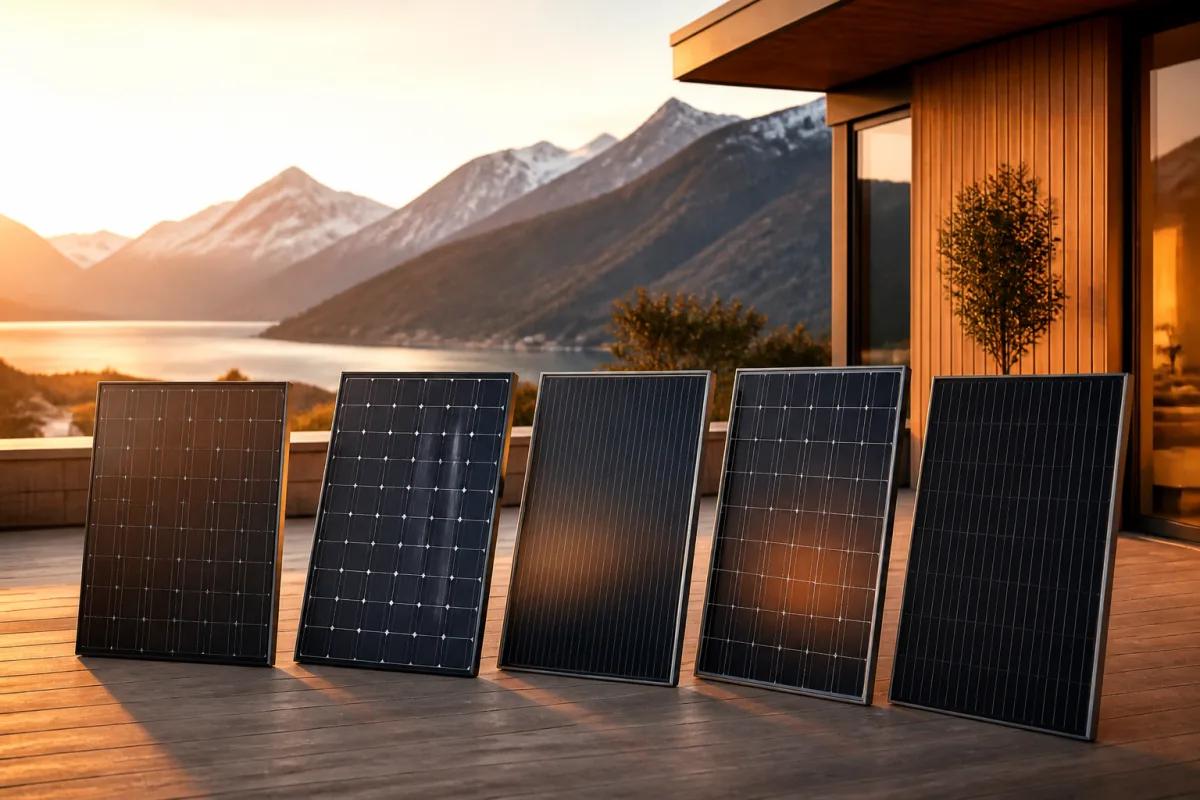
The panel reference counts, but it does not alone decide production. Compare power, efficiency, temperature coefficient, product warranty, performance warranty, weight and dimensions. Ask for the exact technical data sheet of the delivered version. Two modules of the same power can occupy a different surface area, operate with a different current or require a different number of modules per chain. On a limited roof, these details change the actually installable capacity.
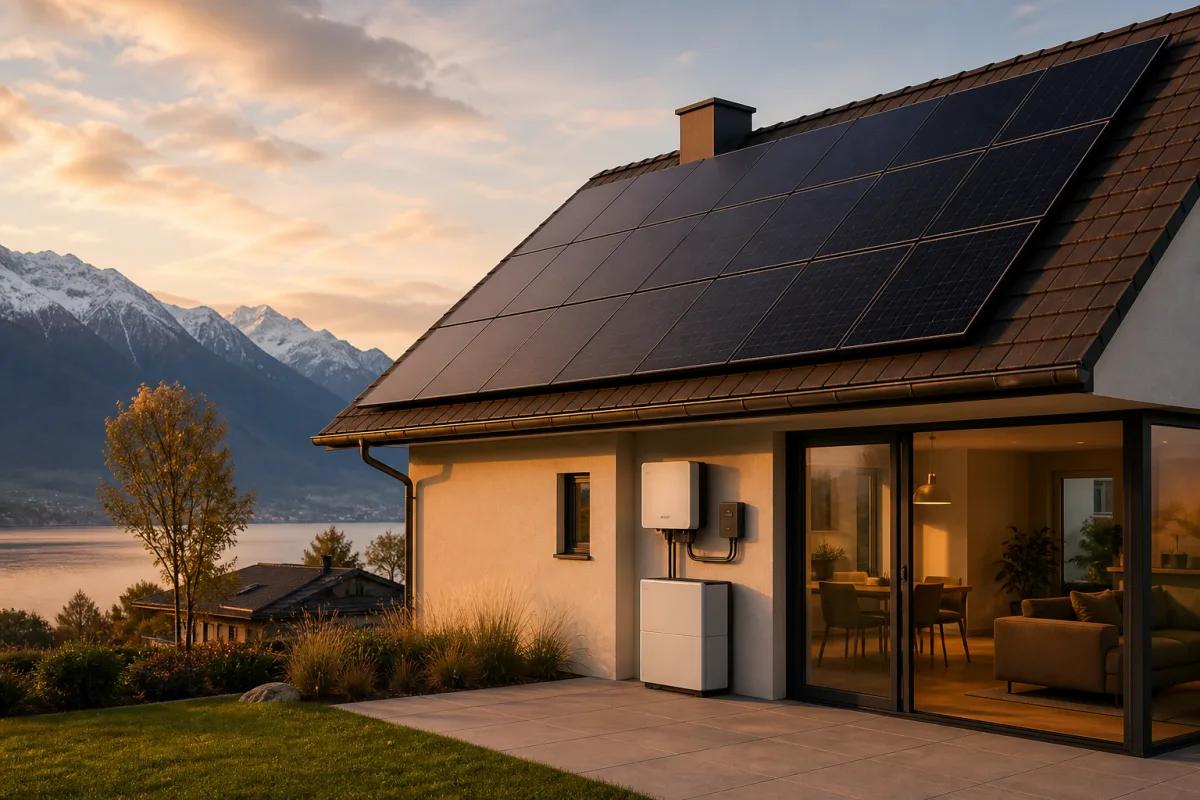
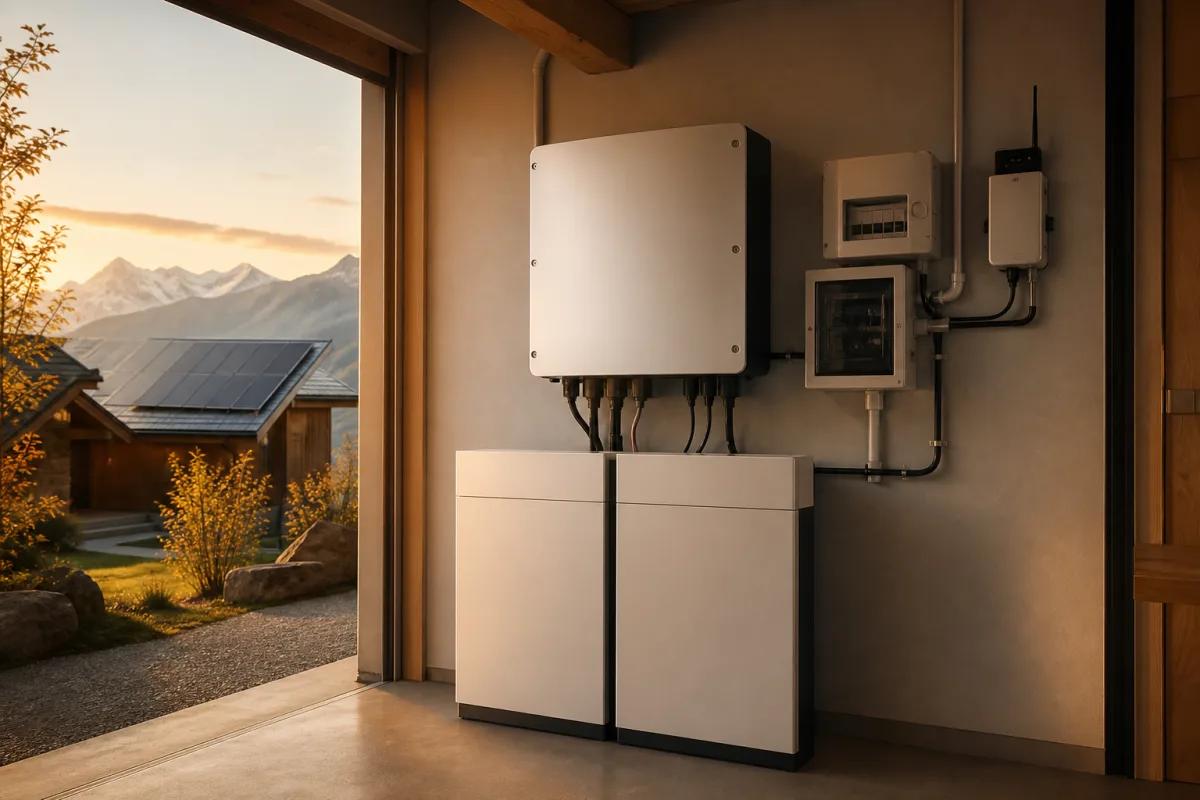
The inverter, structure, protections and cabling must be documented in the same offer. A proposal which announces high efficiency without specifying shading losses, cold voltage, surge arresters or ventilation remains incomplete. For a battery, check the usable capacity, charge and discharge power, number of cycles, warranty, backup mode and inverter compatibility. The best equipment on paper is not the best choice if the service or parts are not available in Switzerland.
- Require the brand and part number of each component, including optimizers and communication gateways.
- Ask for an explanation of losses by temperature, shading, conversion and availability.
- Have it written whether the battery is installed now, prepared for later or excluded from the base price.
Examine the roof, electrical panel and security before signing
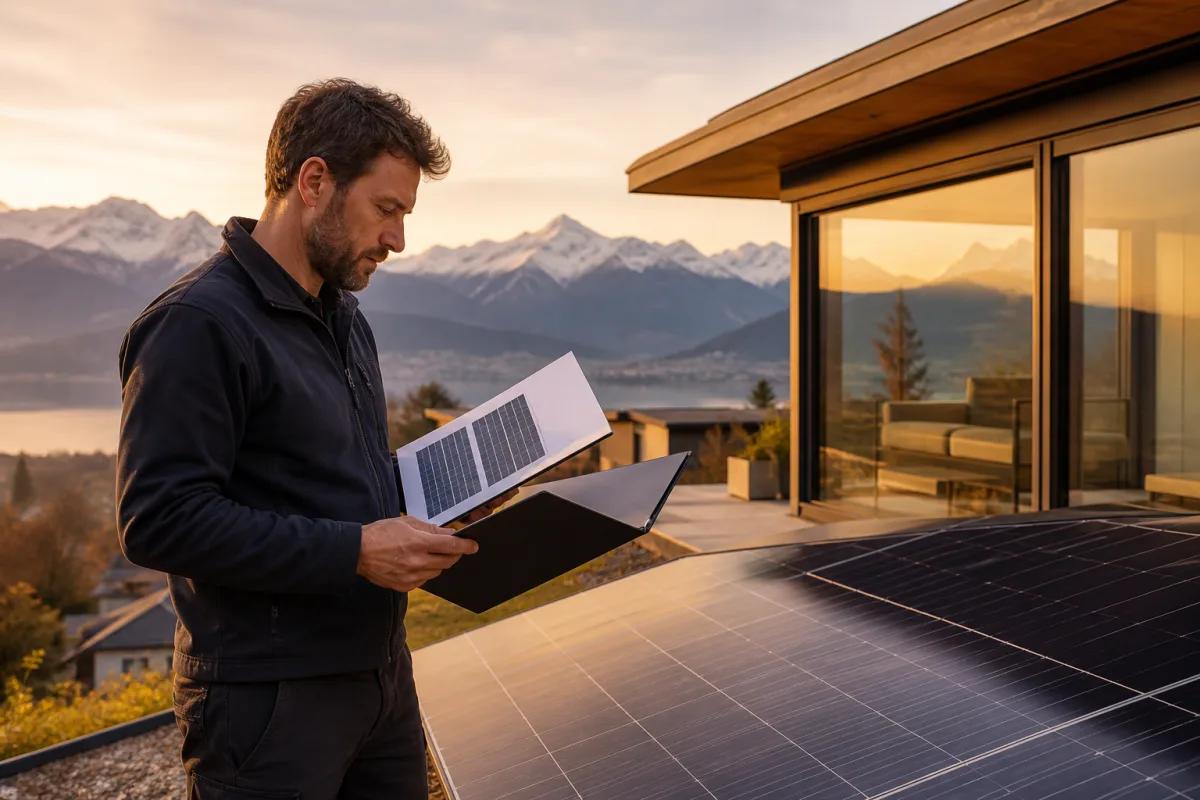
A photovoltaic installation is also a roofing project. The company must indicate how it checks tiles, waterproofing, hooks, snow load, wind and maintenance access. If the roof needs to be renovated, establish clear responsibility between roofer and installer. A saving made by installing panels on a support to be replaced can become a more expensive project. Ask about the protective measures provided for edges, lifelines and movement on the roof.
On the electrical side, the estimate must distinguish between the upgrade of the panel, DC and AC protection, earthing, surge arrester, meter, connection and final control. If the installation includes a backup, check which circuits remain powered and under what conditions. A battery does not automatically make the whole house self-sufficient. The single-line diagram and commissioning settings must be submitted with the file, so that an electrician can understand the architecture several years later.
- Request a site visit when access, structure or board cannot be confirmed remotely.
- Include the excluded roofing work and the name of the company responsible for each interface.
- Do not validate a firm price that still depends on an uncompleted structural verification.
Understanding the connection, Pronovo and administrative procedures
The schedule does not only depend on installation. The installer must explain to you the necessary declaration or authorization, the request to the network manager, the meter, the control and the documents to be submitted to Pronovo. Procedures and deadlines vary depending on the canton, municipality, type of building and local network. Ask who prepares each form, who signs it, who tracks requests for supplements and who sends you proof of filing.
Treat the one-off payment as an official process with conditions and documents, rather than an automatic discount on the quote. The final amount depends on the installation category and the rules in force at the relevant time. Ask whether the quote shows an estimate or confirmed support, and whether the contract explains what happens if the actual amount differs. This protects your budget from relying on financial support that has not been secured.
- Request a timeline with technical visit, offer, order, announcement, installation, commissioning and deposit of parts.
- Retain file references, confirmations, and versions of official terms.
- Separate mandatory procedures from optional administrative follow-up services.
Read a solar quote line by line
A comparable quote indicates the power in kWp, the number of modules, the surface area, the expected annual production and the calculation hypotheses. It then describes the installation, scaffolding, protection, cables, inverter, switchboard, communication, connection, control and cleaning of the site. Optional positions must be separated from essential positions. A round total without details is difficult to compare and leaves too much room for discussions after signing.
Also ask about the limits of the offer. Who pays for a tile repair discovered during installation? What happens if the cable length is greater than the estimate? Can the connection or meter generate a separate bill? Can the company modify the power if the network manager imposes a constraint? Answers must be written. A clear offer is not necessarily the cheapest, but it helps you understand what you are buying and what could still evolve.
- Compare the gross price, estimated subsidies, tax deductions and net price on separate lines.
- Ask for cost per kWp as an indicator, without using it in place of a scoping analysis.
- Refuse unexplained abbreviations for guarantees, protections or connection services.
Price, deadlines and payment: the points that protect the owner
The price of a solar panel installer varies with roof size, access, power, finish level, scaffolding, electrical upgrade and options. A national landmark cannot replace a visit. To compare, look at the amount excluding options, VAT, payment schedule and review conditions. A significant deposit before any study or order must be explained by actual expenses and framed by a contract.
Ask for a target date and events that may move it. Weather, permits, stock, roof and network may change the schedule. The quote should say who notifies you and how a delay is handled. Do not finance an installation on a promise of very rapid commissioning if the procedures have not yet been submitted. A realistic schedule is better than a commercial date that is impossible to keep.
- Include the firm price, the validity period and the precise conditions of a possible variation.
- Favor payments linked to verifiable stages: ordering, installation, commissioning and delivery of the file.
- Keep proof of receipt and control before releasing the final balance.
Warranties, after-sales service and business continuity
A useful guarantee answers four questions: who intervenes, on what element, for how long and with what deadline? Ask for a distinction between module warranty, performance, inverter, battery, installation and waterproofing. The contract must specify the location of the claim and the travel coverage. For a connected component, also check the duration of availability of the application and the possibility of exporting your data. A performance promise does not replace a written complaints procedure.
Business continuity is an often forgotten decision criterion. Ask who provides after-sales service if the company changes its name, loses a team or ceases activity. Serial numbers, plans, settings and minutes must be given to the owner, not kept only in internal software. If several companies are involved, the contract must designate the coordinator. You need to know who to call for an infiltration, an inverter alarm or a lasting difference in production.
- Obtain an end-of-construction file with diagrams, technical sheets, guarantees, photos and adjustments.
- Ask for the name of the parts supplier and the procedure if the manufacturer is no longer distributed locally.
- Include a reception visit and correction of reservations in the contractual calendar.
Warning signs of a bad offer
Be wary of an offer that promises total autonomy without a consumption profile, that presents a guaranteed saving without a dated price or that deducts a subsidy without explaining its eligibility. An installer who refuses a visit, gives no material reference or asks for an immediate signature does not give you time to decide. The arguments of scarcity, stock or imminent increase do not replace an analysis of the roof and the bill.
Another red flag is mixing responsibilities. If the sales company, roofing subcontractor and electrician are not identified, a breakdown can become a cross-reference. Have contradictions between the quote, simulation and contract corrected. If the announced production does not correspond to the surface area or power, request a new simulation. Your goal is not to find a perfect promise, but a verifiable proposition.
- Do not sign on the day of the first visit if the documents have not been reread with your mind at ease.
- Request in writing any oral promises regarding a bonus, date or performance level.
- Compare the company that invoices with the one that installs and the one that guarantees the work.
Questions to ask during the last meeting
The last meeting should be a check-in, not a sales presentation. Ask the installer for your invoice, roof plan, monthly production and net price. Have the differences between the offers explained: different equipment, access, structure, protections, monitoring or administrative scope. If you cannot rephrase the logic of the project, request a simpler document before signing.
Then take a look at the contract. Who orders, who installs, who declares, who controls and who hands over the keys to the system? What is the procedure in the event of a delay, tile defect, drop in production or change of owner? Where will the monitoring data be stored? How much does an out-of-warranty intervention cost? A precise answer to these questions is a better indicator of seriousness than a speech about the best technology.
- What monthly production do you expect and what losses are already included?
- What work and costs are not included in the total presented?
- What document will I receive on the day of commissioning and who keeps a copy?
- Who will be my contact in six months, then in five years?
Receive the installation and retain proof
Receipt is the moment you move from a promise to a documented asset. Check the visual alignment, cable passages, protections, access, water drainage and cleanliness of the site. Request a demonstration of the monitoring and the start date of the guarantees. The meter, inverter, battery and emergency circuits must be identified. Note the reservations in writing and set a date for correction before considering the work completed.
The final file must allow a third party to understand the installation. It includes the location plan, the single-line diagram, the component sheets, the serial numbers, the certificates, the proof of commissioning, the settings, the guarantees, the invoice and the procedures filed. Make a backup outside of the installer account. This organization simplifies insurance, renovation, sale or maintenance intervention and protects the value of your project.
- Photograph the roof, panel, labels and meters after installation.
- Export production data and monitoring access upon commissioning.
- Bring together technical, administrative, tax and contractual documents in a single file.
The right decision in one page
The good solar panel installer is the one who makes the decision controllable. It quantifies production without hiding losses, describes the roof without ignoring its risks, separates aid from savings and responds from installation to after-sales service. You don't need to choose the company that uses the most superlatives. You need a company that is willing to show its credentials, responsibilities and limitations.
Before signing, compare three offers on the same file, check the references, legal identity and label when you wish, then reread the net price with the assumptions. Have the steps confirmed by the network manager and Pronovo depending on your case. Finally, keep proof of each step. A solar installation is a major purchase; a clear selection method reduces unpleasant surprises and improves the real value of the kilowatt-hours produced.