
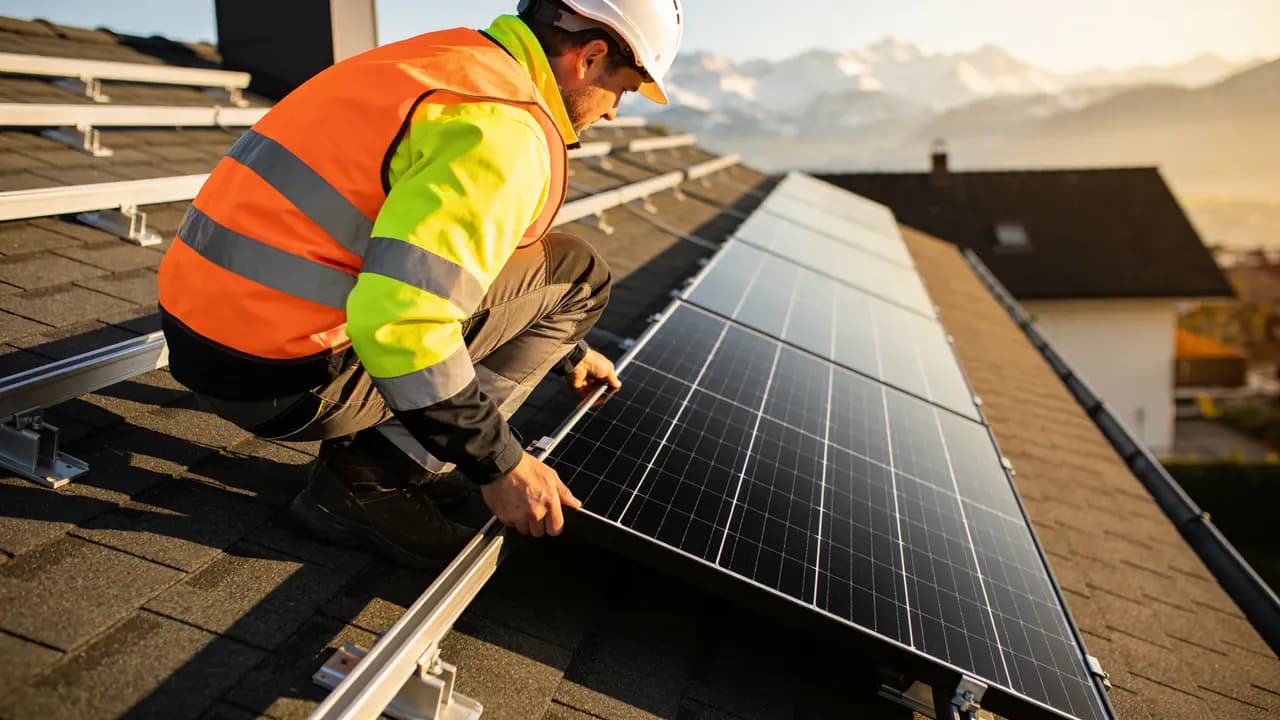
This checklist takes a deeper dive into preparing a quote and sizing the project. For local preview main, start with page on solar panels in the canton of Neuchâtel. Then come back here to check the net price, production assumptions, heat pump, battery, procedures and after-sales service. This separation helps to compare companies without confusing the cantonal page, the comparison of installers and the specific guide to subsidies.
1. Why Neuchatel is a good canton to start a solar project
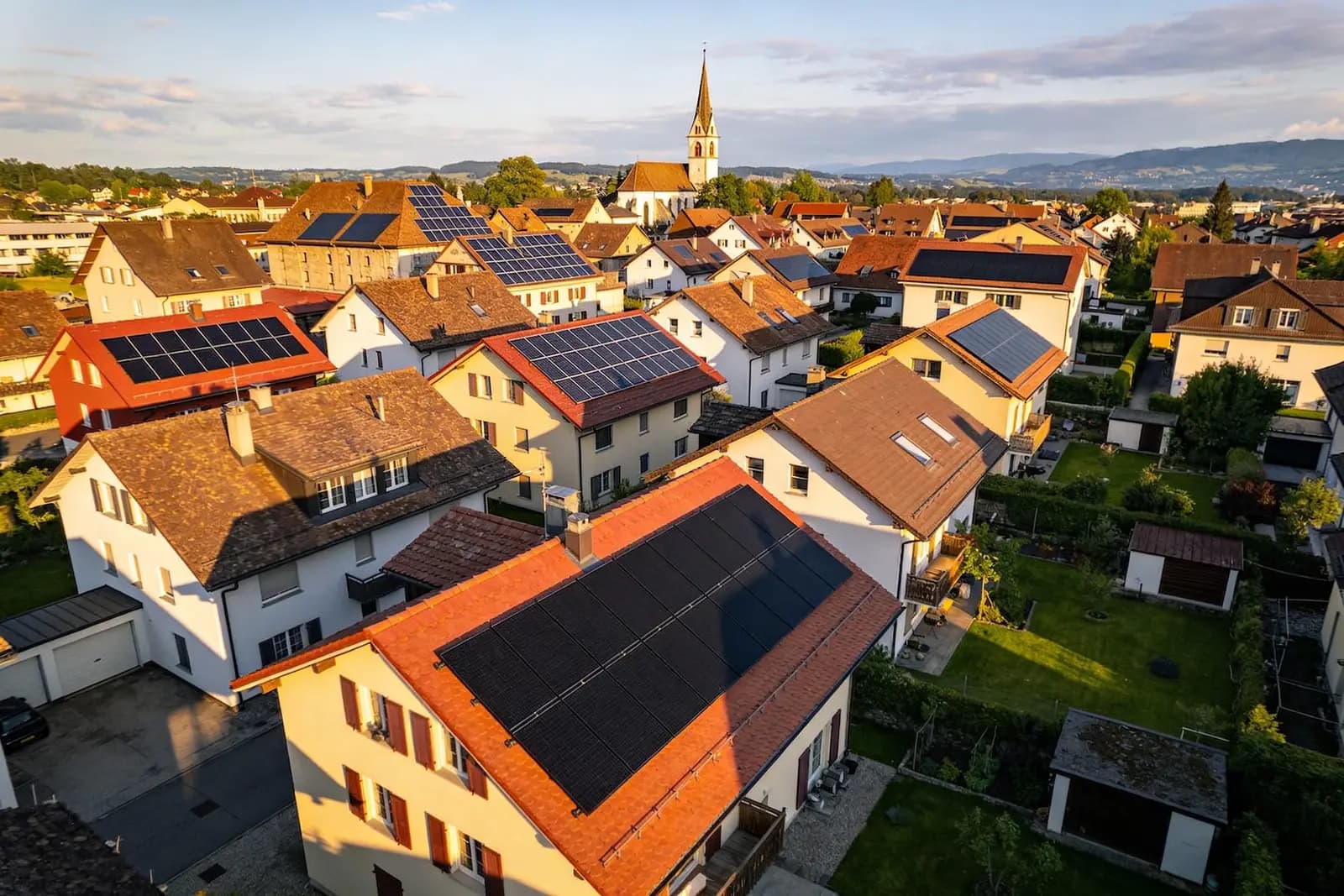
The canton of Neuchatel presents several interesting roof profiles: individual houses on the coastline, sloping villas, buildings in town, agricultural or craft buildings in the valleys. The potential depends less on the name of the municipality than on three very concrete parameters: the orientation of the roof, shade and the ability to consume electricity produced during the day. A south roof remains simple to value, but an east-west roof can be very interesting if you consume in the morning and at the end afternoon, in particular with a heat pump, a boiler, a charging station or teleworking.
So the important question is not just "how many panels can I put up?". It is rather: “how many useful kWh can I produce for my household?”. Too large a solar field can inject lots of surplus at a low price. Too small a field can let a heat pump buy too much electricity to the network. The correct sizing is between these two excesses.
Roofing
Orientation, inclination, shading, state of coverage, scaffolding access.
Bill
Annual consumption, local rate, day/night share, heating and charging.
Devis
Price per kWp, equipment, guarantees, connection, procedures and deadlines.
2. Price of a solar installation in Neuchatel: useful ranges
For a Neuchatel house, a residential photovoltaic installation is often located between CHF 16 000 and 28 000 before aid. A small installation of 5 to 6 kWp can be below, while a large villa with 12 to 15 kWp, battery, hybrid inverter, modification of the electrical panel and complex scaffolding can exceed CHF 35 000. These figures must be read as benchmarks of conversation, not as a guaranteed price. The final quote depends on the roof, the brand of the panels, the type of inverter, electrical safety, access to the site and the capacity of the company plan the connection properly.
| Profile | Typical power | Indicative gross budget | Point to check |
|---|---|---|---|
| Little house | 5-7 kWp | CHF 14 000-20 000 | Fixed price and scaffolding included |
| Family home | 8-10 kWp | CHF 18 000-28 000 | Realistic production and self-consumption |
| Villa with heat pump or VE | 10-14 kWp | CHF 24 000-38 000 | PAC, terminal, battery or EMS control |
The classic trap consists of comparing only the total including tax. Two quotes at CHF 24 000 can tell stories very different stories: one includes the Pronovo request, the compliance of the table, the meter, monitoring and a guarantee of intervention; the other hides several lines in options. Always ask the price per installed kWp, details of the equipment, estimated annual production, self-consumption rate assumed and fees not included.
3. Subsidies and taxation: the net price cannot be read on the first page of the quote
In Switzerland, the useful price is net price after aid and taxation. The single payment Pronovo remains the federal base. It depends on the power and the type of installation, and the demand must be processed in the correct order. Cantonal or municipal aid may vary over time; it is therefore necessary check them when signing, not six months before. Taxation also matters: in many cases, energy investments are deductible, but the effect depends on your taxable income, your situation and schedule of invoices.
A good installer should not promise you a subsidy as if it was already in your account. He must show you the hypothesis, the procedure, the documents to be provided and the moment when the aid is paid. For a buyer, this changes the cash flow: you may have to finance the crude before receiving part of the supports. This is particularly important if you add a heat pump or battery in the same project.
4. Heat pump in Neuchâtel: the solar + heat pump duo must be costed separately
Requests Neuchâtel heat pump and heat pumps Neuchâtel se naturally overlap with solar. Many homeowners want to replace oil, gas or a direct electric heating. The heat pump is an excellent technical solution, but it displaces a part of the bill towards electricity. Solar power allows us to regain some control, especially in off-season, when the pump is still heating up and solar production is already becoming comfortable.
The good quote must not drown the CAP in a vague promise of “autonomy”. He must distinguish the current consumption, future consumption with PAC, the part that can be covered directly by the solar, and controllable uses: boiler, water heating, building inertia, charging station, battery or energy manager. If the company does not know how to explain this logic, you risk oversize the roof or pay for a battery that doesn't work enough.
5. How to choose a solar installer in Neuchatel
A photovoltaic installer is not just a panel installer. He must know how to read a roof, coordinate the electrician, secure the site, announce the installation, manage interfaces with the DSO, provide the diagrams, configure the monitoring and remain contactable after commissioning. In Neuchatel, as elsewhere, proximity counts, but it is not enough. Are you looking for a company that can document his work.
- Ask for three comparable quotes, with the same power or a clear justification for the differences.
- Check that the brands, models, warranties and powers are named precisely.
- Demand monthly simulation, not just flattering annual production.
- Clarify who takes care of Pronovo, the municipal announcement and the connection.
- Ask for the realistic time frame between signature, installation, control and actual production.
- Specify the after-sales service: monitoring, inverter failure, roof leak, intervention.
6. The buyer journey in 90 days
The best solar projects move forward in stages. Week 1: collect electricity bill, photos of roof, photos of the electrical panel, exact address and future plans. Week 2: do a first estimate with a solar calculator or Sonnendach. Weeks 3 to 5: request three quotes. Weeks 6 to 7: compare assumptions, not just prices. Weeks 8 to 10: choose the company, clarify the help and block the schedule. Then comes the announcement, the ordering of the material, the installation and the connection. Depending on the period, the complete deadline may be longer, especially if the DSO or the municipality must address a particular point.
Your goal is not to get the fastest quote. It's about getting a quote that you understand enough good for making a decision. When an installer calmly explains to you why he offers 9 kWp rather than 12, why the battery can wait, or why the electrical panel must be adapted, it is often a better sign than an aggressive discount valid “until Friday”.
Do you want to compare a solar project in Neuchatel?
Have your address, invoice and two photos of the roof ready. The good first filter is to compare the potential, the net budget and the questions to ask the installers.
Callback request