
Selection criteria: what really matters in Switzerland
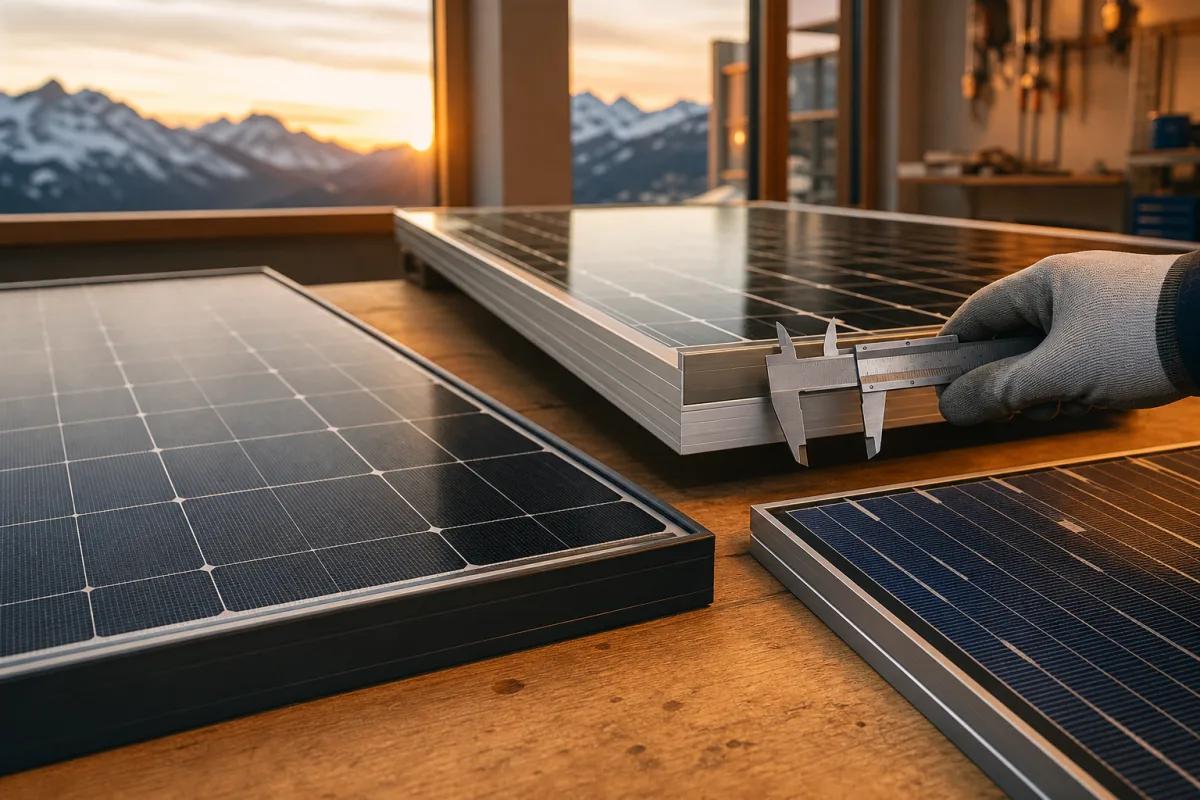
Before classifying, let’s set the criteria. In Switzerland, a solar panel must excel on 4 dimensions specific to our climate: (1) Performance under diffused light — gray days count (30–40% of the time), so low irradiation behavior is crucial. (2) Resistance to mechanical loads — snow, hail and alpine wind require IEC 61215 and 61730 certifications at a minimum. (3) Temperature coefficient — hot summers in Valais or Ticino can cause a loss of 10–15% of production if the coefficient is bad. (4) Real guarantee — 25 years minimum, ideally 30 years, with a solid financial counterpart behind it.
1er: LONGi Hi-MO X6 — the best value for money on the market
Performance, warranty and degradation depend on the exact LONGi sheet proposed in the quote. Check the module reference, IEC certificates and the documents requested for the Pronovo file. LONGi remains a major global player with wide availability, but the comparison should be model versus model, not brand versus brand. Ideal for: residential installations seeking a good balance of availability/price/warranty.
2e: SunPower Maxeon 7 — the champion in duration and optimized surface area
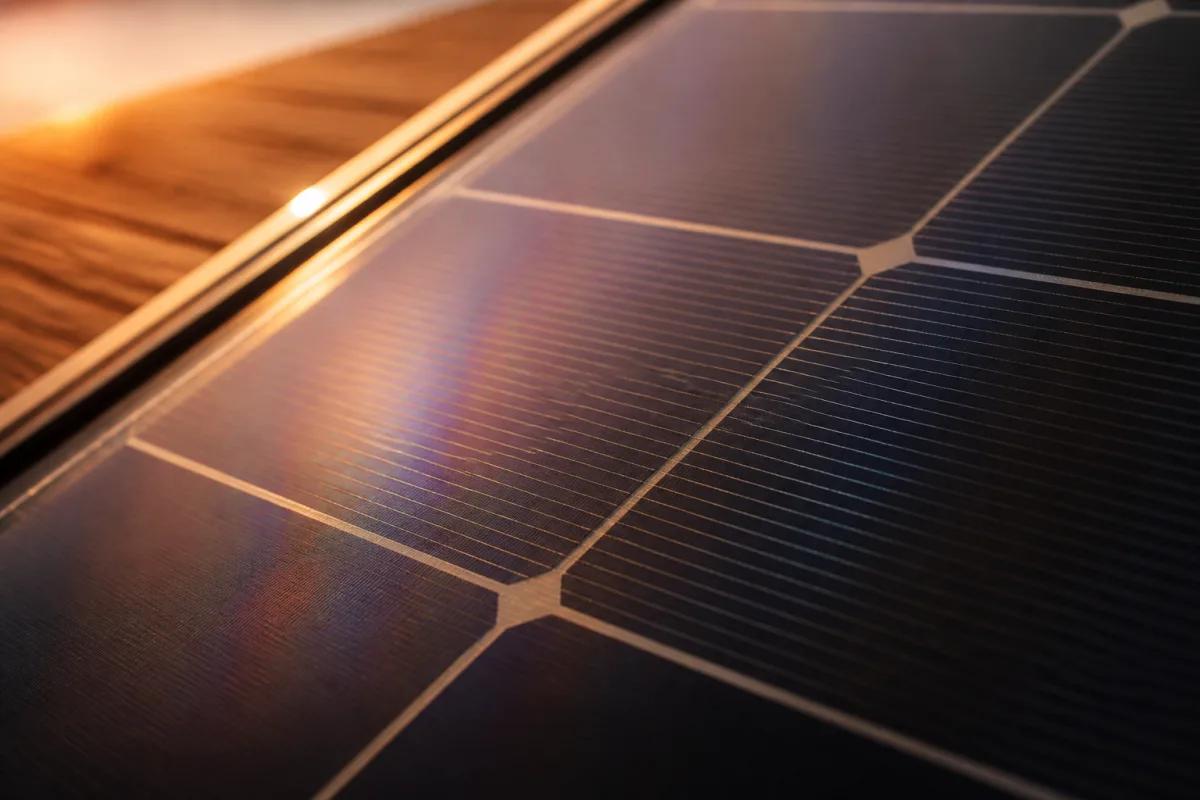
Yield: 22.8% (IBC — Interdigitated Back Contact). Guarantee: 40 years. CH market price: CHF 0.38–0.55/Wp. Coeff. temperature: -0.27%/°C (the best on the market). Certified for demanding specifications. IBC technology places all contacts at the rear of the cell — more grilles on the front, therefore better light capture. The 40-year guarantee is unparalleled. The temperature coefficient -0.27%/°C means better production during Valais or Ticino heatwaves than any TOPCon. Ideal for: small areas, very long-term heritage projects, premium aesthetic.
3e: SOLYCO — the European choice for those who care
Efficiency: 21.0–22.0% (TOPCon N-Type, Pro range). Warranty: 25 years + BIPV options. Price: CHF 0.28–0.38/Wp depending on range. German brand; country of manufacture, certificates and guarantees to be verified by model. SOLYCO is not just a substitute European panel — it is a panel with unique BIPV (building integration) expertise, a very resistant glass-glass range for Swiss roofs stressed by hail, and a predictable supply chain thanks to geographical proximity. Ideal for: renovations with architectural integration constraints, projects with reduced carbon footprint requirements.
4e: REC Group Alpha Pure-R — the accessible HJT
Yield: 22.3% (HJT). Guarantee: 25 years at 92% (one of the best on the HJT market). CH price: CHF 0.30–0.40/Wp. Manufactured: Norway / Singapore. Temperature coefficient: -0.24%/°C. REC Alpha Pure-R is the HJT module which offers the best combination: peak efficiency under diffuse (HJT excels in low light), very high performance guarantee at 25 years (92% vs 87.4% for LONGi) and intermediate price. Ideal for Vaudois or Bernese roofs with a strong overcast sky component. Ideal for: regions with high diffuse sunshine (Swiss Plateau, Jura), owners focused on winter production.
5e: Meyer Burger White — the high-performance patriotic
Yield: 22.5% (HJT Swiss Made). Guarantee: 30 years. CH price: CHF 0.40–0.55/Wp. Manufacturing: Freiberg (Germany) — next factory planned in Switzerland. Meyer Burger is the Swiss solar industrial story par excellence: inventor of the wire saw for cutting wafers, converted into a manufacturer of HJT modules. Each panel is manufactured in Europe, with components with documented traceability. The 30-year warranty and 22.5% yield place it among the elite. Additional cost justified if European origin is a non-negotiable criterion. Ideal for: owners attached to Swiss/European sourcing, institutional projects.
6e: Jinko Tiger Neo — LONGi’s serious competitor
Performance, warranty and price vary depending on Jinko series and distributor. Check the exact reference, certificates and documents in the Pronovo file before signing. Jinko Solar is a very present global manufacturer, with competitive ranges to optimize the cost per Wp. Ideal for: large installations (10+ kWp) where the cost per Wc makes a significant difference, and for projects with a constrained budget wanting a quality module.
In-Depth Buying Guide
A panel rating is only valuable if it helps you make a verifiable decision. The most efficient reference on a technical sheet is not automatically the best for your roof, your connection or your budget. This additional reading transforms performance promises into concrete questions to ask before signing.
Read a technical sheet without confusing power and production
Peak power, expressed in peak watts, indicates the power of the module under laboratory conditions. It allows you to compare similar formats, but it does not alone predict the energy produced on your roof. Two modules of similar power may behave differently depending on temperature, diffuse light, orientation, shadows and ventilation under the panel. So ask for the complete technical sheet of the proposed reference, and not just the brand's marketing page.
Look at the power tolerance, temperature coefficient, voltage at maximum power point, current, weight and dimensions. This data determines the number of modules per string, compatibility with the inverter and the load that the roof will have to carry. A small difference in efficiency can be useful on a limited area, while a high current may require a different inverter choice. The right module is the one that works correctly in the complete architecture of the project.
- Ask for the exact reference, the nominal power and the version of the guarantee that applies in Switzerland.
- Compare the data under the same conditions and with the same number of modules.
- Have the cold and hot voltages checked by the installer before connection.
Yield, diffused light and alpine climate
The Swiss Plateau, the Jura and the Alpine valleys do not have the same light profile. A roof can receive excellent annual radiation while experiencing long periods of cloudy weather, chimney shadows, or high summer temperatures. The yields announced in a ranking must therefore be placed in the local context. A serious study explains monthly production, shade losses and how temperature is modeled.
Snow doesn't always stay on a tilted module like it does on a nearly horizontal roof, and heat temporarily reduces a cell's power. This does not mean that you should buy the module with the most spectacular coefficient without looking at the rest. The expected production gap must be compared to the actual additional cost, available space and ease of replacement. A module that is slightly less efficient but available quickly may be a better choice than a premium reference that is difficult to obtain or replace.
Construction, weight and resistance: the module is part of the roof
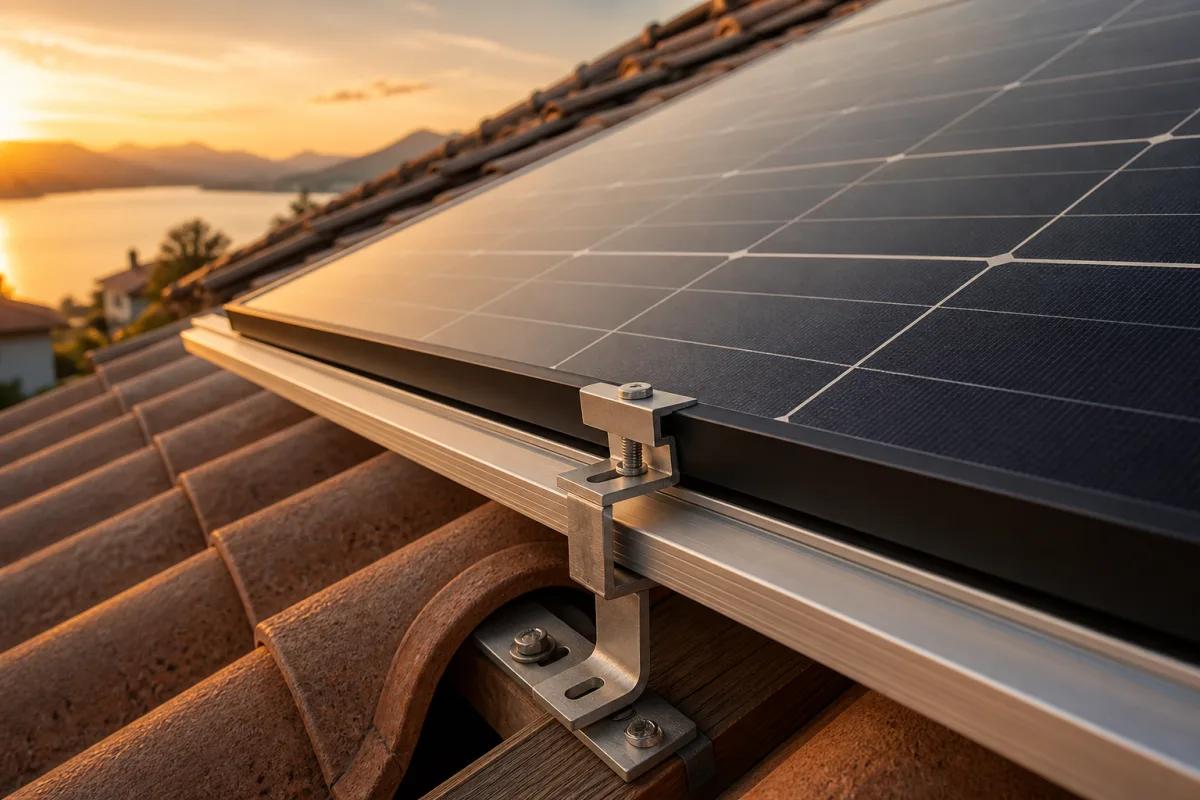
A panel is an element exposed for several decades to wind, snow, freezing and thawing cycles, humidity and hail. Glass-to-glass construction can provide good stability and low permeability, but it sometimes adds weight. On an old roof, the question of the total load can be more important than a few tenths of an efficiency point. The installation plan must include rails, hooks, ballast, cable trays and maintenance access.
The mechanical resistance announced is not an authorization to install any module anywhere. Edge areas, building angles and snow loads require a suitable calculation. Ask who verified the structure, what assumptions were made, and where this verification is kept. In a building or a renovated roof, coordination with the roofer and the owner is as important as the choice of cell.
Guarantees: distinguishing product, performance and recourse
A twenty-five or thirty year performance guarantee does not answer the same question as a product guarantee. The first concerns minimal degradation according to a defined method; the second concerns module faults. Read the exclusions, the claim threshold, the measurement procedure and who should be contacted. The installation contract must also specify the labor guarantee, intervention times and the treatment of a defect noted after the end of the project.
The strength of the appeal depends on the manufacturer, but also on the local chain. An international brand can be great on paper; However, your decision must identify the importer, distributor, warranty manager and how to store serial numbers. Request a digital and paper file with the invoice, technical sheets, certificates, installation photos and confirmation of commissioning. These parts have a concrete value if the owner changes or if a module needs to be replaced.
Compare prices without creating a false winner
The price per peak watt is a useful indicator for an initial sorting, but it becomes misleading when the offers do not have the same scope. One offer may include scaffolding, fall protection, switchboard leveling, metering, connection request or monitoring, while another leaves them as options. Standardize each quote in a table: number of modules, total power, inverter, structure, protection, roofing work, procedures, commissioning, VAT and maintenance.
Then compare the cost per expected energy, not just per installed power. Higher production is only valuable if you can consume it, inject it under known conditions, and maintain the system. The take-back rate from your network manager may change, and self-consumption depends on your presence, heating, hot water and vehicle charging. The final ranking must therefore show cost, production, contractual risk and level of service.
What buyer profile are you?
For a large single roof, availability, price per watt-peak and ease of replacement may take precedence. For a small roof, each square meter counts more and a high-efficiency module can justify an additional cost. For a heritage renovation, visual integration, weight, format and authorization procedure become decisive. For a homeowner who wants to add a battery or station, the compatibility of the complete system matters more than the isolated performance of the panel.
There is no universal winner. Have the reason for choice written in the quote: surface area, shading, budget, availability, warranty or integration. If the recommendation changes between two installers, ask what assumptions explain the discrepancy. A technical and quantified answer is more useful than an argument from authority or a copied classification without link to your address.
Checklist before ordering
Before accepting an offer, check that the brand and reference appear in the contractual documents. Ask what happens if the model becomes unavailable, if a different version is delivered, or if the power offered changes. Any substitution must be accepted in writing and maintain electrical compatibility, warranty and production calculation. The owner must also know who takes the photos of the installation, who issues the certificates and who follows the procedures with the authorities or the network manager.
Finally, don't let the choice of panel obscure the more important issues: roof condition, waterproofing, cable routing, surge protection, maintenance access, monitoring and liability in the event of a fault. A very good module installed on a poorly prepared roof remains a bad project. The best choice 2026 is therefore less a medal than a method: an identified reference, transparent hypotheses and a local service capable of assuming the result.
Use this guide to narrow down the list, then request multiple offers built on the same assumptions. The final decision must be confirmed by the technical sheet, the roof plan, the connection and the guarantees applicable to your project.