
Owners of existing installations are receiving more and more proposals to add a battery or replace the inverter. Here is a method to distinguish compliance, repair, self-consumption gain and optional modernization.
The short answer
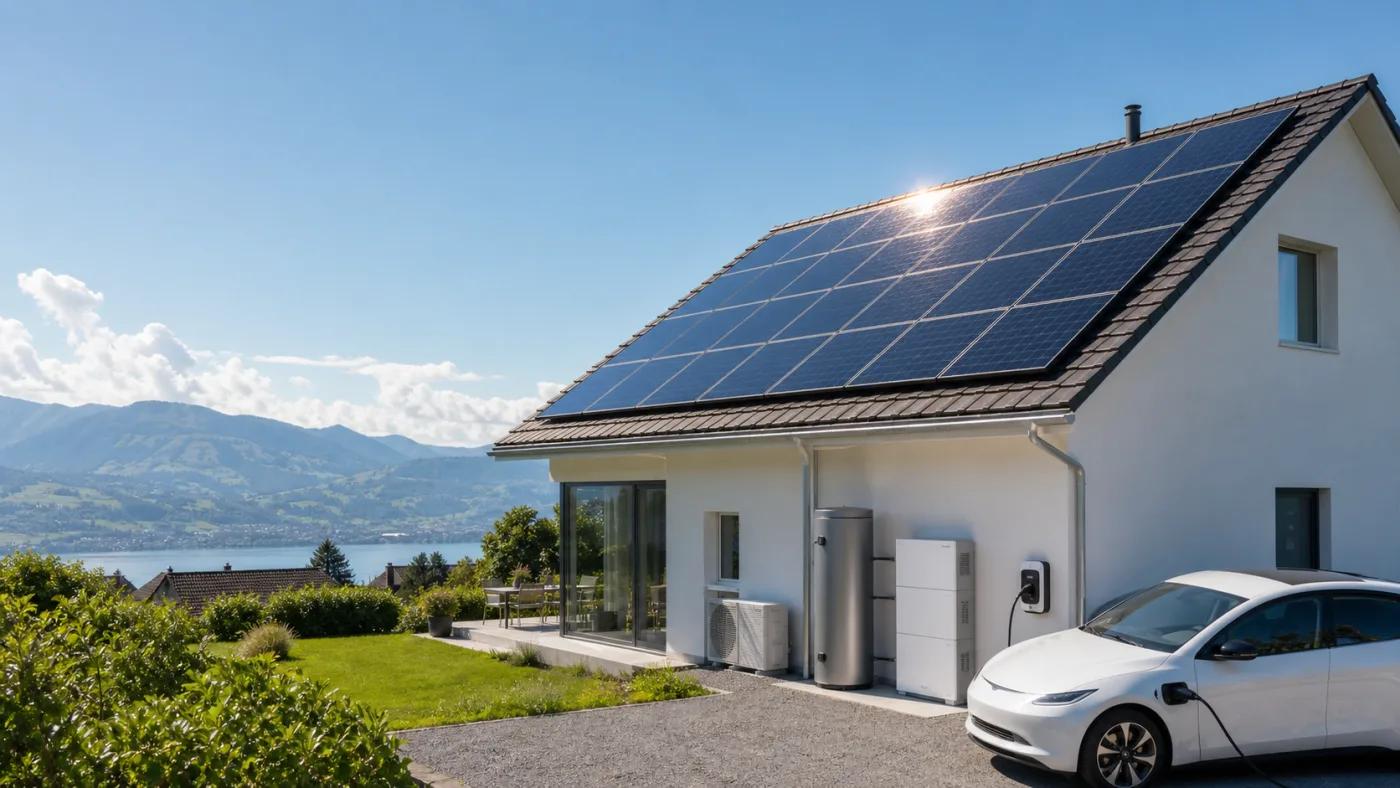
A solar installation that works today is not automatically obsolete in 2026. The right question is not “what new product should I buy?” ”, but “what problem or goal do I need to solve?” ". The possible objectives are different: respect an injection instruction, replace an inverter at the end of its life, improve self-consumption, control a terminal, add a battery, obtain detailed data or prepare a local community.
Start with documents and measurements. Check DC and AC power, connection point, bidirectional meter, inverter settings, recent years' production, alarms, warranties, panel status and cable capacity. ElCom describes a generalization of intelligent measuring systems and data per fifteen minutes; This does not mean that every owner must replace their private equipment immediately.
The injection limit announced for the cases targeted in 2026 can make a measuring or control device useful. The Association of Swiss Electric Companies describes a limit of 70% of the nominal power in the relevant framework. You must confirm with the DNO whether your existing installation is affected, to what extent the power is measured and whether an adaptation is requested.
A battery can increase self-consumption or limit a peak, but it is not an assurance of profitability. Simple piloting may be more useful. The decision must be made with a minimum compliance offer, a performance offer and a calculation that distinguishes the kWh actually moved.
The diagnosis before any expenditure
Gather the contract, single-line diagram, connection declaration, module sheets, inverter, meter, any batteries, commissioning reports and invoices. Note power, year, orientation, known shadows and work carried out. If a document is missing, do not recreate it from memory; request a technical report.
Download production history and alarms. Compare several years taking into account weather, snow, cleaning and shading. A gradual drop can come from a module, an inverter, a connection, a meter or a new shade. It does not prove that a battery is missing.
Check the building consumption separately. An installation can produce correctly but have low self-consumption because the occupants are absent. The purchase and injection curve indicates whether the problem is the midday surplus, the lack of power in the evening or simply expected production.
Ask the DSO if it has sent a request, recommendation or connection condition. General information about 70% is not an individual injunction. The written response must specify power, measuring point, device requested, date and documents to be provided.
When to replace the inverter
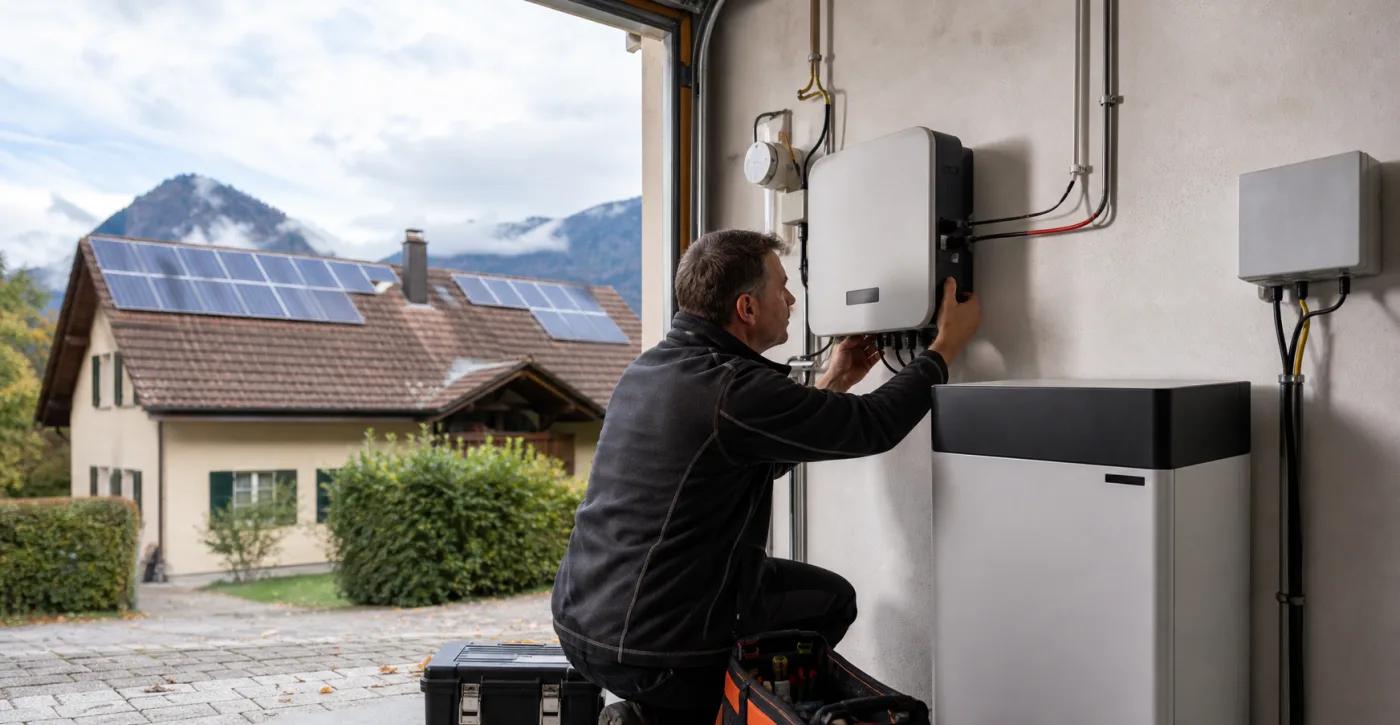
An inverter can be replaced due to breakdown, end of warranty, incompatibility with a battery, lack of limitation or poorly adapted power. It should not be replaced just because a newer model exists. The cost includes equipment, labor, production shutdown, configuration, protection, declaration and commissioning.
Check warranty and parts availability. An old but reliable inverter can continue to create value if its protections, data and settings are compliant. A device that trips, heats up, produces insulation errors or can no longer be repaired deserves a priority diagnosis.
The new model must be compatible with strings, voltage, power, battery, meter, communication and injection setpoint. The brands are not interchangeable by simple connection. Ask for a compatibility sheet and clear responsibility for adjustment.
Replacement may change AC power or network behavior. The DSO may request a new notification or a new control. Don't let an installer increase the power just because the existing cable is already in place.
When to add control
A control can move hot water, recharge, ventilation or other flexible load towards production hours. It can also order a battery and limit export. Its advantage is often that it uses equipment already present, with less capital than large storage.
The measurement must be at the right point. A system that only sees raw production may launch an appliance while the house is already consuming the surplus. A system that sees metered export can better target charging, but depends on frequency, communication and device behavior.
Ask what the control system does at 8 h, 12 h, 18 h and when a cloud passes. What minimum power is needed? What happens if the water heater is hot or the car has to leave? Can the user take back control? The subscription, connection and support period must be specified.
Piloting is not always profitable. If no device is flexible or if the surplus is low, the data does not create consumption. The simulation should show the additional kWh directly used and the annualized cost of the system.
When to add a battery
The battery can store the surplus and release it in the evening. It can also reduce an injection peak, prepare new, more variable remuneration or offer a backup mode. These goals have different values. Standby mode is not automatic on a network system and may require a separate load table.
Size the battery with evening consumption, actual production, charging power and the number of days surplus is available. A large capacity that remains empty in winter or full from midday in summer is not automatically a good investment. Losses and degradation must be visible.
Swissolar reports strong growth in domestic batteries and a falling guide price for some systems. The market is changing, but a lower purchase price is not enough. Add installation, protection, ventilation, insurance, warranty, software, replacement and recycling. Compare an offer with and without battery on the same production.
A battery must remain controllable if the price changes. Ask if it can prioritize self-consumption, limitation, dynamic tariff or backup, and how these priorities are changed. The owner must have access to essential data and settings.
An installation already limited to 70%
If the DSO requires or provides for limitation, start with its measurement point and reference power. Module production, AC power and export are not the same thing. A limitation on export can leave the house using the surplus, while a poorly designed inverter reduction could reduce useful local consumption.
Request a simulation without a new battery, with control and with storage. It must quantify production, direct self-consumption, charging and discharging, export and capping. If a new sensor is enough, replacing the inverter may not be necessary. If the inverter does not support any commands, compare the cost of an update with that of a replacement.
Write down the setting, the measuring point, the behavior in the event of loss of communication and the test carried out. Screen proof is not always sufficient; keep the minutes and configuration.
Smart meter and data
ElCom describes systems that meter per fifteen minutes and a target of 80% of smart metering installations in an area by 2028. For a private installation this can improve monitoring and planning, but the DSO remains responsible for the billing meter. A private sensor may be required for rapid control of the inverter.
Check what's free, charged, or optional. Local metering cost, self-consumption software and battery platform should not be grouped together without detail. Ask for duration, export format, access after subscription and data responsibility.
The fifteen minute curve may reveal that the battery is too large, that the surplus is low or that the controlled device is not following the program. It does not necessarily allow each use to be identified. Use it to decide, not to promise accuracy that the meter does not provide.
Repair, make compliant or improve
Create three columns. The first contains the essential work: security, breakdown, request from the DSO or lack of protection. The second contains useful work: management, measurement, preventive replacement or improvement of data. The third contains the options: large battery, emergency mode, extension and new charges.
Ask for a price and deadline for each column. An offer that mixes everything makes it impossible to know what you are buying to avoid risk and what you are buying to improve profitability. The owner can then decide to do the compliance now and option later.
The contract must state whether the new service provider is taking over an old guarantee. We must not believe that an audit automatically transforms historical responsibility into a new guarantee. Request an entry report, exclusions and guarantee of the work carried out.
Example of decision
Let's assume an 8 kWp installation which still produces normally, but exports a lot at midday. The DSO requests a limitation at the connection point. One offer offers a complete new system with battery. A second adds a sensor and controls the water heater. A third only replaces an old inverter which cannot receive the setpoint.
Compare the annual loss, cost, directly consumed kWh, stored kWh and warranty in the three cases. The battery may be of interest if the house has a heavy evening load; it may be useless if the water heater and a terminal absorb the surplus. The new inverter can be justified by compliance and not by energy gain.
The correct answer depends on the measurements. Without a buy and inject curve, a conclusion would be seller preference. With the data, you can choose a compliant minimum or a complete modernization with full knowledge of the facts.
Questions to ask
- What specific problem does the change solve?
- Has the DNO requested action for my installation, and with what date?
- What DC, AC and export power is currently declared?
- Where is the flow measured?
- Is a sensor or update enough without replacing the inverter?
- What production and capping are simulated before and after?
- What is the real gain from piloting on available devices?
- How much energy does a battery return per year, after losses?
- What warranties, repairs and responsibilities are transferred?
- Does a change require further notification or testing?
- Are the data and settings accessible to the owner?
- What options can be added later without redoing the table?
The answers must be linked to the statements, the diagram and the estimate. An offer that starts with the brand of the battery does not yet address the problem.
Checklist before signing
Download production and alarms. Ask for consumption history, price, export and measurement. Have the inverter, panel, cables, mounting, meter and configuration checked. Ask for the DNO’s response.
Get a separate compliance offer, steering offer and battery offer. Compare kWh, costs, losses, guarantees, subscriptions and deadlines. Include tests, adjustments, declaration and documents.
After work, archive diagram, settings, serial numbers, minutes, access and data. Monitor the installation over several months. An adaptation is only successful if it works in your actual home and remains understandable for the next owner.
What the status report should contain
The report must start with the identity of the installation: address, year, power of the modules, inverter, meter, batteries and connection point. Add available roof plans, protections, limitation settings, meters and warranties. If a part could not be inspected, say so instead of assuming it is compliant.
The measures must distinguish between production, purchase, export, self-consumption and battery charging. Note the weather and time of each measurement. Low production at 9 a.m. in December does not prove a defect; a channel that is inactive for several clear days is worth checking. The report must relate the alarm to an action or explain why no fault is established.
Also ask for a condition of the panel and cables. An installation can be energetically correct but have protection or a connection to adapt. Conversely, a modern table does not prove that the inverter accepts an export command. These controls avoid requiring a battery to resolve a measurement failure.
The ratio is the basis for the comparison. A repair offer corrects the defect; a compliance offer responds to the GRD; a performance offer adds control or storage. The three should not be mixed into a single price.
Evaluate an inverter replacement
A replacement is justified by breakdown, end of parts, incompatibility, inadequate power or battery purpose. Check string voltage, current, number of MPPTs, DC/AC power, protections, communication and behavior in the event of an outage. Ask for the exact reference and the new diagram.
The replacement results in an interruption and sometimes a new declaration. The new product may have a longer warranty but a different platform. Ask if the owner can keep the old data, if the installer takes over the setting and who verifies the return to the network.
Don’t just compare the price of the device. Add labor, travel, protection, configuration, testing, dismantling, disposal, counter, GRD file and production loss. A cheaper inverter may cost more if the board or sensor is incompatible.
The battery, control and future consumption
Before adding storage, look at the devices planned for the next few years. A charging station is present if the car is at home, a heat pump can move hot water, and a variable rate can change schedules. These uses may modify the best sizing.
A battery offered today should not be given a value for a vehicle that does not yet exist or will be absent by noon. Ask for a current scenario and a future scenario, with the arrival date and cost of future equipment. The decision may be to prepare the board and wait for storage.
The piloting must provide for manual mode. If a child has to load a car or if there is no hot water, the owner must be able to override the rule. The command must also manage clouds, outages, Internet loss and user change. A system that depends on a lifetime subscription must be encrypted.
Check after upgrade
After work, compare the quote settings to the commissioning report. Check production, export, charge, discharge and purchase for several weeks. Ask why a value diverges; do not change a protection or export setting yourself.
Keep the old and new configuration. Note replacement date, series, firmware, warranty, declaration and contact details. If the system uses a platform, create owner access and download the data. The installation must be able to be transferred without the installer's personal account.
If the DNO has requested a limitation, request proof of testing and measurement point. If you add modules or a battery later, don't assume the current declaration is enough. New power can modify the control, the cable and the protection.
The transfer folder
A retrofit file should contain the old and new schematics, status reports, inverter configuration, meters, serial numbers, warranties and invoices. Add production history before and after the job. It will allow a future professional to understand what has really changed.
If an old guarantee still exists, ask the new provider what it includes and what it excludes. The new bill should not suggest that all historical responsibilities are covered. A clear scope is more useful than a “global guarantee” formula without details.
This traceability also protects the value of the building during a sale or change of manager.
When it is better to wait
A stable, well-documented and correctly connected installation can continue without replacement. Maintenance, alarm monitoring and an inventory may be sufficient until the arrival of a heat pump, a terminal or a new tariff. This avoids buying a battery before the evening charge is known.
Also coordinate the schedule with a roof renovation or sale. Opening the roof twice, moving a new inverter or transferring a current subscription creates costs rarely visible in a standard offer. Ask for a joint schedule from the companies concerned.
An inspection without work remains useful: it documents the condition, separates historical and new responsibilities and gives the next owner a basis for decision.
When not to replace anything
A stable, well-documented installation can remain in service. An inventory, alarm monitoring and maintenance may be sufficient until the arrival of a heat pump, a terminal or a new tariff. A battery purchased too early can remain underused, especially if the household already consumes a lot directly.
Coordinate the decision with a roof renovation, a sale or a change of tenant. Opening the roof twice, moving a new inverter or transferring a subscription can add costs. Ask for a common calendar for companies.
A check without work remains useful. It specifies production, metering, export, protections, guarantees and non-inspected areas. The report separates historical defects from future work and gives the next contractor a clear basis.
Track a battery after installation
During the first weeks, check charge, discharge, reserve, export and purchase. The nominal capacity does not show how many kWh are really returned. If the application displays unusual performance, request definition and tuning rather than modifying the system yourself.
Keep old and new schematic, firmware, series, warranties, GRD declaration and data. The value of modernization is easier to prove when the previous configuration is documented.
The value of modernization is verified after the fact
An inverter replacement should not be credited with a production gain if the modules and the weather have not changed. Instead, measure export, purchase, limitation, management and battery before and after. The right question is what problem is solved: outage, compliance, data access or kWh moved.
If no constraints are demonstrated, maintenance and monitoring may be preferable. Wait for a future heat pump, terminal or tariff change to recalculate with a real profile. A deferred decision is valid if the system is safe, documented and followed.
After the work, request a control visit and an owner report. The installer must indicate what he has checked, what remains outside the scope and what his warranty covers. The file must allow the installation to be transmitted without depending on a service provider account.
Conclusion
Modernizing an existing facility may be relevant in 2026, but the reason must be specific. Start with connection, measurements and actual production. Separate compliance, repair, piloting and battery. Compare offers on the kWh actually valued and not on the nominal capacity.
The best update is one that resolves a verifiable constraint, maintains the guarantees and leaves the owner in control of the data and settings.
Points to check
- An existing installation is not automatically required to replace its inverter; the DSO must confirm the request.
- Gross production, self-consumption, export and capping are distinct flows.
- A battery must be evaluated on the energy actually returned and the full cost.
- Any modification to power, battery or connection must be checked with the DSO.