
Maximize your self-consumption
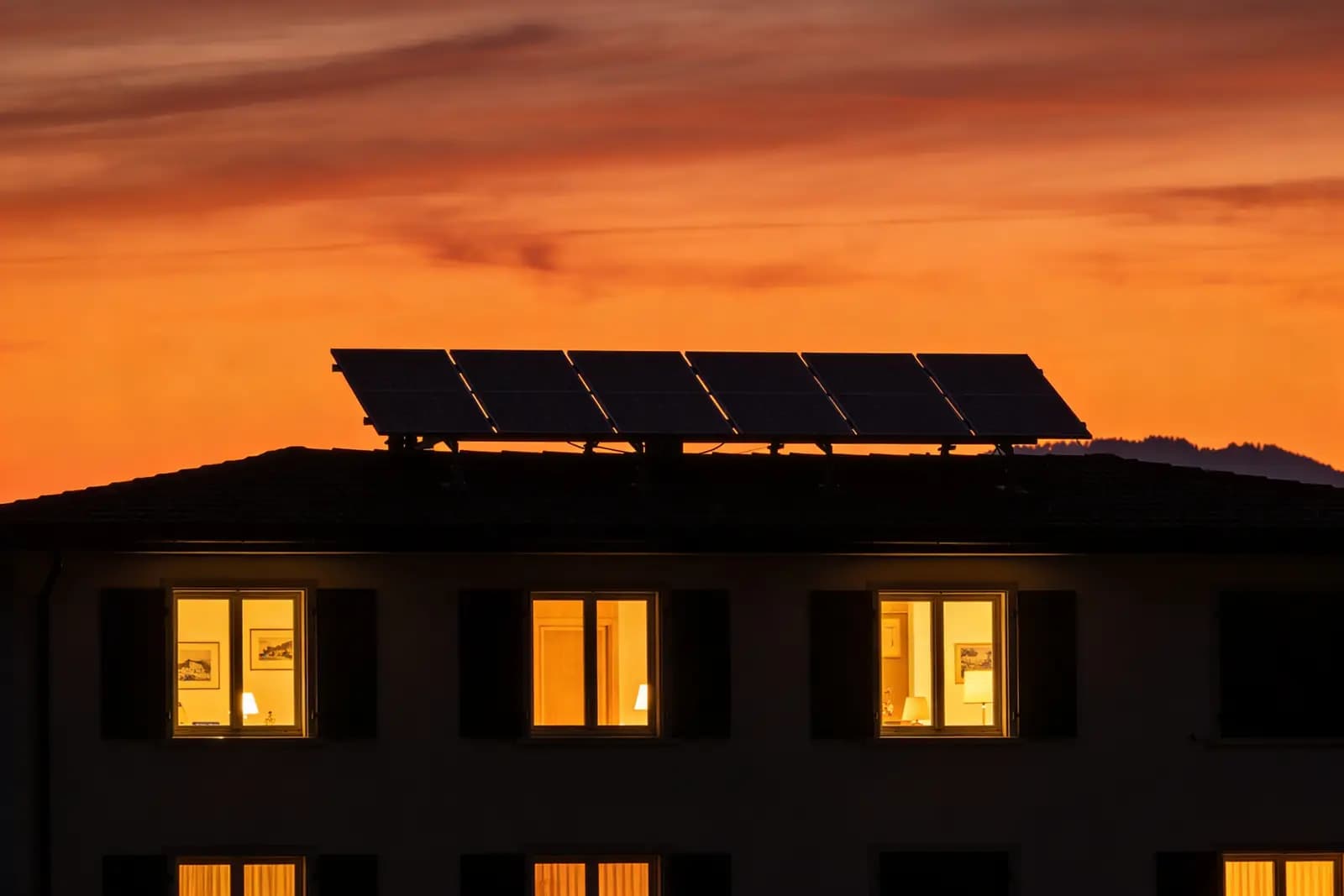
With the reduction in feed-in tariffs by DSOs, each solar kWh sold back to the network is almost a loss. The goal is to consume it at home.
Average rate without opti.
30%
Rate with manager
45–55%
Savings per self-consumed kWh
~0.30 CHF
Main tool
EMS / Home automation
Strategies for consuming your own electricity rather than buying it at full price.
Remember the essentials of this issue at a glance before moving on to the detailed analysis and recommendation.
Objective
Decide quickly
Horizon
2026
Approach
Practical decision
Verifications
5
Problem Analysis
Self-consumption is the part of your solar production that you consume directly on site, at the very moment it is produced. Historically, reselling your electricity to the network was profitable, but with the drastic increase in the cost of purchased electricity (often > 30 cents/kWh) and the drop in take-back prices (< 10 cents/kWh), the calculation has radically changed.
The basic principle: one kWh that you produce and consume saves you 30 cents (the price you would have paid). On the other hand, this same kWh resold only brings you 8. The economic interest is therefore to shift your household consumption as much as possible during sunshine hours (from 10h to 15h).
Without optimization, an average household only self-consumes 30% of its production, because consumption peaks occur in the morning and evening, when the sun is low or has set. To make the installation profitable more quickly, action must be taken on the two other major energy expenditure items: hot water and heating.
Our Recommendation
Implement an Intelligent Management System (EMS - Energy Management System).
The most profitable investment even before purchasing a battery is a driver for your water heater. Devices like the Fronius Ohmpilot or solar routers detect excess energy not used by the house and send it instantly to the electrical resistance of the hot water boiler. You thus transform your water tank into a huge thermal battery, thus erasing all the electricity consumption of hot water over the year.
Then, postpone the operation of your large household appliances (washing machines, dishwashers) until midday using delayed starts. Finally, consider fully integrating home automation (Smart Home) compatible with your inverter to automate these energy flows without thinking about it.
Sources & Method
Analysis based on ElCom 2024–2026 data, OFEN (Federal Office of Energy), Pronovo SA, EPFL and HEG Geneva studies. The financial projections use the following assumptions unless otherwise stated: local purchase price, GRD injection price, production 1 100 kWh/kWp/year, self-consumption rate 35–40%. Actual results vary depending on canton, roof orientation and consumption profile. The site may also present its own services or calls for contact related to these subjects.
Next step
Compare several quotes, validate profitability with our tools and then check the contractual conditions adapted to your canton.
No obligation · Transparent data