
Couple Solar and Heat Pump
Replacing fossil heating with a heat pump massively increases the electricity bill. How can photovoltaics offset this cost?
PAC coverage by solar
25–40%
Reduction in winter CAP consumption
Marginale
Reduced summer hot water consumption
100%
Coupled grant
Cantonal Bonuses
The ultimate energy duo: Heat Pump and Solar Panels.
Remember the essentials of this issue at a glance before moving on to the detailed analysis and recommendation.
Objective
Decide quickly
Horizon
2026
Approach
Practical decision
Verifications
5
Problem Analysis
The Heat Pump (PAC) is the essential standard for cleaning up a building in Switzerland. However, it adds between 4 000 and 8 000 kWh of additional electricity demand to the household, mainly in winter, at the precise time when solar production is at its lowest.
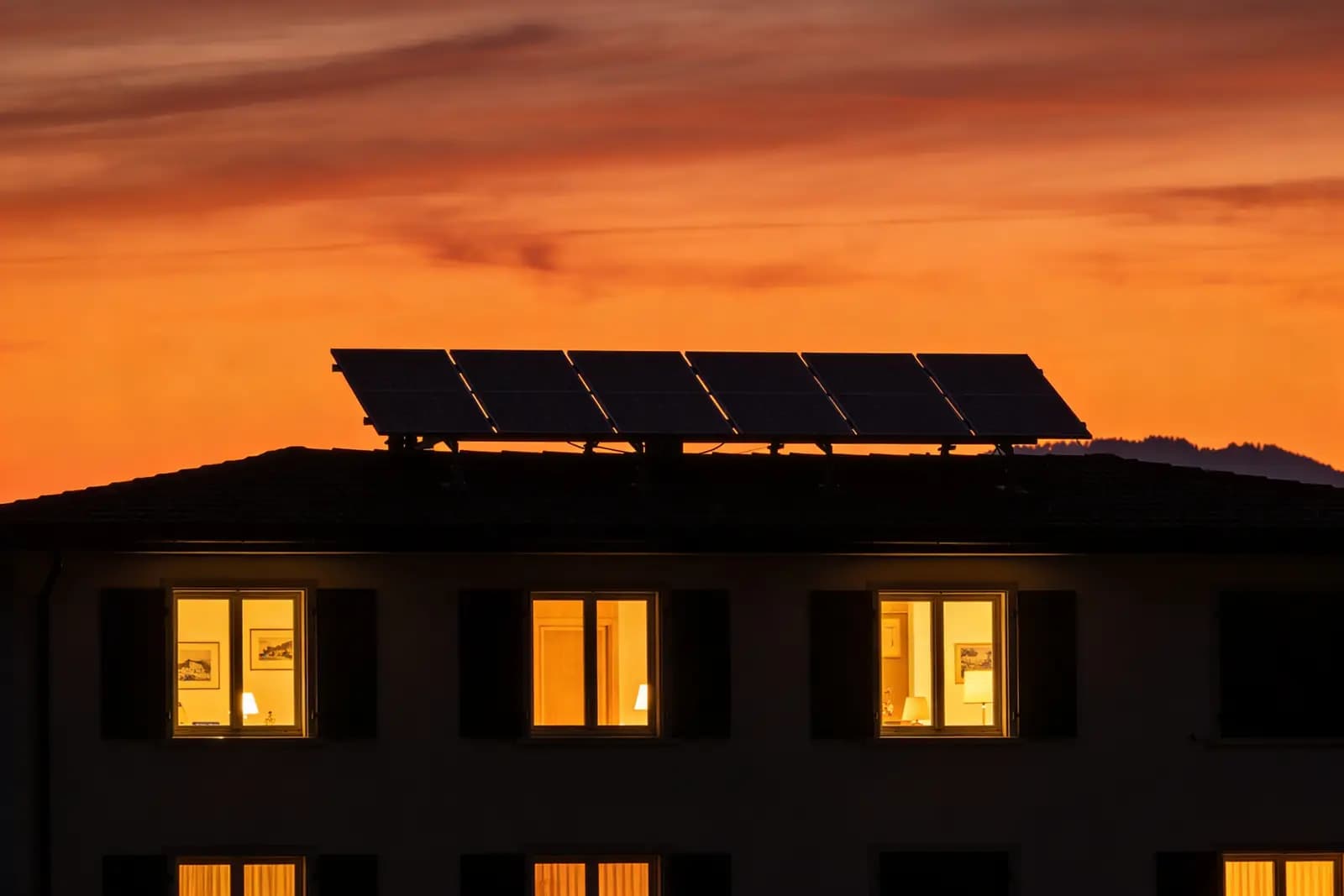
This seasonal shift creates a challenge. It is false to say that your solar panels will run your heat pump for free all winter (because there is not enough sun). However, the coupling remains essential because the panels will remove 100% of the domestic hot water from the heat pump in summer, as well as a very large part of the heating needs in the inter-season (March-April and September-October).
Ultimately, a well-sized roof generally covers 25 to 40% of the total annual electricity consumption of a heat pump, which considerably softens the additional cost of the electricity bill caused by abandoning fuel oil.
Our Recommendation
Adapt the management (Smart Grid Ready) and strategically orient the panels.
First make sure that your heat pump is certified 'SG Ready' (Smart Grid Ready). This global standard allows the inverter to tell the heat pump: 'I have a lot of excess sun, take advantage of it to overheat the house or the domestic hot water now'.
As for the panels, if the goal is really to help the heat pump, prefer (if the roof allows it) a strongly inclined installation (roof at 40° or even on vertical BIPV facades). These inclinations better 'catch' the winter sun very low on the horizon, offering up to 30% additional yield in the middle of December, at the critical time for the CAP.
Sources & Method
Analysis based on ElCom 2024–2026 data, OFEN (Federal Office of Energy), Pronovo SA, EPFL and HEG Geneva studies. The financial projections use the following assumptions unless otherwise stated: local purchase price, GRD injection price, production 1 100 kWh/kWp/year, self-consumption rate 35–40%. Actual results vary depending on canton, roof orientation and consumption profile. The site may also present its own services or calls for contact related to these subjects.
Next step
Compare several quotes, validate profitability with our tools and then check the contractual conditions adapted to your canton.
No obligation · Transparent data