
The 25 November decision clarifies grid-operator costs for establishing, maintaining or dissolving a ZEV or LEG. Use a worked example to review a quote.

On 25 November 2026, the Swiss Federal Council adopted a change to the Electricity Supply Ordinance affecting certain costs of shared solar electricity. The new Article 12a, in the provisional wording published by the Federal Office of Energy, treats capital and operating costs borne by the distribution network operator when establishing, maintaining or dissolving a self-consumption group (ZEV or RCP) or a local electricity community (LEG or CEL) as allowable network costs. The operator cannot bill those costs individually. The announced commencement date is 1 January 2027. The definitive version published on Fedlex is authoritative. Start with the Federal Council announcement and the second page of the published amendment to identify the operations in scope.
If a condominium, municipality or group of neighbours is preparing a project for 2027, ask for an itemised quotation before agreeing a budget or signing the sharing agreement. Record the service performed, the organisation supplying it, the intended payer and the estimated work date. That makes it possible to ask a narrow question about the network operator’s costs without losing track of the work the community actually needs to buy. Photovoltaic equipment, electrical alterations, a private billing platform and the electricity the group uses may still appear in its budget.
Why the dates in the folder matter
A committee can approve expenditure in December even if all technical work takes place later. Keep separate entries for the quotation date, its validity, the intended opening and the billing date. Add the version of the document and the contact who confirmed the schedule. An attachment circulated in autumn can otherwise find its way into January minutes unchanged, even when the treatment of a line deserves another look. For work straddling the year boundary, ask the operator to explain how it dates the particular service and which rules it applies. A settled invoice, a quote for physical alterations and a charge planned for future administration call for different evidence. The wording published with the decision does not establish an automatic refund for old invoices. Keep the original document while you clarify an individual item.
Search results can offer both the 25 November announcement of the adopted package and a separate consultation about electricity supply. Use the attachment published with the decision of 25 November for the billing point. Its opening note describes the legal wording as provisional and its closing provision gives the commencement date. Retain the version you read and consult Fedlex before relying on the definitive wording for a signed decision or a disputed bill.
Read the service behind the label
A quotation may say “activation”, “management”, “network access” or “commissioning” without explaining the underlying work. The same label could cover an electrician modifying a distribution board, a private supplier configuring billing software or the network operator setting up an account for the group. Identify the activity, its purpose and the party that incurs the expense. Does the work concern establishing, maintaining or dissolving the group? Does the distribution network operator bear the relevant capital or operating cost? In this setting, “allowable” explains the way certain costs are assigned in network accounting. It does not give a universal per-home price or extend to every service a third party offers. The price of electricity and the terms of private services still need to be set on their own basis.
A group that changes its membership can meet several of these activities at once. The operator may process a change, the billing provider may update its allocation and a contractor may alter equipment. Ask for separate entries so you can trace who did what. For Article 12a, identify the capacity in which the organisation performs the task. The same name at the top of two contracts does not establish that an organisation is acting in the same capacity under both. An operator may also be associated with a commercial service. Ask it to state the role and the agreement for each disputed or unclear amount.
Describe the arrangement before asking about charges
Start with a short description and a site plan. Mark the buildings, solar installation, points of connection and measurement, responsible producer and proposed representative. For a self-consumption group, describe the perimeter and how it will deal with external parties. If you are considering a virtual arrangement, ask which details of the connection points the operator needs to check the configuration. For a local electricity community, state the participating addresses and the distribution network. The cost rule does not itself settle whether a particular group is eligible or how it must be created. Tell the operator if you are still deciding between arrangements. The guide to choosing a LEG or a ZEV introduces the models and helps you explain your intended use.
A condominium that wants to share its generation among flats and common areas has different needs from a neighbourhood in which households keep varied agreements and patterns of consumption. Two offers headed “shared solar” can therefore describe quite different tasks. Sketch the electricity flows separately from the responsibilities of the building manager, representative, supplier and software provider. Give that drawing to the participants before the budget discussion. They can use it to spot a missing source of meter data, a service already covered by an agreement or a task for which nobody has yet accepted responsibility.
Put the lines in four parts of the budget
Give each row a supplier and a proposed invoice recipient. In the first group, list work to establish, maintain or dissolve the sharing arrangement for which the distribution network operator says it bears the relevant capital or operating cost. If there is a direct charge for that work, ask the operator to explain how it applies Article 12a. In the second group, enter equipment, wiring work, connections and alterations. Identify who orders and owns the equipment, what part of the site it serves and whether the work is technically distinct from administering the establishment of the group. Work can occur in the same month without forming the same service.
Place private services in the third group. Examples include reporting, the administration of meter allocations, software support and help for new residents. A provider should distinguish setup, regular support and extras. Use the fourth group for recurring electricity charges and their components. Depending on what the documents show, these can include energy, network use, metering, levies and tax. Capture the interval and unit used for each. A monthly amount, an annual subscription and a rate per metering point have different budget effects. Look for overlapping services and ask the providers to reconcile the written scopes, especially when one advertises a package with several components.
Worked example before a condominium vote
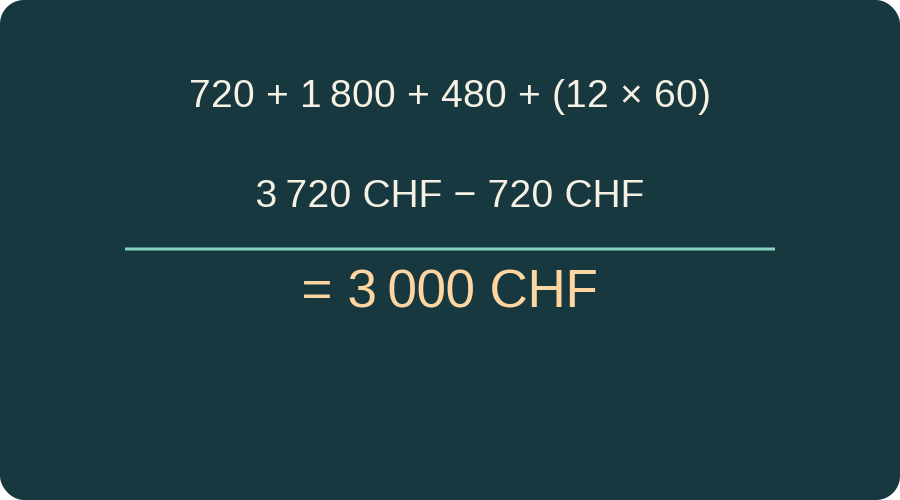
Imagine a condominium preparing its launch budget. The network operator quotes CHF 720 for “opening the perimeter”. The electrician quotes CHF 1 800 to adapt a distribution board and label circuits. A private billing company offers setup for CHF 480 and ongoing administration for CHF 60 a month. After twelve monthly payments, the administration totals CHF 720 and the full first-year budget is CHF 3 720. Solar panels themselves, energy revenue, tariff payments and applicable taxes are outside the calculation. These hypothetical amounts illustrate the arithmetic.
The manager asks whether “opening the perimeter” consists entirely of the costs borne by the operator to establish the group and when it would perform the work. The electrician identifies essentials and optional work. The billing company confirms which homes and transactions the package covers. If the operator confirms that the complete first item is covered and removes the individual charge in this example, the revised first-year figure is CHF 3 000. A mixed item might instead require another split between services. Keep both budgets until there is a dated revised offer and record which document the assembly actually approves. That preserves room to act if the work schedule changes or the operator needs a separate request.
Ask a question that can be answered in writing
Include the site address, the case identifier, the form of sharing proposed and the schedule. Quote the precise wording and reference for the line. Ask the operator to describe the task, the basis for billing, the unit, the intended payer and the effective date. Where the invoice appears to combine services, request a breakdown between operating the group, physical alterations, metering, energy and mandated administration. If a particular amount governs whether the group can go ahead, ask for a revised document. Notes from a call help to preserve context, but a written explanation can be checked against a quotation and circulated accurately to people who were not on the call.
If the reply points to a published fee sheet, check the network area and the applicable period. Provide only the information needed to identify the line and service. Have one person keep the working table in a multi-owner project so that suppliers receive consistent questions and participants see the same answers. Keep a copy of each quote that informed a decision. The solar grid connection guide explains which documents make it easier to identify the installation and its grid operator.
What the group still has to settle locally
The revised treatment of the operator’s costs leaves practical decisions for the community. Agree which private services to purchase, who funds physical work and how the group settles energy payments. New residents may join after the opening. Decide who records the effective date, sends opening and closing meter readings to each party and explains any later adjustment. Ask how remaining demand will be supplied in periods with little solar electricity. For a departure or a dissolution, record who receives the final records and who can answer a question after the account closes. It is worth deciding where the documentation will remain when a person moves out or a committee changes.
Other parts of the revision concern topics such as guarantees of origin and the standard product. Their inclusion in the same notice does not decide whether a setup invoice is permitted. A lower establishment charge also gives no estimate of what the site will generate, how much neighbours will consume or what the agreement will return each year. Ask for the consumption and generation assumptions behind any claimed saving per flat. The guide to sharing electricity in a condominium helps allocate responsibilities and review contracts before the vote.
Reconcile the versions before signing
Put the site plan, participant list, official wording, quotations and cost table together. For each amount show the activity, cost, frequency, evidence and owner of the unresolved question. Compare the establishment year with the following year. One-off charges and recurring bills should remain identifiable even when one provider quotes them together. An uncertainty might be recorded as a conditional allowance with a deadline and a responsible person. Ask for a narrow explanation if a revised offer removes one fee but introduces another. The two changes may reflect a different service scope, date or contract. An itemised comparison lets the committee distinguish a genuine saving from a shift in when it pays.
If your group is already operating, start with its latest actual statement and current service agreement. Read the description before copying the amount. If it is closing, export final records from the billing system, assign responsibility for checking the readings and make sure participants know where to request a missing document. Ask how you would retrieve data on termination before accepting a long software commitment. A useful budget and a useful invoice both connect the payment to an identified activity, a responsible party and a dated record. That leaves the committee with a decision it can explain even after the people who collected the original quotations have moved on.
A handover exercise for a volunteer committee
Imagine that the person who negotiated the paperwork leaves the committee shortly after the annual meeting. A successor has to answer a resident who challenges a charge. Give that successor a folder containing the dated offer, the selected scenario, the minutes acknowledging uncertainties and the written reply that resolves each ambiguous row. Provide a short explanation of the calculation and a contact directory by role. Someone who joins midway through the project should be able to follow the sequence without reconstructing conversations from calendar invitations. Add a reminder to verify the current public tariff schedule before preparing the next annual budget. Record where formal correspondence is stored and who can authorise its release.
Practise with an invented example. A household asks whether a recurring payment covers meter allocation or an unrelated upgrade to the building’s technical infrastructure. Look up the account reference, review the invoice’s service period and compare the cost description with the contractor’s scope. A maintenance agreement might include technical support alongside data processing, while a separate supplier owns the installed equipment. The board can prepare a short explanation that cites the relevant clauses and explains the next enquiry. If a price is disputed, mark the item as unresolved and keep a record of the proposed and accepted amounts. For formal advice, share the supporting documents with the person qualified to assess the agreement.
Refresh the budget after the first statement
When the first invoice comes in, reconcile it against the signed offer before setting the recurring household contributions. Note unexpected rounding, billing intervals and extra work authorised during construction. Compare the list of metering points with the occupancy record and make sure common facilities are represented distinctly. A budget can be accurate at approval and still need revision after a participant joins or a contractor revises delivery. Review changes at an ordinary meeting and ask the treasurer to show the immediate cash effect separately from a longer contractual commitment. The governing document and the written supplier correspondence should remain easy to find. This is also a chance to agree which attachments residents can consult and which account records require controlled access.
For a proposal to add another building, start with the boundary drawing. Check whether additional connections, new common-space consumption or a different route for meter data affect the services purchased. Set out the updated responsibilities before circulating a figure. Getting those details right can avoid disputes between early participants and people who join a larger community later.