




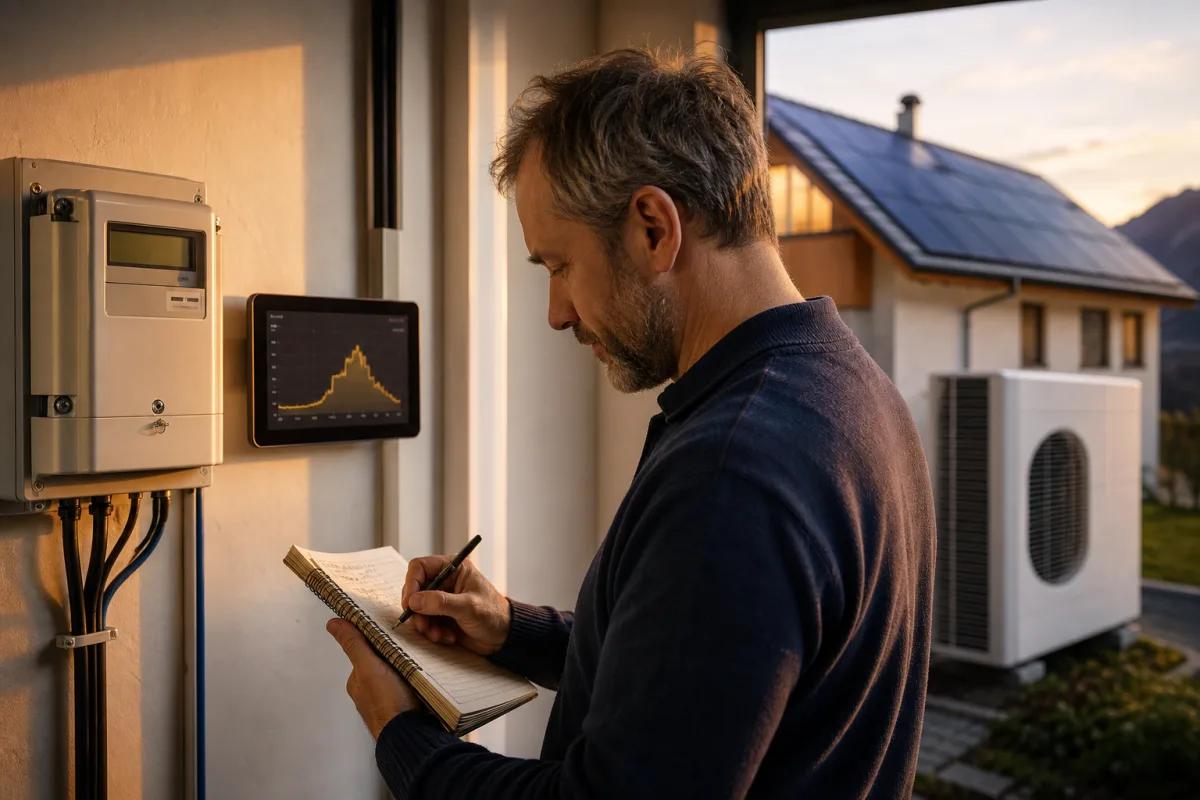
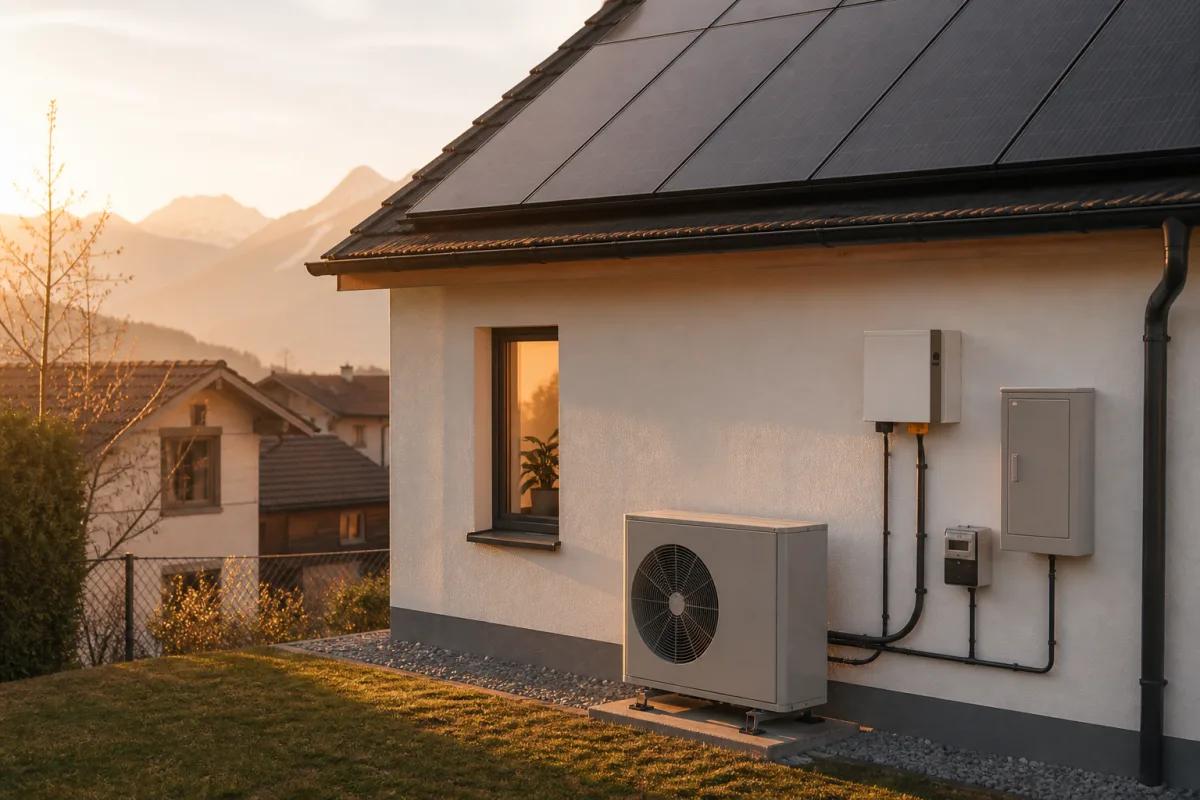
An increase in bill does not always mean an increase in energy prices
When the electricity bill increases, the first instinct is often to look for a new supplier or order solar panels. Start by separating the lines. The Swiss bill generally combines energy, network usage, metering, public charges, network surcharge and VAT. One line may be going up while another is going down. Without this reading, you risk attributing to photovoltaics a saving that comes from a change in price, or looking for a battery for a power problem.
For 2026, ElCom announced an average drop in the prices of basic supplies for households, while reminding that prices vary depending on the manager and the municipality. The median figure for a typical household is a national benchmark, not your personal bill. Your profile, your municipality, your price, your consumption and your royalties matter more. Note the pricing date of each comparison and check the official source when deciding.
- Photograph or export each page of the invoice before modifying a contract.
- Compare the same units, periods and categories of consumption.
- Do not transform a Swiss average into a valid promise for your municipality.
Read your Swiss invoice in five blocks
The first block is the energy consumed, often expressed in kilowatt hours. The second concerns the use of the network, which finances transportation and certain technical services. The third includes measurement, counter or communication. The fourth contains public and local royalties. The fifth corresponds to VAT and any adjustments. The titles may differ, but the principle remains the same: each franc is not sensitive to the same lever.
A solar panel directly reduces part of the energy purchased when you consume your production. It does not necessarily remove fixed costs, measurement or all royalties. A battery can shift more kWh into the evening, with losses and an investment cost. A heat pump, a boiler or a terminal can shift consumption to solar hours without a battery. The solution should be related to the line you are looking to reduce.
- Calculate the full cost per kWh, then distinguish the variable part from the fixed part.
- Find the surplus recovery rate if you already produce electricity.
- Identify the fees that will not disappear with a solar installation.
Why do prices change from one year and from one municipality to another?
Not all network operators have the same purchasing, local production, network and royalty costs. The national tariff structure provides a framework, but the amount paid depends on the basic supply, the H4 profile or another category, the municipality and local decisions. A comparison between cantons must therefore keep the same consumption and specify whether it includes all the components.
Wholesale prices, reserve mechanisms, network investments, weather, legislative changes and metering costs can change the bill. The average drop announced for 2026 does not make a solar project useless; it simply reminds us that a decision should not be based on a permanent increase. Calculate with a conservative assumption and show how the project remains interesting if the energy price falls or if the recovery tariff changes.
- Note the network manager, municipality and profile category displayed on the invoice.
- Check the rates for the year in question on the official website of the GRD and ElCom.
- Use multiple price scenarios instead of extending a single historical year.
Solar protects part of the budget, not the whole bill
A photovoltaic installation can reduce the purchase of energy from the network and provide visibility on the cost of part of the kWh produced. It does not cover each month uniformly: in winter, production drops while heating and lighting increase. The injection of the surplus can be remunerated at a rate different from the purchase price. Protection therefore comes mainly from self-consumption and sizing, not from a promise of total independence.
To measure the effect on your budget, compare twelve months before and after the project. Add estimated production, direct consumption, battery, injection, residual purchases, fixed costs and financing. An avoided kWh price is not the same as an injected kWh. If your project covers a renovation, separate the cost of the roof, heating or insulation. This method shows the share actually linked to solar power.
- Calculate the self-consumed energy and the injected energy separately.
- Show the winter and summer bill rather than just one annual average.
- Include financing, maintenance and replacement costs in the net scenario.
Price increases and self-consumption: the real economic link
An increase in the price of energy increases the value of a solar kWh consumed on site, all other things being equal. It does not automatically make a large battery or an oversized installation profitable. The quote price, orientation, shadows, daytime consumption and feed-in rate remain determining factors. A project that is only profitable with a strong future increase is fragile; a project that operates with conservative assumptions is easier to defend.
The first lever is often the shift in uses. Heat water, run certain appliances or recharge the car when production is available, without compromising comfort. The second lever is the size of the solar field in relation to the surface area and needs. The third is storage, to be analyzed after the first two. Ask the installer for a table that shows the gain of each lever instead of an overall autonomy rate.
- Measure the gain of simple programming before paying for a battery or EMS.
- Compare the price of avoided energy with the price of injected electricity.
- Redo the calculation with a lower rate and a higher rate than today.
Battery or usage management against a higher bill?
The battery is attractive when midday production must be consumed in the evening, but it adds investment, losses, cycles and a guarantee. Controlling a boiler, a heat pump or a terminal can directly utilize the surplus without going through an additional conversion. A battery can then process the rest. Ask for three scenarios on your profile: without battery, with usage management and with storage.
Sizing should not aim for a spectacular autonomy percentage. Look at the usable capacity, power, number of cycles, temperature, warranty period and replacement costs. A backup mode intended for a few circuits is not of the same value as powering the entire house. The price of electricity may change during the life of the battery; the economy must therefore remain acceptable in several hypotheses.
- Distinguish between the financial objective, the relief objective and the comfort objective.
- Ask for the total cost over the warranty period, including subscription or software.
- Don't add a battery just to compensate for an incorrectly sized solar field.
Dynamic tariffs and the energy manager
A variable price may make you want to charge the battery when the price is low and use storage when it is high. This strategy requires correct measurement, readable rules and compatibility with the EMS and network manager. The price of energy is only one component; network costs, taxes and losses remain present. An application should not display gross savings as if each kWh were purchased at spot price.
Request a simulation that separates solar, load shifting and rate arbitrage. Test a foggy day, a winter evening and a period without signal. The system must maintain safety limits and not discharge a battery for minimal theoretical gain. Prices change; have a manual rule or simple mode if the subscription or integration no longer works.
- Ask for the source, frequency and update date of the price signal.
- Check network charges and losses before comparing two times.
- Maintain a backup strategy without relying on the cloud or a perfect forecast.
Compare your local situation instead of using a national average
For a useful estimate, enter the municipality, network manager, household category, consumption and times. A house in Geneva, Vaud, Neuchâtel or in an Alpine canton may have a different take-back price and network profile. Public pages may also be updated on different dates. Note the consultation date and save the pricing document that was used for the calculation.
Your bill may also include a smart meter, differentiated hours or municipal charges. If you are part of a PPE, a group for own consumption or a local community, the logic of the calculation changes. Ask which meter measures each flow and who receives the excess. An individual project should not be compared to a collective project as if they had the same costs and the same rights.
- Keep the DSO price, charges and profile category with your simulation.
- Request a separate calculation for a house, a PPE or a consumption group.
- Check the treatment of the surplus and the meter before announcing a saving.
Make an honest profitability calculation in 2026
The profitability calculation must start with the full price of the installation and end with a realistic annual flow. Include the panels, installation, scaffolding, switchboard, connection, procedures, possible battery, maintenance, financing and really accessible aid. Separate savings on consumption, surplus remuneration and tax advantages. Each hypothesis must have a date and a source.
Vary the price of energy, production, self-consumption and the recovery tariff. A facility may remain consistent if the median price falls, but its return time will change. The calculation must also show the net cost per kWp, the kWh produced and the kWh actually useful. Use a calculator as a discussion grid, then have the contractual elements confirmed by the installer, the DSO and the authorities.
- Present at least one conservative scenario and one central scenario, never just one outcome.
- Do not mix future savings with aid already paid.
- Compare the result with a realistic lifespan and guarantees.
What a price increase or decrease really changes
A price variation mainly changes the value of the kWh that you would have purchased from the network. It does not change your roof's output, inverter power or conversion losses. If you consume little during the day, a reduction in the price may make monitoring usage more important than adding modules. If you have a heat pump or a terminal, greater production may remain relevant despite a lower average price.
The right decision is therefore robust over several years and not optimized for a single press title. Please note in the offer the tariff year, the network operator, the feed-in rate and the calculation method. Ask when the project should be re-evaluated: after a change of heating, a new car, an extension or a different price. This discipline transforms uncertainty into a check-up appointment rather than a promise.
- Keep a dated copy of the invoice and the price on which the calculation was based.
- Re-evaluate the simulation if your heating, your car or your presence changes.
- Choose an architecture that is understandable even when prices do not follow the forecast.
Checklist to reduce bill exposure
Before ordering, make a list of actions in the correct order. Read the invoice, measure usage, check the roof, obtain monthly production, compare quotes and confirm the connection. Only then decide whether a battery, EMS or terminal provides additional value. This sequence avoids paying for technology to correct a hypothesis that has never been verified.
A solar installation does not remove the grid; it can reduce and stabilize part of the purchases. The result depends on the municipality, the manager, the building, your use and the contractual conditions. Check the 2026 figures with ElCom and the DSO before signing, then keep the documents. The best protection against an unpredictable bill is a sized, measured and documented project.
- Invoice broken down into energy, network, measurement, royalties and VAT.
- Local rate and reference date confirmed.
- Separate solar, control, battery and financing scenarios.
- Monthly production, self-consumption and surplus explained in the quote.
- Revision planned if the price, heating or mobility changes.